
E177: Why Bankers Got Paid and Europe Recovered: The London Debt Agreement Explained

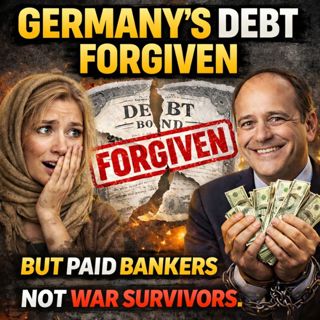
E177: Why Bankers Got Paid and Europe Recovered: The London Debt Agreement Explained

Economic historian Tobias Straumann breaks down how Germany’s debt meltdown in 1931 crashed the global economy—and how a surprisingly generous 1953 debt deal helped spark the German economic miracle by putting growth ahead of punishment.

GUEST BIO: Tobias Straumann (Switzerland) is Professor of Modern & Economic History at the University of Zurich; author of Out of Hitler’s Shadow and 1931: Debt, Crisis, and the Rise of Hitler.

TOPICS DISCUSSED:

  • 1931 as the real inflection point of the Great Depression
  • Treaty of Versailles + reparations politics (why it’s not a straight-line story)
  • Germany’s “double surplus” debt trap (budget + trade surplus) and default dynamics
  • Gold standard breakdown and global contagion
  • London Debt Agreement (1953): what it did and why it mattered
  • WWII reparations vs interwar debts vs private creditors (who got paid)
  • Cold War incentives vs the older “German problem” (balance of power since 1871)
  • 1990 reunification, the 2+4 treaty, and why reparations weren’t reopened
  • Later compensation: Israel/Claims Conference, forced labor, voluntary gestures
  • Poland/Greece reparations claims in modern politics
  • Comparisons: Japan/Italy reparations and postwar strategy
  • Modern debt parallels (domestic vs foreign-currency debt; political will)

MAIN POINTS:

  • 1931 turned a severe recession into a worldwide depression via Germany-centered financial contagion.
  • Versailles mattered, but Allied policy adjustments and domestic politics shaped outcomes more than a simple “Versailles caused WWII” line.
  • Germany’s foreign-currency debt made austerity + transfer demands self-defeating, ending in default and system collapse.
  • The 1953 London Debt Agreement was pivotal: it reduced and restructured interwar debts and made repayment compatible with recovery.
  • West Germany paid little-to-no WWII reparations (effectively deferred), while interwar private creditors recovered significant shares—morally messy but stabilizing.
  • Cold War pressures helped, but Europe’s long-running challenge was integrating a too-strong Germany into a stable order.
  • In 1990, the 2+4 framework avoided reopening WWII reparations to keep reunification politically and economically manageable.
  • Later payments (Israel, Holocaust victims, forced laborers) partially addressed moral claims outside classic state-to-state reparations.

TOP 3 QUOTES:

  • “We think that the year 1931 was the turning point… it turned into a worldwide depression.”
  • “It’s probably the biggest and most important debt settlement of the 20th century.”
  • “It’s morally hard to swallow… but it had the advantage of stabilizing Western Europe economically and politically.”

🎙 The Pod is hosted by Jesse Wright
💬 For guest suggestions, questions, or media inquiries, reach out at https://elpodcast.media/
📬 Never miss an episode – subscribe and follow wherever you get your podcasts.
⭐️ If you enjoyed this episode, please rate and review the show. It helps others find us.

Thanks for listening!

Avsnitt(186)

E162: He Built a Billion-View Empire: Now He Warns Social Media Rewires Your Brain - Richard Ryan

E162: He Built a Billion-View Empire: Now He Warns Social Media Rewires Your Brain - Richard Ryan

How a tech insider who helped build billion-view machines explains the attention economy’s playbook—and how to guard your mind (and data) against it.Guest bio:Richard Ryan is a software developer, med...

22 Okt 20251h 12min

E161: From Rome to Right Now: What History Gets Wrong About Collapse - Dr. Luke Kemp

E161: From Rome to Right Now: What History Gets Wrong About Collapse - Dr. Luke Kemp

Dr. Luke Kemp, an Existential Risk Researcher at the University of Cambridge shows how today’s plutocracy and tech-fueled surveillance imperil society—and what we can do to build resilience.Guest bio:...

15 Okt 20251h 17min
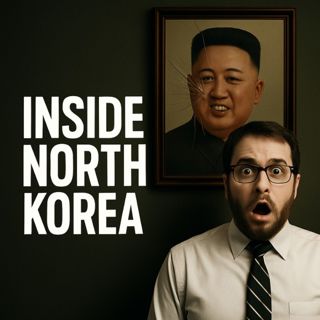
E160: How North Korea’s Dictatorship Endures: Historian Fyodor Tertitskiy Explains

E160: How North Korea’s Dictatorship Endures: Historian Fyodor Tertitskiy Explains

A deep dive with historian Dr. Fyodor Tertitskiy on how North Korea’s dynasty survives—through isolation, terror, and nukes—and why collapse or unification is far from inevitable.Guest bio:Fyodor Tert...

11 Okt 202558min

E159: Laziness Is a Myth: How Hustle Culture Hijacked Your Life

E159: Laziness Is a Myth: How Hustle Culture Hijacked Your Life

Dr. Devon Price unpacks “the laziness lie,” how AI and “bullshit jobs” distort work and higher ed, and why centering human needs—not output—leads to saner lives.Guest bio: Devon Price, PhD, is a Clini...

4 Okt 202559min

E158: Post-Plagiarism University: Replacing Humans with AI—Belonging Dips, GPAs Slide, Integrity Erodes

E158: Post-Plagiarism University: Replacing Humans with AI—Belonging Dips, GPAs Slide, Integrity Erodes

Dr. Joseph Crawford unpacks how AI is reshaping higher education - eroding student belonging, redefining assessment in a post-plagiarism era, and raising the stakes for soft skills.Guest bioDr. Joseph...

27 Sep 20251h 19min

E157: Have We Got Happiness Wrong? Eric Weiner on Bliss in Age of AI

E157: Have We Got Happiness Wrong? Eric Weiner on Bliss in Age of AI

Author Eric Weiner argues that happiness depends less on wealth or location than on relationships, meaning, trust, and realistic expectations—while tech and social media often push the other way.Guest...

24 Sep 202554min
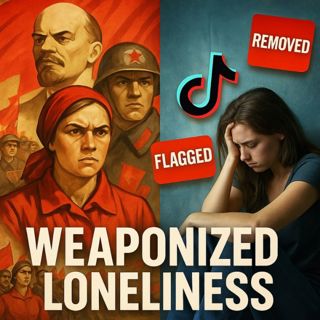
E156: Former CIA Analyst Exposes the Weaponization of Loneliness

E156: Former CIA Analyst Exposes the Weaponization of Loneliness

A conversation with Stella Morabito on how the weaponization of loneliness—from Soviet propaganda to modern social media—threatens free speech, family, and community.👤 Guest BioStella Morabito – Writ...

10 Sep 202540min

E155: Special Ops Tactics for Breakthrough Creativity - Dr. Angus Fletcher Explains

E155: Special Ops Tactics for Breakthrough Creativity - Dr. Angus Fletcher Explains

Neuroscientist explains why school crushes creativity—and how to fix it—teaching “primal intelligence” and special-operations tactics you can use at work, at home, and in the classroom to think and in...

3 Sep 202559min

Populärt inom Business & ekonomi

badfluence
framgangspodden
varvet
rss-jossan-nina
uppgang-och-fall
rss-borsens-finest
avanzapodden
rss-svart-marknad
fill-or-kill
rss-kort-lang-analyspodden-fran-di
bathina-en-podcast
rss-dagen-med-di
24fragor
tabberaset
lastbilspodden
borsmorgon
rss-inga-dumma-fragor-om-pengar
dynastin
svd-tech-brief
loungepodden