Brain Balls
Radiolab9 Jan

Brain Balls

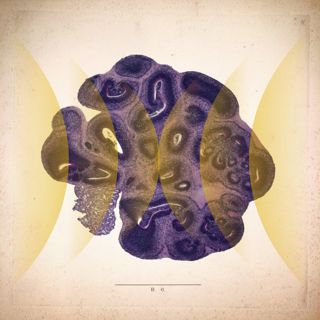
When neuroscientist Madeline Lancaster was a brand new postdoc, she accidentally used an expired protein gel in a lab experiment and noticed something weird. The stem cells she was trying to grow in a dish were self-assembling. The result? Madeline was the first person ever to grow what she called a “cerebral organoid,” a tiny, 3D version of a human brain the size of a peppercorn.

In about a decade, these mini human brain balls were everywhere. They were revealing bombshell secrets about how our brains develop in the womb, helping treat advanced cancer patients, being implanted into animals, even playing the video game Pong. But what are they? Are these brain balls capable of sensing, feeling, learning, being? Are they tiny, trapped humans? And if they were, how would we know?

Special thanks to Lynn Levy, Jason Yamada-Hanff, David Fajgenbaum, Andrew Verstein, Anne Hamilton, Christopher Mason, Madeline Mason-Moriarty, the team at the Boston Museum of Science, and Howard Fine, Stefano Cirigliano, and the team at Weill-Cornell.

EPISODE CREDITS:
Reported by - Latif Nasser
with help from - Mona Madgavkar
Produced by - Annie McEwen, Mona Madgavkar, and Pat Walters
with mixing help from - Jeremy Bloom
Fact-checking by - Natalie Middleton and Rebecca Rand
and Edited by - Alex Neason and Pat Walters

EPISODE CITATIONS:

Videos -

Articles -


Books -
Carl Zimmer Life’s Edge: The Search for What it Means to be Alive (https://carlzimmer.com/books/lifes-edge/)


Sign up for our newsletter!! It includes short essays, recommendations, and details about other ways to interact with the show. Signup (https://radiolab.org/newsletter)!

Radiolab is supported by listeners like you. Support Radiolab by becoming a member of The Lab (https://members.radiolab.org/) today.

Follow our show on Instagram, Twitter and Facebook @radiolab, and share your thoughts with us by emailing radiolab@wnyc.org.

Leadership support for Radiolab’s science programming is provided by the Simons Foundation and the John Templeton Foundation. Foundational support for Radiolab was provided by the Alfred P. Sloan Foundation.


Hosted by Simplecast, an AdsWizz company. See pcm.adswizz.com for information about our collection and use of personal data for advertising.

Det här avsnittet är hämtat från ett öppet RSS-flöde och publiceras inte av Podme. Det kan innehålla reklam.

Avsnitt(652)

After Birth

After Birth

Pardon the graphic pun, but hey! For this podcast, Jad--a brand new father--wonders what's going on inside the head of his baby Amil. Hosted by Simplecast, an AdsWizz company. See pcm.adswizz.com for ...

25 Aug 200910min
15: Sum

15: Sum

For meditation number fifteen we have a reading from David Eagleman's book Sum. It's a vision of the after life that's both playful and... horrifying. Sum is read by actor Jeffrey Tambor. Hosted by S...

14 Aug 20095min

14: The Four Groans

14: The Four Groans

Another meditation on what happens after the moment of death, this time as Shakespeare envisions it.  Hosted by Simplecast, an AdsWizz company. See pcm.adswizz.com for information about our collection...

13 Aug 20097min
13: Gone

13: Gone

We continue our meditations on death with a reading from poet and writer, Mark Doty. This is an excerpt from Doty's 1996 memoir Heaven's Coast. Hosted by Simplecast, an AdsWizz company. See pcm.adsw...

12 Aug 20096min
12: Proof

12: Proof

This week on the podcast, we continue our meditations on death. Our After Life episode had eleven meditations, and now we’re gonna throw a new one at you each day, all week long, culminating in a very...

11 Aug 20097min

After Life

After Life

This hour: Radiolab stares down the very moment of passing, and speculates about what may lie beyond. Hosted by Simplecast, an AdsWizz company. See pcm.adswizz.com for information about our collection...

27 Juli 200958min
In Defense of Darwin?

In Defense of Darwin?

When evolutionary biologist Richard Dawkins' daughter was six years old, he told her that flowers are not here for beauty, not here for the bees, but instead merely to copy their own DNA. Sigh, what a...

14 Juli 200918min

Are We Coins?

Are We Coins?

After we released our show about Stochasticity, we received a lot of comments about the idea humans can be just as predictable as coins. In that show, Jonah Lehrer was telling us about a study on the ...

30 Juni 200918min

Populärt inom Vetenskap

allt-du-velat-veta
p3-dystopia
dumma-manniskor
rss-ufobortom-rimligt-tvivel
kapitalet-en-podd-om-ekonomi
ufo-sverige
svd-nyhetsartiklar
rss-spraket
paranormalt-med-caroline-giertz
hacka-livet
medicinvetarna
dumforklarat
rss-vetenskapsradion
det-morka-psyket
ufo-sverige-2
sexet
rss-tidsmaskinen
halsorevolutionen
rss-tidslinjen-podcast
rss-vetenskapsradion-2