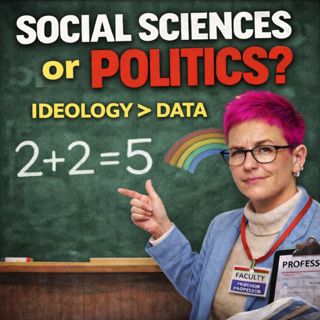

E181: Politics Is the Best Predictor of Academic Research — Prof Mark Horowitz
El Podcast27 Jan

E181: Politics Is the Best Predictor of Academic Research — Prof Mark Horowitz

Political beliefs often matter more than data or methods in shaping how social scientists think about controversial issues. In this episode, sociologist Dr. Mark Horowitz explains why many professors line up by politics on hot-button questions, drawing on moral psychology, groupthink inside universities, and the idea that some topics become treated as morally untouchable “sacred victims.”

Guest bio:

Dr. Mark Horowitz is a Professor of Sociology at Seton Hall University whose research uses large surveys of faculty to study political bias, motivated reasoning, and viewpoint diversity in the social sciences.

Topics discussed:
  • Why politics predicts social-science positions on controversial questions
  • Moral Foundations Theory (Jonathan Haidt): care/fairness vs. loyalty/authority/sanctity
  • “Bio-resistance” / discomfort with biological explanations in parts of the academy
  • Anthropology & sociology survey findings (e.g., plausibility of evolved sex differences; biology & STEM gaps)
  • “Sacred victims,” ingroup policing, and why some hypotheses become morally “off-limits”
  • Postmodernism vs. “postmodern vibes”: activist scholarship without explicit postmodern labels
  • Grievance studies hoax + “idea laundering” and how ideas move journal → curriculum → common sense
  • Tenure realities: how dissent can be managed without formal firing
  • Replication/reliability worries and what “fixes” might actually help: introspection + viewpoint diversity
Main points:
  • Humans reason with motivated cognition, and academics aren’t exempt—political identity often tracks judgments on contested claims.
  • Moral intuitions shape what feels plausible: some explanations trigger moral disgust (e.g., claims perceived as “naturalizing inequality”).
  • Fields with extreme ideological skew risk narrowing hypothesis space, intensifying policing, and losing public legitimacy.
  • The issue isn’t “one side evil”—it’s how moral communities become interpretive communities (and vice versa).
  • The best corrective mechanisms are viewpoint diversity, active engagement with opposing arguments, and self-awareness about bias.
Top 3 quotes:
  • Do you believe it because the evidence suggests it—or because it’s congenial to how you feel?
  • Interpretive communities become moral and emotional communities—and then disagreement feels morally wrong, not just empirically wrong.
  • The only way to minimize distortion is introspection plus viewpoint diversity—actively seeking ideas that unsettle us.

🎙 The Pod is hosted by Jesse Wright
💬 For guest suggestions, questions, or media inquiries, reach out at https://elpodcast.media/
📬 Never miss an episode – subscribe and follow wherever you get your podcasts.
⭐️ If you enjoyed this episode, please rate and review the show. It helps others find us.

Thanks for listening!

Avsnitt(188)

E180: Attraction & Disgust: Evolutionary Psychology Explained (Dr. Deb Lieberman)

E180: Attraction & Disgust: Evolutionary Psychology Explained (Dr. Deb Lieberman)

Evolutionary psychologist Debra Lieberman explains how “disgust” and other built-in mental programs shape attraction, kinship, morality, and even law—while modern technology and social media scramble ...

20 Jan 1h 3min
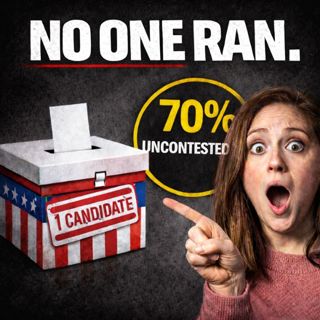
E179: Breaking the Gerontocracy: How Amanda Litman Is Getting Young People into Office

E179: Breaking the Gerontocracy: How Amanda Litman Is Getting Young People into Office

Amanda Litman argues U.S. leadership is too old, local races are dangerously uncontested, and the fastest fix is getting more young people to run—backed by better pay and campaign-finance reform.Guest...

16 Jan 50min

E178: Social Media Isn’t Toxic: Here’s What the Data Says - Dr. Jeff Hall

E178: Social Media Isn’t Toxic: Here’s What the Data Says - Dr. Jeff Hall

Social media isn’t “crack for your brain” for most people—Jeffrey Hall argues the best evidence shows tiny average effects on wellbeing, lots of measurement mess, and a bigger story about relationship...

13 Jan 59min
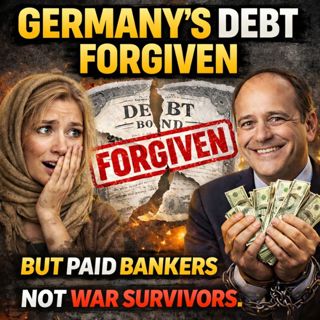
E177: Why Bankers Got Paid and Europe Recovered: The London Debt Agreement Explained

E177: Why Bankers Got Paid and Europe Recovered: The London Debt Agreement Explained

Economic historian Tobias Straumann breaks down how Germany’s debt meltdown in 1931 crashed the global economy—and how a surprisingly generous 1953 debt deal helped spark the German economic miracle b...

9 Jan 54min

E176: College Student IQ Has Collapsed: Researcher Breaks Down His New Meta-Analysis - Dr. Bob Uttl

E176: College Student IQ Has Collapsed: Researcher Breaks Down His New Meta-Analysis - Dr. Bob Uttl

A cognitive psychologist explains why college student IQ now averages about 102, why that shift is mathematically inevitable as enrollment expands, and how outdated testing norms and student-evals can...

6 Jan 1h 15min
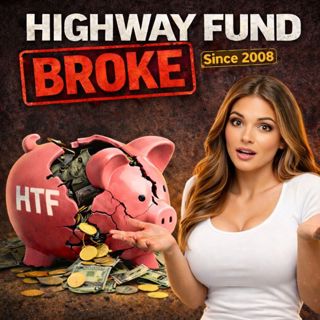
E175: Roads Are Bankrupt: New Car Fees Are Coming - Jeff Davis

E175: Roads Are Bankrupt: New Car Fees Are Coming - Jeff Davis

Jeff Davis breaks down why the Highway Trust Fund has been insolvent since 2008 and what fixes (and tradeoffs) are realistic as EVs grow.GUEST BIOJeff Davis is a Senior Fellow at the Eno Center for Tr...

30 Dec 20251h

E174: Acquired Broke Every Podcast Rule: Harvard Business School Professor Explains Why

E174: Acquired Broke Every Podcast Rule: Harvard Business School Professor Explains Why

Harvard’s Shane Greenstein explains why Acquired wins by treating each episode like an audiobook—high-signal, audience-first, and built for durable value.GUEST BIO: Dr. Shane M. Greenstein is a Profes...

23 Dec 20251h 4min

E173: Broke. Woke. Stroke. A tenured prof explains why college is failing

E173: Broke. Woke. Stroke. A tenured prof explains why college is failing

Tenured sociology professor Mark Horowitz explains why falling preparedness, grade inflation, and perverse incentives are eroding college standards—and why “broke, woke, stroke” helps describe the pat...

17 Dec 20251h 7min

Populärt inom Business & ekonomi

framgangspodden
badfluence
varvet
rss-jossan-nina
rss-svart-marknad
rss-borsens-finest
avanzapodden
svd-tech-brief
uppgang-och-fall
rss-dagen-med-di
fill-or-kill
lastbilspodden
rss-inga-dumma-fragor-om-pengar
dynastin
24fragor
rss-kort-lang-analyspodden-fran-di
rss-den-nya-ekonomin
kapitalet-en-podd-om-ekonomi
bathina-en-podcast
borsmorgon