Why Weight Stigma Harms Everyone: Anti-Fat Bias in Health, Mental Health, & Eating Disorder Recovery

Why Weight Stigma Harms Everyone: Anti-Fat Bias in Health, Mental Health, & Eating Disorder Recovery

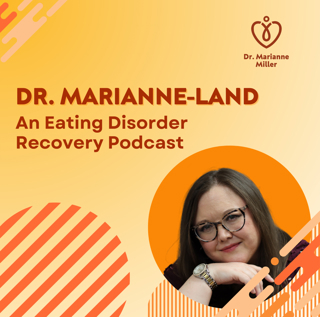
Weight stigma affects far more than body size. It shapes healthcare, mental health treatment, and eating disorder recovery for people across all bodies. In this solo episode, eating disorder therapist Dr. Marianne Miller, LMFT, examines how anti-fat bias operates inside medical systems, mental health care, and everyday cultural messages about bodies.

Weight stigma does not only harm people in larger bodies. It distorts how clinicians diagnose illness, how providers respond to symptoms, and how individuals relate to food, movement, and self-worth. People in larger bodies often face delayed diagnosis, dismissal of medical concerns, and barriers to eating disorder treatment. At the same time, people in smaller bodies frequently receive praise for behaviors that signal medical or psychological danger, which can hide eating disorders and delay care.

In this episode, Dr. Marianne explores how weight stigma disrupts physical health, fuels disordered eating, and complicates recovery. Anti-fat bias increases stress, discourages people from seeking medical care, and encourages shame-based approaches to health. These pressures influence people across body sizes. They can lead individuals to distrust hunger cues, suppress bodily needs, and feel that their worth depends on body size.

This conversation also explores how weight stigma interacts with other systems of oppression. Racism, ableism, gender bias, and class inequality can amplify weight-based discrimination in healthcare and mental health settings. When these systems overlap, people often experience greater barriers to accurate diagnosis, compassionate treatment, and sustainable eating disorder recovery.

Dr. Marianne also discusses how a liberation-centered approach to treatment can support healing. Recovery becomes more possible when clinicians prioritize autonomy, body respect, and nervous system safety rather than weight control. Challenging anti-fat bias allows providers to offer more accurate care and helps clients rebuild trust with their bodies.

If you have ever wondered why eating disorder recovery can feel harder in a culture obsessed with body size, this episode offers an important perspective. Addressing weight stigma creates space for more compassionate healthcare, more effective mental health treatment, and more accessible eating disorder recovery for people in every body.

Here are some related episodes:

Anti-Fat Bias in Healthcare & Chronic Illness: Healing Body Image in a Marginalized Body With Ivy Felicia @iamivyfelicia on Apple and Spotify.

Medical Weight Stigma & Eating Disorders on Apple & Spotify.

Having Anorexia in a Larger Body: Navigating Medical Anti-Fat Bias & Lack of Care with Sharon Maxwell @heysharonmaxwell on Apple & Spotify.

Dr. Marianne Miller is a licensed marriage and family therapist specializing in eating disorder recovery, including ARFID, binge eating disorder, anorexia, and bulimia. Her work centers neurodivergent-affirming care, body liberation, sensory attunement, and trauma-informed treatment that supports long-term healing.

You can learn more about therapy with Dr. Marianne Miller or explore her self-paced courses on eating disorder recovery via her website at drmariannemiller.com.

Det här avsnittet är hämtat från ett öppet RSS-flöde och publiceras inte av Podme. Det kan innehålla reklam.

Avsnitt(351)

Have a Chronic Eating Disorder? Why Late-Diagnosed ADHD May Have Been the Issue All Along

Have a Chronic Eating Disorder? Why Late-Diagnosed ADHD May Have Been the Issue All Along

ADHD and eating disorders often overlap in ways that treatment misses. For adults with late-diagnosed ADHD, chronic restriction, binge eating, bulimia, ARFID, food inconsistency, and repeated eating d...

23 Sep 20min

Eating Disorders in Midlife: Rebuilding Trust With Food & Your Body With Amber Caudle

Eating Disorders in Midlife: Rebuilding Trust With Food & Your Body With Amber Caudle

Binge eating recovery requires more than changing what or how you eat. Chef, eating psychology coach, and author Amber Caudle joins Dr. Marianne to discuss her 30-year struggle with binge eating, rest...

21 Sep 33min

ARFID & PDA: Why Eating Can Feel Like a Demand Even When No One Is Pressuring You

ARFID & PDA: Why Eating Can Feel Like a Demand Even When No One Is Pressuring You

ARFID and PDA can make eating feel difficult even when no one is telling you what, when, or how much to eat. For autistic and neurodivergent people with Avoidant/Restrictive Food Intake Disorder (ARFI...

18 Sep 15min

Tradwives, Disordered Eating, & the Thin Ideal: Why Young Women Are Being Told to Shrink Again

Tradwives, Disordered Eating, & the Thin Ideal: Why Young Women Are Being Told to Shrink Again

Tradwife culture is having a moment, but what happens when traditional femininity, purity culture, the thin ideal, and disordered eating begin to overlap? In this SOLO episode, Dr. Marianne Miller exa...

16 Sep 20min

Is Eating Disorder Recovery a Form of Neurodivergence? Diet Culture, Hunger, & Body Trust With Shira Collings, LPC

Is Eating Disorder Recovery a Form of Neurodivergence? Diet Culture, Hunger, & Body Trust With Shira Collings, LPC

Eating disorder recovery often requires developing a relationship with food, hunger, movement, and body size that differs sharply from what society considers “normal.” In this conversation, Dr. Marian...

14 Sep 27min

Autism, Food Rigidity, & Eating Disorders: How Autistic Traits Can Help & Hinder Recovery

Autism, Food Rigidity, & Eating Disorders: How Autistic Traits Can Help & Hinder Recovery

Autism and eating disorders can create a complicated relationship with food rigidity, routines, sensory needs, and predictability. For autistic people recovering from anorexia, ARFID, bulimia, or othe...

11 Sep 19min

Why Is Eating Disorder Recovery So Scary? Understanding Fear, Safety, & Letting Go

Why Is Eating Disorder Recovery So Scary? Understanding Fear, Safety, & Letting Go

Eating disorder recovery can feel surprisingly scary, even when you genuinely want to get better. Letting go of restriction, binge eating, purging, compulsive exercise, food rules, or body checking ca...

9 Sep 15min

How to Help Your Child With an Eating Disorder: Replacing Control With Connection With Dr. Tom Wooldridge

How to Help Your Child With an Eating Disorder: Replacing Control With Connection With Dr. Tom Wooldridge

Supporting a child or teen with an eating disorder can leave parents caught between the urgency to help them eat and the fear that increasing control will create more conflict around food. In this epi...

7 Sep 32min

Populärt inom Hälsa

somna-med-henrik
rss-jossan-nina
inga-beiga-morsor
rss-bara-en-till-om-beroende-medberoende
rss-vuxna-pa-latsas
bullfika
johannes-hansen-podcast
not-fanny-anymore
angestpodden
sexnoveller-deluxe
rss-pappahjartat
sa-in-i-sjalen
rss-viktmedicinpodden
sova-med-dan-horning
rss-ronden
rss-traningsklubben
tyngre-traningssnack
rss-basta-livet
halsoveckan-by-tyngre
rss-angra-inget-3