Strait of Hormuz Crisis, Shipping Shockwaves & Security at Sea

Strait of Hormuz Crisis, Shipping Shockwaves & Security at Sea

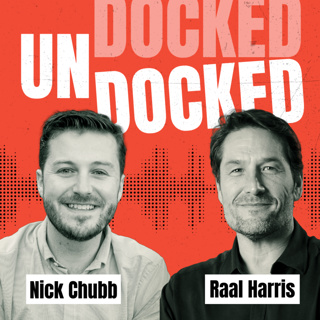
Nick and Raal open the episode in the middle of a rapidly evolving geopolitical crisis. Following airstrikes involving the US, Israel and Iran, the Strait of Hormuz, the critical chokepoint connecting the Arabian Gulf to global shipping lanes, has reportedly been closed by the Iranian Revolutionary Guard. With around 3,200 vessels trapped inside the Gulf, the hosts explore the immediate implications for global shipping, energy markets and the tens of thousands of seafarers now operating in a conflict zone.


The conversation begins with the human reality at sea. Estimates suggest 50–60,000 seafarers are currently aboard ships stranded in the region, highlighting once again how maritime workers often find themselves caught in geopolitical crossfire. Nick explains why merchant vessels are particularly exposed: unlike naval ships, they have no defensive capability against drones or missile attacks, making even routine transits through the strait fraught with risk.


From there, the discussion turns to markets. The Strait of Hormuz handles roughly 20% of global oil and gas exports, and the disruption has already sent energy prices sharply higher. Shipping markets have reacted even faster, with VLCC tanker rates reportedly jumping from recent highs of $132k per day to well over $400k per day, illustrating how geopolitical shocks can rapidly reshape maritime economics.

The hosts also explore the broader ripple effects: war-risk insurance disappearing overnight, container ships potentially stranded inside Gulf hubs, and crew-change logistics thrown into chaos as major aviation hubs close. The episode closes by examining how crises like this often become inflection points, accelerating investment in maritime security, risk intelligence and new technologies across the industry.


Chapters


01:09 Strait of Hormuz closure and ships trapped in the Gulf

07:45 Seafarers caught in the conflict zone

12:36 War-risk insurance collapses

16:10 Energy markets and inflation ripple effects

22:30 Supply chain disruption and container impacts

24:20 Crew-change crisis and aviation hubs

27:18 Maritime security risks and ISPS response

44:57 New maritime risk intelligence tools

47:33 Emerging digital roles in shipping companies


Links


The Mission to Seafarers: https://www.missiontoseafarers.org/our-app


Det här avsnittet är hämtat från ett öppet RSS-flöde och publiceras inte av Podme. Det kan innehålla reklam.

Avsnitt(63)

Shipping’s 2050 Fuel Forecast, Helium Supply Shortages, and 54,000 Sea Miles for One Sausage Roll

Shipping’s 2050 Fuel Forecast, Helium Supply Shortages, and 54,000 Sea Miles for One Sausage Roll

This week, Nick and Raal examine how geopolitical disruption is exposing hidden dependencies across shipping: from helium shortages and future-fuel investment choices to soaring freight markets and cy...

24 Sep 54min

Could Crew Welfare Decide Who Gets Fuel, South Korea's Public AI Bet, and Armageddon

Could Crew Welfare Decide Who Gets Fuel, South Korea's Public AI Bet, and Armageddon

This week, Nick and Raal ask whether bunker suppliers could become an unlikely force for crew welfare, examine why the world map may finally change, and explore South Korea’s bet on sovereign AI. They...

17 Sep 57min

What SMM 2026 Signals for Shipping, the Rise of the Meat Proxy, and the Return of the Spreadsheet

What SMM 2026 Signals for Shipping, the Rise of the Meat Proxy, and the Return of the Spreadsheet

Nick returns from SMM Hamburg with a read on where maritime innovation is actually moving: wind propulsion, nuclear, AI, class and new technology hubs. Raal then digs into digital judgement, conflicti...

10 Sep 53min

Shipping’s Digital Ambition Is Outpacing Its IT Maturity, with Steven Hemmings

Shipping’s Digital Ambition Is Outpacing Its IT Maturity, with Steven Hemmings

Steve Hemmings joins Nick and Raal to examine why maritime IT maturity still lags other sectors, what shipping can learn from cruise and banking, and why cyber resilience, asset visibility, data archi...

3 Sep 56min

Who’s Liable When Ship Control Moves Ashore? Cyber Risk and Maritime Law

Who’s Liable When Ship Control Moves Ashore? Cyber Risk and Maritime Law

This week, Nick and Raal examine what happens when maritime technology moves faster than the legal frameworks around it, from remote ship control and pollution liability to cyber risk and seaworthines...

27 Aug 59min

Extreme Heat Hits Trade, Ships Generate Green Hydrogen, and AI Content Gets Watermarked

Extreme Heat Hits Trade, Ships Generate Green Hydrogen, and AI Content Gets Watermarked

Nick Chubb and Raal Harris examine how extreme heat is reshaping trade, from Rhine water levels and Panama Canal draught limits to pressure on energy systems. They also explore Drift Energy’s hydrogen...

20 Aug 57min

Why AI Could Make Markets More Volatile and Bridgetown’s $500k Port Transformation

Why AI Could Make Markets More Volatile and Bridgetown’s $500k Port Transformation

Nick and Raal examine what good maritime digital transformation looks like, from Bridgetown Port’s low-cost community system to shared vessel inspections and procurement pooling. They then explore AI’...

13 Aug 1h 1min

Are We Making Seafaring Harder Than It Needs to Be? With Steven Jones

Are We Making Seafaring Harder Than It Needs to Be? With Steven Jones

Steven Jones joins Nick Chubb and Raal Harris to examine what the latest Seafarers Happiness Index reveals about life at sea, crew relationships, shore-based wellbeing.Chapters02:16 The origins of the...

6 Aug 57min

Populärt inom Teknik

uppgang-och-fall
natets-morka-sida
elbilsveckan
bilar-med-sladd
market-makers
rss-en-ai-till-kaffet
rss-laddstationen-med-elbilen-i-sverige
rss-elektrikerpodden
rss-technokratin
skogsforum-podcast
rss-ai-med-jonas-benjamin
rss-sakerhetspodcasten
rss-veckans-ai
developers-mer-an-bara-kod
rss-uppgang-och-fall
rss-powerboat-sverige-podcast
rss-fabriken-2
bli-saker-podden
rss-it-sakerhetspodden
rss-snacka-om-ai