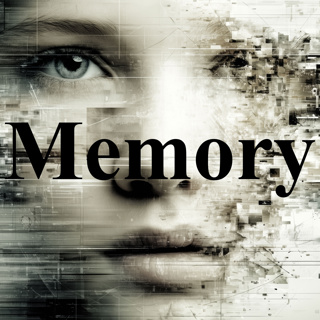
12. The Illusion of Certainty: Why False Memories Feel Real

12. The Illusion of Certainty: Why False Memories Feel Real

Chapter 12 — False Memories and Distortion

In this episode, we confront an unsettling but essential truth: certainty is not proof. The vividness of a memory — and the confidence we feel in it — does not guarantee that it is accurate. False memories are not rare defects in broken minds. They are natural byproducts of a healthy, reconstructive system.

Because memory is rebuilt each time it is recalled, the brain must constantly fill in gaps. We explore the process of “gap filling”, in which the mind uses prior knowledge, expectations, and mental frameworks — known as schemas — to create a coherent narrative. When details are missing, the brain prefers completion over ambiguity.

This episode also distinguishes everyday distortion from confabulation — a condition in which individuals produce confident but entirely fabricated memories. Confabulation is not intentional deception. It reflects a breakdown in the brain’s internal verification systems. When monitoring networks fail, the brain generates plausible stories to preserve continuity and identity.

We examine why these distortions feel so convincing. The brain tends to generate confidence based on coherence — how smoothly a story fits together — rather than on objective verification. A seamless narrative feels true. Disjointed memory feels uncertain. Accuracy and confidence are not the same thing.

By the end of this episode, listeners gain a more realistic understanding of memory’s strengths and vulnerabilities. The same flexibility that allows us to adapt and update beliefs also opens the door to distortion.

Key topics include:

  • The Certainty Trap: Why vividness and confidence are unreliable indicators of truth.
  • Gap Filling and Schemas: How prior knowledge shapes reconstructed memory.
  • Confabulation: Why the brain may generate invented narratives when monitoring systems fail.
  • The Coherence Bias: Why smooth stories feel accurate even when they are not.

Understanding distortion does not weaken trust in memory. It deepens it — by revealing how reconstruction supports both adaptation and vulnerability.

To explore the science of memory’s flexibility — and how it shapes identity and belief — continue in the complete book:

Book: Memory: What Memory Is, Why It Changes, and How We Can Care for It

Avsnitt(20)

Populärt inom Hälsa

somna-med-henrik
rss-bara-en-till-om-missbruk-medberoende-2
inga-beiga-morsor
rss-jossan-nina
angestpodden
rss-vuxna-pa-latsas
rss-viktmedicinpodden
sexnoveller-deluxe
johannes-hansen-podcast
not-fanny-anymore
sova-med-dan-horning
brottarbroder
sa-in-i-sjalen
rss-sjalsligt-avkladd
rss-insikter-fran-utsikter-en-podd-du-mar-bra-av
tyngre-traningssnack
rss-fet-fakta-podcast
sex-pa-riktigt-med-marika-smith
rss-basta-livet
rss-pa-insidan-med-bjorn-rudman