Tchaikovsky Symphony No. 6 (Part 1)

Tchaikovsky Symphony No. 6 (Part 1)

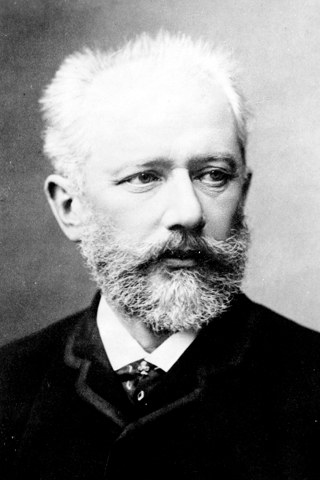
The great and somewhat controversial conductor Leopold Stokowski said this about Tchaikovsky: "His musical utterance comes directly from the heart and is a spontaneous expression of his innermost feeling. It is as sincere as if it were written with his blood." I couldn't agree more with Stokowski, because I think he hits on a word that has made Tchaikovsky's music so powerful to almost every audience that encounters it: sincere. Tchaikovsky's music is so profoundly moving because you feel as if there is no gap between the music and Tchaikovsky's emotions. It's as if he is earnestly speaking to you through his music. But paradoxically, this ability that Tchaikovsky had made him a punching bag of critics and cynics throughout his career and even into today. Even though Tchaikovsky remains one of the most popular composers in the Western Classical canon, his name is still not treated with the respect of a composer like Beethoven or Brahms or other luminaries. I understand that, but I also think Tchaikovsky's skills as a composer are extremely underrated, which brings me to Tchaikovsky's 6th and final symphony, nicknamed the "Pathetique."

Tchaikovsky's 6th symphony essentially rewrites the traditional symphonic form. It is one of the few 19th century symphonies that end quietly, and that ending is one of the most extraordinary and daring in the entire repertoire. It is a piece of remarkable complexity and brilliant construction, and it packs an emotional wallop that leaves you walking out of the hall slightly changed from the way you walked in. In fact, this piece is so multi-layered that I wanted to devote some extra time to it, so I've decided to make this a two-part episode. This week, we're going to talk about the controversies over Tchaikovsky's emotional state as he composed this symphony, and the first two movements of the piece: a massive, 17-minute first movement that ingeniously melds multiple different symphonic forms into one long breath, and a waltz with a twist. We'll get into a lot more detail than we usually do, giving us a chance to really give Tchaikovsky the respect he deserves.

Avsnitt(284)

Beethoven Triple Concerto

Beethoven Triple Concerto

Beethoven's Triple Concerto might be his most heavily criticized work. Musicians look down on it, critics always complain about it, conductors hate conducting it, orchestral musicians hate playing it,...

18 Juni 202051min

Encounters with Milhaud, Messiaen, Stravinsky, Lutoslawski, and Ligeti, with John Heiss

Encounters with Milhaud, Messiaen, Stravinsky, Lutoslawski, and Ligeti, with John Heiss

John Heiss teaches composition, flute, and music history at the New England Conservatory. I first encountered Mr. Heiss in his legendary Schoenberg/Stravinsky class at NEC and have been an admirer of ...

15 Juni 202056min
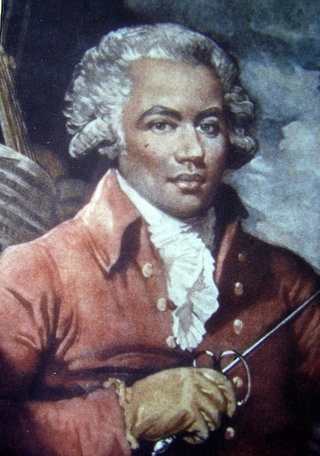
The Life and Music of Le Chevalier de Saint-Georges

The Life and Music of Le Chevalier de Saint-Georges

Just a glance at a biography of Le Chevalier should have every movie producer salivating. He was the son of a 17 year old slave and her white owner. He was an expert athlete, known as the greatest fen...

11 Juni 202046min

Stephen Hough on Practicing Through the Pandemic, Composing, and Classical Music as Entertainment.

Stephen Hough on Practicing Through the Pandemic, Composing, and Classical Music as Entertainment.

First, I want to let my listeners know that Thursday will begin a new commitment to exploring the works of minority composers. It's long past time to begin doing that. For today, please enjoy this tho...

8 Juni 202045min

Bartok Violin Duos and Social Duoing

Bartok Violin Duos and Social Duoing

Bartok's 44 Violin Duos are a triumph of Bartok's devotion to the folk music of Eastern Europe. 42 of the 44 are based on field recordings Bartok collected in his travels, many of which you will hear ...

4 Juni 202056min
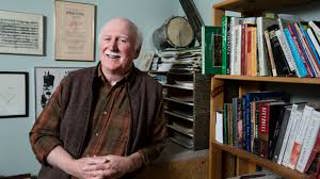
How Musical Revolutions Were Created, Part 2 - w/ Jan Swafford

How Musical Revolutions Were Created, Part 2 - w/ Jan Swafford

Jan Swafford was such a fantastic guest last time that I thought we had to have him back on! During these past two weeks, we discussed how so much of the revolutionary music in the history of classica...

1 Juni 202048min
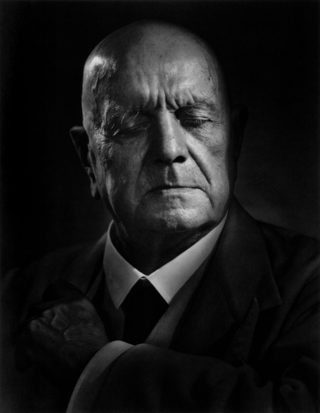
Sibelius Symphony No. 7

Sibelius Symphony No. 7

Sibelius' 7th Symphony is a piece that is barely a symphony at all, and yet it carries symphonic logic throughout. It's only 20 minutes long, in one movement that never stops evolving, with a form tha...

28 Maj 202044min

How Musical Revolutions Were Created, Part 1 - w/Jan Swafford

How Musical Revolutions Were Created, Part 1 - w/Jan Swafford

Jan Swafford was such a fantastic guest last time that I thought we had to have him back on. This week(and next week), we discussed how so much of the revolutionary music in the history of classical m...

25 Maj 202039min

Populärt inom Nöje

mellan-himmel-och-jord-med-jlc
filip-fredrik-svarar
mardromsgasten
rss-p3-musikdokumentar
dialogiskt
chilla-med-de-vet-du
mannen-utan-spar
badfluence
schulman-show
fem-i-topp
skandal
gott-snack-med-fredrik-soderholm
vardagsmysterier
hemma-hos-strage
karatefylla
podme-bio-4
sexet
rss-rockpodden
rss-bl-metal-podcast
rss-made-in-sverige-podcast