Trauma Explained: Big T, Little t, and the Nervous System

Trauma Explained: Big T, Little t, and the Nervous System

What if trauma isn’t defined by the event — but by how your nervous system experienced it?

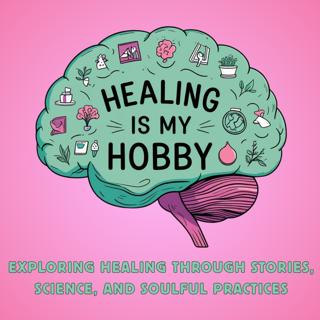
In this episode of Healing Is My Hobby, Jessica Colarco, LCSW, breaks down one of the most misunderstood topics in mental health: trauma.

Many people believe trauma only applies to extreme, life-threatening events. But trauma is actually about nervous system overwhelm — when experiences exceed our capacity to process them in the moment.

Jessica explains the difference between Big T trauma (major life-threatening events) and little t trauma (chronic emotional stress, relational wounds, and repeated experiences of not feeling safe, seen, or supported). Both shape how our nervous system learns to respond to the world.

This conversation reframes trauma through a compassionate, neuroscience-informed lens, helping listeners understand that trauma responses like hyper-vigilance, people-pleasing, emotional numbing, or overworking are not character flaws — they are adaptations your nervous system developed to survive.

The most hopeful part? Trauma is not permanent damage. Because of neuroplasticity, the nervous system can learn new patterns of safety, regulation, and resilience.

If you’ve ever wondered why certain situations trigger strong reactions or patterns you can’t quite explain, this episode offers clarity, understanding, and the first step toward healing.

Key Takeaways
  1. Trauma is defined by nervous system overwhelm, not just by the event itself.
  2. Big T trauma involves life-threatening events, while little t trauma involves chronic emotional stress and relational wounds.
  3. Trauma responses are survival adaptations, not personal weaknesses.
  4. Trauma is often stored in the body and nervous system, shaping how we react to stress.
  5. Through awareness, regulation, and supportive practices, healing is possible.

Chapters

00:00 Introduction and Episode Overview

01:05 Jessica's Background and Focus on Trauma

02:03 Defining Trauma: Nervous System Overwhelm

04:26 Big T Trauma: Life-Threatening Events

06:24 Little T Trauma: Chronic Emotional Experiences

08:06 Why Both Types Matter for Healing

09:04 What Trauma Is Not: Common Misconceptions

11:34 Trauma Is Not Permanent Damage

12:36 Trauma Stored in the Body and Nervous System

14:30 The Body Keeps the Score and Healing Strategies

15:55 Trauma's Impact on the Nervous System

17:52 Trauma Responses and Reactivity

20:18 Shifting from Self-Judgment to Compassion

21:36 Reflective Practice: Noticing Patterns

23:04 The Power of Understanding and Compassion

24:11 Next Steps in Healing and Upcoming Topics

Want to stay in the know? Subscribe to our newsletter here.

Contact Jessica here.

Let's connect:

Instagram: https://www.instagram.com/healingismyhobby/

YouTube: https://www.youtube.com/@healingismyhobby

Would you like to learn more about Jessica’s clinical practice? Click here.

Resources

The Body Keeps the Score by Bessel van der Kolk

What Happened to You by Bruce Perry and Oprah Winfrey

Gabor Maté's The Myth of Normal

trauma, nervous system, healing, big T trauma, little t trauma, mental health, regulation, safety, recovery, neuroplasticity

Avsnitt(36)

Identity Grief: Losing a Version of Yourself

Identity Grief: Losing a Version of Yourself

In this final episode of the April grief series, Jessica explores identity grief — the grief that comes not from death, but from losing a version of yourself. Whether it's a milestone birthday, a care...

20 Apr 14min

Ambiguous Loss: When You're Grieving a Person Who's Still Alive

Ambiguous Loss: When You're Grieving a Person Who's Still Alive

We're three weeks into grief month, and this episode goes somewhere that doesn't get nearly enough airtime — grieving someone who is still alive. Whether you've had to create distance from a relations...

20 Apr 8min

The Grief Nobody Validates

The Grief Nobody Validates

Episode SummaryIn this week's This Might Be a Trauma Response segment, Jessica takes the conversation about grief a layer deeper — moving beyond last week's broad definition of loss into a specific an...

13 Apr 7min

Grief Doesn't Always Look Like Crying

Grief Doesn't Always Look Like Crying

In this month's opening episode, Jessica introduces April's theme: grief — and challenges the widely-held belief that grief only belongs to death. Drawing on clinical definitions and her own therapeut...

6 Apr 6min

Why Am I Like This? The High-Functioning Trauma Edition

Why Am I Like This? The High-Functioning Trauma Edition

This Might Be a Trauma Response: High-Functioning Trauma Healing Is My Hobby | This Might Be a Trauma Response SeriesWhat if the most common sign of trauma isn't falling apart — it's having it all tog...

30 Mars 15min

What Is Trauma, Really? Big T, Little t, and Two Experiments to Try Today

What Is Trauma, Really? Big T, Little t, and Two Experiments to Try Today

Your nervous system isn't broken. It's doing exactly what it was designed to do.But when the danger has passed and the responses stay — the numbness, the sleeplessness, the reactions that feel way too...

23 Mars 20min

Master Your Nervous System: 4 Steps to Calm Mild Triggers

Master Your Nervous System: 4 Steps to Calm Mild Triggers

What if your triggers weren't signs of weakness, but proof your nervous system is working exactly as designed? In this Therapy Is My Cardio workout, Jessica walks you through a four-step real-time reg...

16 Mars 9min

Populärt inom Utbildning

historiepodden-se
rss-bara-en-till-om-missbruk-medberoende-2
det-skaver
nu-blir-det-historia
harrisons-dramatiska-historia
not-fanny-anymore
rss-viktmedicinpodden
johannes-hansen-podcast
allt-du-velat-veta
rss-foraldramotet-bring-lagercrantz
sektledare
roda-vita-rosen
i-vantan-pa-katastrofen
sa-in-i-sjalen
rss-max-tant-med-max-villman
rss-sjalsligt-avkladd
rikatillsammans-om-privatekonomi-rikedom-i-livet
sex-pa-riktigt-med-marika-smith
rss-relationsrevolutionen
rss-pa-insidan-med-bjorn-rudman