
How Stripe built “minions”—AI coding agents that ship 1,300 PRs weekly from Slack reactions | Steve Kaliski (Stripe engineer)
How I AI25 Mars

How Stripe built “minions”—AI coding agents that ship 1,300 PRs weekly from Slack reactions | Steve Kaliski (Stripe engineer)

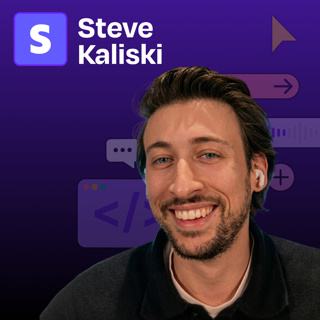
Steve Kaliski is a software engineer at Stripe who has spent the past six and a half years building developer tools and payment infrastructure. He’s part of the team that created “minions”—Stripe’s internal AI coding agents, which now ship approximately 1,300 pull requests per week with minimal human intervention beyond code review. In this episode, Steve demonstrates how Stripe engineers activate development work from Slack and leverage cloud-based development environments for parallel agent workflows, and demos machine-to-machine payments where AI agents transact autonomously with third-party services.


What you’ll learn:

  1. How Stripe’s “minions” write 1,300 pull requests per week with minimal human intervention
  2. Why a good developer experience for humans creates better outcomes for AI agents
  3. The critical role of cloud development environments in unlocking AI-powered engineering velocity
  4. The machine payment protocol that lets AI agents spend money to accomplish tasks
  5. The code review strategy for handling thousands of agent-written PRs
  6. Why non-engineers at Stripe are starting to use minions to ship code
  7. The future of software businesses built primarily for agent consumers

Brought to you by:

Optimizely—Your AI agent orchestration platform for marketing and digital teams

Rippling—Stop wasting time on admin tasks, build your startup faster

In this episode, we cover:

(00:00) Introduction to Steve

(02:39) Stripe’s minions and their effect on Stripe as a whole

(04:42) Why activation energy matters more than execution

(05:44) What is a minion? The technical architecture

(06:52) Demo: Activating a minion from Slack with an emoji

(09:04) Why good developer experience benefits both humans and agents

(11:22) Walking through the agent loop and system prompts

(13:42) Why Stripe chose Goose as their agent harness

(16:00) The role of Stripe’s developer productivity team

(17:15) Why cloud environments unlock multi-threaded AI engineering

(21:14) One-shot prompting: from Slack to shipped PR

(22:04) How Stripe handles code review for 1,300 AI-written PRs weekly

(23:44) Non-engineers using minions across the company

(24:53) Demo: Planning a birthday party with Claude and machine payments

(32:15) Quick recap

(35:08) The future of ephemeral, API-first businesses for agents

(36:36) Lightning round and final thoughts

Detailed workflow walkthroughs from this episode:

• How Stripe's AI 'Minions' Ship 1,300 PRs Weekly from a Slack Emoji: https://www.chatprd.ai/how-i-ai/stripes-ai-minions-ship-1300-prs-weekly-from-a-slack-emoji

• How to Build an Autonomous AI Agent That Pays for Services to Complete Tasks: https://www.chatprd.ai/how-i-ai/workflows/how-to-build-an-autonomous-ai-agent-that-pays-for-services-to-complete-tasks

• How to Automate Code Generation from a Slack Message into a Pull Request: https://www.chatprd.ai/how-i-ai/workflows/how-to-automate-code-generation-from-a-slack-message-into-a-pull-request

Tools referenced:

• Goose (AI agent harness): https://github.com/block/goose

• Claude Code: https://claude.ai/code

• Cursor: https://cursor.sh/

• VS Code: https://code.visualstudio.com/

• Slack: https://slack.com/

• Browserbase: https://browserbase.com/

• Parallel AI: https://www.parallel.ai/

• PostalForm: https://postalform.com/

• Stripe Climate: https://stripe.com/climate

Other references:

• Stripe machine payments: https://docs.stripe.com/payments/machine

• Blue-Green Deployment: https://martinfowler.com/bliki/BlueGreenDeployment.html

• Git worktrees: https://git-scm.com/docs/git-worktree

Where to find Steve Kaliski:

Twitter: https://twitter.com/stevekaliski

LinkedIn: https://www.linkedin.com/in/steve-kaliski-079a7710/

Where to find Claire Vo:

ChatPRD: https://www.chatprd.ai/

Website: https://clairevo.com/

LinkedIn: https://www.linkedin.com/in/clairevo/

X: https://x.com/clairevo

Production and marketing by https://penname.co/. For inquiries about sponsoring the podcast, email jordan@penname.co.

Avsnitt(67)

From Figma to Claude Code and back | Gui Seiz & Alex Kern (Figma)

From Figma to Claude Code and back | Gui Seiz & Alex Kern (Figma)

Most teams are still passing static design files back and forth, and most Figma files are already out of date by the time they reach engineering. Gui Seiz (designer) and Alex Kern (engineer) from Figm...

11 Mars 40min

Mastering Midjourney: How to create consistent, beautiful brand imagery without complex prompts | Jamey Gannon

Mastering Midjourney: How to create consistent, beautiful brand imagery without complex prompts | Jamey Gannon

Jamey Gannon is an AI creative director who specializes in creating consistent, beautiful brand imagery using AI tools. In this episode, Jamey demonstrates her streamlined workflow for generating cohe...

9 Mars 49min

How Coinbase scaled AI to 1,000+ engineers | Chintan Turakhia

How Coinbase scaled AI to 1,000+ engineers | Chintan Turakhia

Chintan Turakhia is Senior Director of Engineering at Coinbase, where he’s led the transformation of a 1,000-plus-engineer organization to embrace AI tools at scale. When tasked with rewriting Coinbas...

2 Mars 58min
5 OpenClaw agents run my home, finances, and code | Jesse Genet

5 OpenClaw agents run my home, finances, and code | Jesse Genet

Jesse Genet is a homeschooling parent and entrepreneur who runs her household with five specialized OpenClaw agents. She layers them on top of her Obsidian “second brain,” deploys each on its own Mac ...

25 Feb 49min
“I haven’t written a single line of front-end code in 3 months”: How Notion’s design team uses Claude Code to prototype

“I haven’t written a single line of front-end code in 3 months”: How Notion’s design team uses Claude Code to prototype

Brian Lovin is a designer at Notion AI who has transformed how the design team builds prototypes, by creating a shared code environment powered by Claude Code. Instead of designers working in isolated...

23 Feb 51min

How this visually impaired engineer uses Claude Code to make his life more accessible | Joe McCormick

How this visually impaired engineer uses Claude Code to make his life more accessible | Joe McCormick

Joe McCormick is a principal software engineer at Babylist who lost most of his central vision due to a rare genetic disorder right before starting college. He pivoted from mechanical engineering to c...

16 Feb 49min

Claude Opus 4.6 vs. GPT-5.3 Codex: How I shipped 93,000 lines of code in 5 days

Claude Opus 4.6 vs. GPT-5.3 Codex: How I shipped 93,000 lines of code in 5 days

I put the newest AI coding models from OpenAI and Anthropic head-to-head, testing them on real engineering work I’m actually doing. I compare GPT-5.3 Codex with Opus 4.6 (and Opus 4.6 Fast) by asking ...

11 Feb 30min

How to build your own AI developer tools with Claude Code | CJ Hess (Tenex)

How to build your own AI developer tools with Claude Code | CJ Hess (Tenex)

CJ Hess is a software engineer at Tenex who has built some of the most useful tools and workflows for being a “real AI engineer.” In this episode, CJ demonstrates his custom-built tool, Flowy, that tr...

9 Feb 53min

Populärt inom Teknik

uppgang-och-fall
elbilsveckan
market-makers
rss-elektrikerpodden
bilar-med-sladd
skogsforum-podcast
rss-uppgang-och-fall
rss-laddstationen-med-elbilen-i-sverige
developers-mer-an-bara-kod
rss-veckans-ai
natets-morka-sida
bli-saker-podden
rss-powerboat-sverige-podcast
rss-technokratin
rss-fabriken-2
rss-snacka-om-ai
teknikveckan
hej-bruksbil
kodsnack
rss-digitala-influencer-podden