382E-418-Fireball II

382E-418-Fireball II

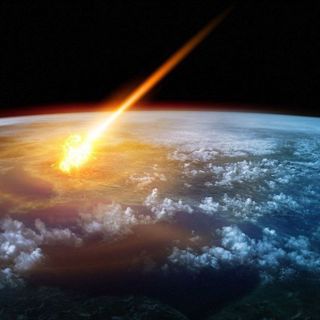
Recently there were four fireball meteors, brighter than the planet Venus, which exploded over Germany, France, Ohio, and Arizona within the space of only 10 hours. A total of 1320 individuals were treated to light shows and reported their observations to the American Meteor Society. The one which exploded over Arizona was probably several feet in diameter and entered the Earth's atmosphere over Flagstaff. This event was observed in Arizona, California, Nevada, Utah, New Mexico, and Colorado. It was recorded by numerous electronic security and dashboard cameras and was visible for from 3 to 7 seconds. This meteor also produced a booming sound which was reported by about a dozen different observers. The fireball was last seen over Happy Jack, Arizona and is likely to have produced meteorite fragments which are scattered along Interstate 17 somewhere in the rugged country between Phoenix and Flagstaff. There are likely to be on the order of 1,000 fireball events over the Earth every day. Most of them occur over the oceans or during the day and pass unobserved by humans. During the first 10 months of 2017 the most energetic fireball event occurred when a meteoroid entered the Earth's atmosphere at 8.5 miles/second above the ocean between Australia and Antartica. If you record a fireball with your dash cam or security camera report it to the American Meteor Society. Your data will be very important in finding out where it came from in the solar system as well as to indicate where it might be possible to find pieces of it on the ground.

Det här avsnittet är hämtat från ett öppet RSS-flöde och publiceras inte av Podme. Det kan innehålla reklam.

Avsnitt(1000)

918-Auroras from Space

918-Auroras from Space

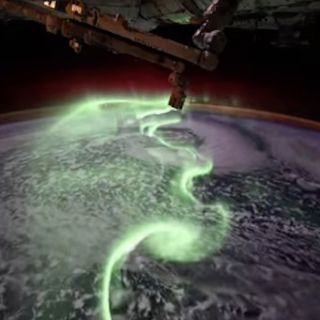
The northern lights or Aurora Borealis have fascinated humans throughout the ages. Today aurora watching is a multimillion dollar industry in places like Alaska, Canada, Norway, Sweden, Finland, Green...

25 Sep 2min
407E-448-Two PHA's

407E-448-Two PHA's

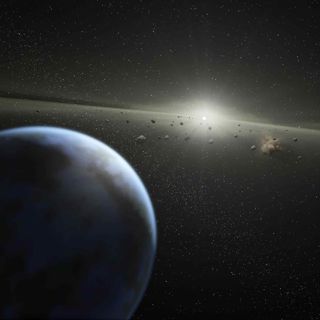
The large dangerous asteroids that we don't know about are what keep asteroid hunters going to the telescope.

22 Sep 2min
917-Space Dust

917-Space Dust

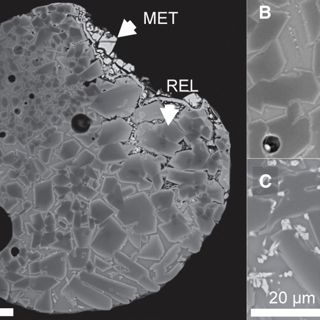
As the Earth orbits the Sun at 18.5 mi/s it sweeps up about 100 tons of micrometeorites and space dust every day of which some 14 tons eventually makes it to the ground. You can even find some of thes...

18 Sep 2min
406E-447-Nuking An Asteroid

406E-447-Nuking An Asteroid

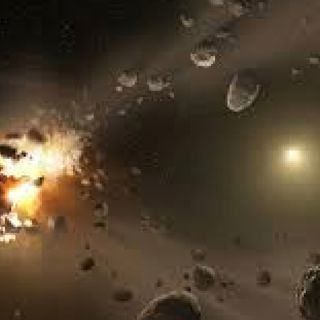
Tonight, even though the chances are extremely slim, an asteroid hunter could find a sizable asteroid on a collision course with planet Earth. If we have decades warning, the potential impactor's arri...

15 Sep 2min
916-Past Glory

916-Past Glory

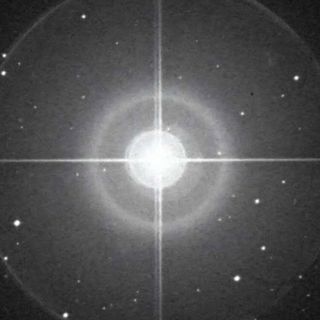
When accurately recorded historical observations do not agree with what we what we see today it is often very rewarding to find out why. In modern telescopes we see Theta Eridani to a be pair separate...

11 Sep 2min

405E-446-Asteroid Homestead

405E-446-Asteroid Homestead

In the future one can envision a space mining family boarding a descendent of the SpaceX Falcon Heavy Launch Vehicle for a trip into low Earth orbit. A few hundred miles above the Earth's surface they...

8 Sep 2min
915-Raining Comets

915-Raining Comets

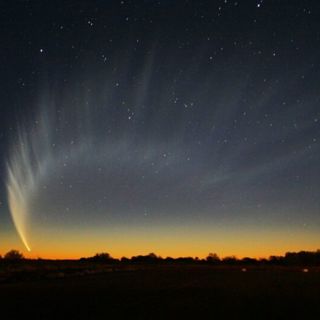
The comets we observe generally start out as icy dirty snowballs of frozen gases like water and frozen carbon dioxide in the Oort cloud. If recent scientific analysis is correct, we are now witnessing...

4 Sep 2min
404E-445-Not So Secret

404E-445-Not So Secret

A partnership of humans and computers will help to minimize the damage when asteroid hunters find a space rock with our number on it.

1 Sep 2min

Populärt inom Vetenskap

dumma-manniskor
p3-dystopia
rss-mottagningen
allt-du-velat-veta
angestpodden
kapitalet-en-podd-om-ekonomi
rss-ronden
det-morka-psyket
ufo-sverige
svd-nyhetsartiklar
4health-med-anna-sparre
sexet
rss-vetenskapsradion
rss-arkeologi-historia-podden-som-graver-i-vart-kulturlandskap
bildningspodden
rss-spraket
rss-vetenskapsradion-2
ideer-som-forandrar-varlden
rss-ufobortom-rimligt-tvivel
rss-geopodden-2