
From Hype to Reality: What Machine Learning Can Actually Do

From Hype to Reality: What Machine Learning Can Actually Do

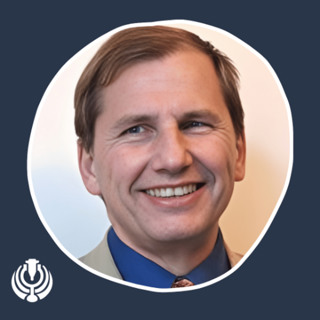
“You can't be stationary in this field. I've never seen anything like it." Machine learning is changing geophysics faster than most people expected, but knowing what actually works versus what is hype is still unclear. Jerry Schuster explains why combining physics, intuition, and hands-on coding is the real advantage that many overlook. He also reveals a surprising shift where AI can act like a “free graduate student,” opening new possibilities while raising important questions about creativity and the future of work. KEY TAKEAWAYS > Big picture plus hands-on learning is the real advantage: Understanding concepts is not enough, doing the work yourself is what turns knowledge into lasting skill. > Physics and machine learning are stronger together: Combining both approaches can outperform either one alone, giving geophysicists a powerful edge. > AI is a tool, not a replacement: Used well, it expands your abilities and speeds up work, but creative thinking still depends on you. LINKS * Practical Machine Learning Methods in Geosciences 2026 virtual (China time zone): 12-13 May -> https://seg.org/shop/product/?id%20=product&id=d7c3ffd8-f69a-f011-b41b-6045bda9b090 * Practical Machine Learning Methods in Geosciences 2026 virtual (North America Time zone): 19-20 May -> https://seg.org/shop/product/?id%20=product&id=c92e0916-51fd-f011-8406-7c1e525c17aa * Buy Machine Learning Methods in Geoscience by Gerard Schuster, featuring hands-on MATLAB and Colab labs. -> https://library.seg.org/doi/epdf/10.1190/1.9781560804048.fm * Listen to his previous interview on his book, Machine Learning Methods in Geoscience -> https://seg.org/podcasts/episode-249-machine-learning-methods-in-geoscience/ GUEST BIO Gerard Schuster has an M.S. (1982) and a Ph.D. (1984) from Columbia University and was a postdoctoral researcher there from 1984 to 1985. From 1985 to 2009, he was a professor of geophysics at the University of Utah and became a professor of geophysics at KAUST (2009–2021). He is currently a research professor at the University of Utah. He received several teaching and research awards while at the University of Utah. He was editor of GEOPHYSICS 2004–2005 and was awarded SEG’s Virgil Kauffman Gold Medal in 2010 for his work in seismic interferometry. SEG published Gerard's book Seismic Inversion in late 2017 and Machine Learning Methods in Geoscience in 2024. ABOUT SEISMIC SOUNDOFF Seismic Soundoff showcases conversations addressing the challenges of energy, water, and climate. Produced by the Society of Exploration Geophysicists (SEG) and hosted by Andrew Geary of 51 features, these episodes celebrate and inspire the geophysicists of today and tomorrow. Three new episodes monthly. See the full archive at https://seg.org/resources/podcast/.

Det här avsnittet är hämtat från ett öppet RSS-flöde och publiceras inte av Podme. Det kan innehålla reklam.

Avsnitt(307)

Why SEG Is Building a Home for Mining Geophysics

Why SEG Is Building a Home for Mining Geophysics

"That’s what we’re trying to achieve with this forum: bringing all the people together with different backgrounds and create this community, which I don’t think fully exists right now.” Jiajia Sun an...

18 Juni 30min

The Human Side of Volcano Monitoring

The Human Side of Volcano Monitoring

"I feel like we are making a change in the way that people now see the volcanoes and see the earthquakes in El Salvador. So in that sense, I think we are making a a big change.” Adonay Martinez Coto ...

11 Juni 33min

How Geophysics Connects Curiosity, Science, and Career Opportunity

How Geophysics Connects Curiosity, Science, and Career Opportunity

“If you're curious about geophysics, there's definitely a place in geophysics for you. The field is so interdisciplinary.” Johanna Villagomez joins Andrew Geary to share how curiosity, fieldwork, stu...

4 Juni 23min

What Geophysicists Gain by Attending URTeC

What Geophysicists Gain by Attending URTeC

"Integration, literally, that's why the URTeC is successful.” Marianne Rauch joins Andrew Geary to explain why URTeC 2026 matters for geophysicists who want their work to shape real field decisions. ...

21 Maj 25min

Why Geophysicists Are Paying More Attention to Groundwater

Why Geophysicists Are Paying More Attention to Groundwater

“The concept of mapping the aquifer from the sky, that’s gigantic. It could change how aquifers are managed around the world.” Seogi Kang and Mike Wilt explain why groundwater is becoming one of the ...

14 Maj 28min

The Hidden Opportunity in Critical Minerals That Geophysicists Can’t Ignore

The Hidden Opportunity in Critical Minerals That Geophysicists Can’t Ignore

“We all realize that we need a lot more mineral resources in the next two decades. And we realized that geophysics can play a critical role.” Sarah Devriese and Jiajia Sun explain why demand for crit...

7 Maj 26min

OTC 2026 Emerging Leaders on the Future of Offshore Energy Collaboration

OTC 2026 Emerging Leaders on the Future of Offshore Energy Collaboration

“Nothing can happen in a vacuum anymore. We need to have the developers talking to the geoscientists, talking to the environmental professionals.” Two OTC 2026 Emerging Leaders share why the future o...

23 Apr 28min

Why Seismic Acquisition Is Making a Quiet Comeback

Why Seismic Acquisition Is Making a Quiet Comeback

"What has happened in the last few years is exploration overall has taken a little bit of a backseat. So they are starting to relook at seismic acquisition to explore new areas and solve more complex ...

16 Apr 27min

Populärt inom Vetenskap

p3-dystopia
dumma-manniskor
allt-du-velat-veta
kapitalet-en-podd-om-ekonomi
svd-nyhetsartiklar
bildningspodden
medicinvetarna
sexet
rss-kriminologerna
rss-spraket
halsorevolutionen
dumforklarat
paranormalt-med-caroline-giertz
rss-ufobortom-rimligt-tvivel
ufo-sverige
det-morka-psyket
doden-hjarnan-kemisten
rss-vetenskapsradion
rss-vetenskapsradion-2
4health-med-anna-sparre