Who is That in the Mirror? Self-awareness Affects How We See Our Own Faces

Who is That in the Mirror? Self-awareness Affects How We See Our Own Faces

Did you know that the way you see yourself in the mirror is different from the self in photos? This episode touches on fascinating research on the different pathways involved in what scientists call the mirrored versus the non-mirrored self.

Ever wondered what’s actually going on in your mind when you look at yourself in the mirror? According to science, our faces in the mirror versus our faces seen on photographs of ourselves are supposed to be nearly identical. Yet, the truth is we know we somehow look different. Why is that so? The rise of mental health disorders related to body-image has been linked to social media use, in particular following and engaging with celebrity accounts. Being excessively concerned about how we are portrayed on social media, the overvaluation of likes and comments also puts us at risk. But there is a deeper root to the problem—what actually happens when we take on our digital identities? It all boils down to thinking of what others are thinking of us, and that proves to be a psychologically risky path.

In a 2008 paper, Self-awareness affects vision, Eric et al. wanted to determine if high level mental factors such as states of self-awareness can influence perception— and it turns out that our consciousness can be manipulated to cause us to “see” our faces differently. More specifically, in this experiment he wanted to see if there was a difference between how we see the mirrored self, versus the one in a photograph for example. In essence, what he found was that when we are looking at ourselves in the mirror, our awareness is directed internally, the same for instance when we are told to focus on our own breathing, which was what he asked the participants to do. On the other hand, when we look at our faces on photographs our awareness is directed externally. Now what exactly does that mean?

An example is when we are told to think about our strengths and weaknesses. When we do so we are actually thinking of ourselves through the eyes of others i.e. what are others thinking when they look at me? So the researchers actually found the fascinating shift in our self-awareness when we are looking at images of our faces, which change from internally-directed self-awareness in the case of our faces in the mirror, to externally, socially directed self-awareness. Now what do you think are the implications of this? The experiment was performed way before the advent of social media—Instagram was launched in 2010 but really took off about 2014 or so.

The digital self on social media is the epitome of the image that is primarily perceived by an externally-directed self-awareness. And that of course raises questions as to what happens to our psyches when we become obsessed instead with what others think of us?

Instagram has been linked to body-image related mental health burden like anxiety, depression and body dysmorphic disorder. But what research really shows is that it is not the platform itself but the following of celebrity accounts, engaging with them and excessively curating photos that puts one at risk. Also, back in 2008, smartphones were still not invented, and selfies were not possible the way it is now. Do you think the brain perceives selfies via internally-directed self-awareness, like one looking into a mirror, or via externally directed self-awareness i.e. thinking of what others think of you? Let me know in the comments.

If you enjoyed this episode, please leave us a 5-star review on Spotify and Apple podcasts so the podcast can be enjoyed by more people!

Want more of our podcast? Episode Recaps and Notes: https://www.scienceofbeauty.net/⁠⁠; Instagram: ⁠⁠@drteowanlin

Podcast Transcript: https://scienceofbeauty.net/who-is-that-in-the-mirror-self-awareness-affects-how-we-see-our-own-faces/

Det här avsnittet är hämtat från ett öppet RSS-flöde och publiceras inte av Podme. Det kan innehålla reklam.

Avsnitt(158)

A Dermatologist’s Guide to Boosting Mitochondrial Energy with Signature Purple Code® LED Light Therapy

A Dermatologist’s Guide to Boosting Mitochondrial Energy with Signature Purple Code® LED Light Therapy

Have you ever felt that your skincare has simply stopped working? Even with gold-standard serums and disciplined ten-step rituals, results often plateau—a phenomenon known as tachyphylaxis, where the ...

13 Maj 8min
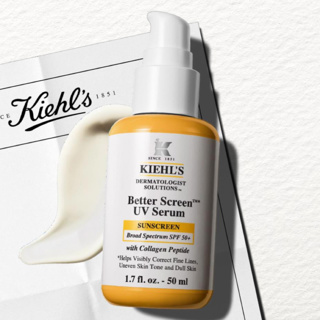
Sunscreen Serums Masterclass: The Science of Collagen Peptides & Skincare Hacks

Sunscreen Serums Masterclass: The Science of Collagen Peptides & Skincare Hacks

Is your sunscreen doing more than just blocking the sun? In this masterclass, I explore the revolutionary shift toward sunscreen serums and how sun protection has moved far beyond merely blocking UV r...

11 Maj 9min
Why Plant Adaptogens Work for Zonal Dysbiosis: The Science of the O-Zone

Why Plant Adaptogens Work for Zonal Dysbiosis: The Science of the O-Zone

Is your skin behaving like two different ecosystems? If you are struggling with an oily T-zone alongside parched, sensitive cheeks, you aren’t just dealing with combination skin—you are experiencing Z...

8 Apr 13min

The Brain-Skin Axis: Bridging Psychodermatology & AI-Biotech

The Brain-Skin Axis: Bridging Psychodermatology & AI-Biotech

In this special editorial supplement to our podcast, we dive into the clinical evidence supporting the Brain-Skin Axis—the bidirectional ecosystem where the nervous system and skin cells interact. As ...

7 Apr 4min

Do retinoids thin your skin? Mastering Retinoids: Dermal Remodelling vs. Stratum Corneum Thinning

Do retinoids thin your skin? Mastering Retinoids: Dermal Remodelling vs. Stratum Corneum Thinning

I break down the histological reality of how retinoids affect the cellular matrix.While social media often warns that these ingredients "thin" the skin, the peer-reviewed evidence tells a different st...

18 Mars 10min

Dermatologist Guide: Retinoids, Skin Barrier Health, and Lessons from Asian Skin

Dermatologist Guide: Retinoids, Skin Barrier Health, and Lessons from Asian Skin

Do retinoids thin the skin? No. In fact, they induce dermal remodeling that strengthens your skin’s foundation. But if you’re Asian, the answer to the retinoid burn is more nuanced than the standard p...

18 Mars 31s

Is Oxygen the Secret to Resilient Asian Skin?

Is Oxygen the Secret to Resilient Asian Skin?

In this episode of The Dermatologist Talks: Science of Beauty, I’m taking you inside the glass-walled laboratories of LVMH Research to discuss a breakthrough dominating the conversation in 2026: the i...

11 Mars 9min

Beyond Collagen: Dior Ox-C & The 12 Hallmarks of Aging

Beyond Collagen: Dior Ox-C & The 12 Hallmarks of Aging

A glimpse into the Dior International Skincare Summit in Tokyo, which I had the pleasure of attending in October 2025. The LVMH Recherche team shared a groundbreaking deconstruction of the 12 Hallmark...

10 Mars 1min

Populärt inom Hälsa

somna-med-henrik
rss-bara-en-till-om-missbruk-medberoende-2
inga-beiga-morsor
johannes-hansen-podcast
rss-vuxna-pa-latsas
not-fanny-anymore
angestpodden
sexnoveller-deluxe
sa-in-i-sjalen
sova-med-dan-horning
rss-viktmedicinpodden
brottarbroder
giggles-med-wiggles
smartare-fitness-podden
rss-hos-psykologen
sinnessjukt
rss-traningsklubben
rss-stark-sarbar
dodsdomar
rss-sjalsligt-avkladd