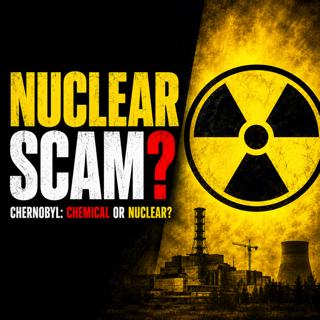

The Nuclear Scare SCAM. Russia Did NOT Develop Their Own Nuclear Atomic Weapon: FDR Sent Them USA Plans.  Was Chernobyl Chemical or Nuclear?

The Nuclear Scare SCAM. Russia Did NOT Develop Their Own Nuclear Atomic Weapon: FDR Sent Them USA Plans. Was Chernobyl Chemical or Nuclear?

Chernobyl Wasn't Just an Explosion—People Stayed, Ate Contaminated Food, and Kept Working While the Danger Spread, and Many Questions Still Aren't Fully Answered

Clip: Galen Winsor - What stopped plutonium economy? - YouTube

Bad Moon Rising (Remastered 1985)

The official story of the Chernobyl disaster centers on radiation—but what if that narrative is only part of the record? In this episode, we examine how exposure was defined, measured, and ultimately controlled. Workers were assigned radiation "doses"—often estimated after the fact—while overlapping symptoms like nausea, fatigue, neurological disruption, and long-term illness blurred the line between radiation injury and broader toxic exposure. From Cold War nuclear testing to civilian reactor expansion, a pattern emerges: rapid exposure, delayed response, and a simplified public explanation that prioritizes clarity over complexity.

This investigation breaks down how "radiation medicine" became the framework for tracking and managing health outcomes—while leaving critical gaps in attribution, accountability, and long-term risk. Millions were entered into registries, but not all were treated equally, tracked consistently, or fully understood. When exposure pathways overlap and data is incomplete, liability becomes negotiable—and that's where the real story begins. Bottom line: the disaster didn't just contaminate land and bodies—it shaped the narrative of what counts as harm, and who gets to define it.

Russia-UK and USA Nuclear Power Plants-First Nuclear Power Plant in RUSSIA -UK and USA ALL lied to public. Nuclear Plants create Dirty Electricity over time as bad or worse than Ionizing Radiation. Directly INTO our homes.

The U.S. Army explored using radioactive poisons to assassinate important individuals such as military or civilian leaders, according to newly declassified docs. Approved at the highest levels of the Army in 1948, the effort was a well-hidden secret….

Summary of KNOWN testing/Research, scroll to bottom: SMART Meters & Electricity – Bioterrorism

Animal Studies: Research on mice exposed to chronic low-dose-rate ionizing radiation has shown molecular alterations in the hippocampus, a brain region crucial for memory and learning, resembling those found in Alzheimer's disease. Connection Between Ionizing Radiation and Alzheimer's Disease (cbrnecentral.com)

Declassified Document: "U.S. Army explored using radioactive poisons to assassinate 'important individuals'" - Global ResearchGlobal Research - Centre for Research on Globalization

World War II casualties of the Soviet Union - Wikipedia

Nuclear Power in the World Today - World Nuclear Association

Countries with Nuclear Weapons 2026

Capture of Chernobyl - Wikipedia

Nuclear power in Russia - Wikipedia

Dissolution of the Soviet Union - Wikipedia

The Undoing Of The U.S.S.R.: How It Happened

Dissolution of Soviet Union 1991, Factors, Consequences

The genetic effects of Chernobyl radiation exposure | National Institutes of Health (NIH)

Prevalence of Thyroid Nodules in Residents of Ukraine Exposed as Children or Adolescents to Iodine-131 from the Chornobyl Accident - PubMed

Lack of transgenerational effects of ionizing radiation exposure from the Chernobyl accident - PubMed

Risk of clonal hematopoiesis in families exposed to radiation following the Chornobyl accident - PubMed

Do you have a psychopath in your life? The best way to find out is read my book. BOOK *FREE* Download – Psychopath In Your Life4

Support is Appreciated: Support the Show – Psychopath In Your Life

Tune in: Podcast Links – Psychopath In Your Life

Download Pods here: TOP PODS – Psychopath In Your Life

My old discussion forum with last 10 years of victim stories, is back online. Psychopath Victim Support Community | Forums powered by UBB.threads™

Google Maps My HOME Address: 309 E. Klug Avenue, Norfolk, NE 68701 SMART Meters & Timelines – Psychopath In Your Life

Declassified Document: "U.S. Army explored using radioactive poisons to assassinate 'important individuals'"

US Considered Radiological Weapon
by Robert Burns

October 9, 2007. Associated Press. In one of the longest-held secrets of the Cold War, the U.S. Army explored the potential for using radioactive poisons to assassinate "important individuals" such as military or civilian leaders, according to newly declassified documents obtained by The Associated Press.

Approved at the highest levels of the Army in 1948, the effort was a well-hidden part of the military's pursuit of a "new concept of warfare" using radioactive materials from atomic bombmaking to contaminate swaths of enemy land or to target military bases, factories or troop formations.

Military historians who have researched the broader radiological warfare program said in interviews that they had never before seen evidence that it included pursuit of an assassination weapon. Targeting public figures in such attacks is not unheard of; just last year an unknown assailant used a tiny amount of radioactive polonium-210 to kill Kremlin critic Alexander Litvinenko in London.

No targeted individuals are mentioned in references to the assassination weapon in the government documents declassified in response to a Freedom of Information Act request filed by the AP in 1995.

The decades-old records were released recently to the AP, heavily censored by the government to remove specifics about radiological warfare agents and other details. The censorship reflects concern that the potential for using radioactive poisons as a weapon is more than a historic footnote; it is believed to be sought by present-day terrorists bent on attacking U.S. targets.

The documents give no indication whether a radiological weapon for targeting high-ranking individuals was ever used or even developed by the United States. They leave unclear how far the Army project went. One memo from December 1948 outlined the project and another memo that month indicated it was under way. The main sections of several subsequent progress reports in 1949 were removed by censors before release to the AP.

The broader effort on offensive uses of radiological warfare apparently died by about 1954, at least in part because of the Defense Department's conviction that nuclear weapons were a better bet.

Whether the work migrated to another agency such as the CIA is unclear. The project was given final approval in November 1948 and began the following month, just one year after the CIA's creation in 1947.

It was a turbulent time on the international scene. In August 1949, the Soviet Union successfully tested its first atomic bomb, and two months later Mao Zedong's communists triumphed in China's civil war.

As U.S. scientists developed the atomic bomb during World War II, it was recognized that radioactive agents used or created in the manufacturing process had lethal potential. The government's first public report on the bomb project, published in 1945, noted that radioactive fission products from a uranium-fueled reactor could be extracted and used "like a particularly vicious form of poison gas."

Among the documents released to the AP – an Army memo dated Dec. 16, 1948, and labeled secret – described a crash program to develop a variety of military uses for radioactive materials. Work on a "subversive weapon for attack of individuals or small groups" was listed as a secondary priority, to be confined to feasibility studies and experiments.

The top priorities listed were:

1 – Weapons to contaminate "populated or otherwise critical areas for long periods of time." 2 – Munitions combining high explosives with radioactive material "to accomplish physical damage and radioactive contamination simultaneously." 3 – Air and-or surface weapons that would spread contamination across an area to be evacuated, thereby rendering it unusable by enemy forces. The stated goal was to produce a prototype for the No. 1 and No. 2 priority weapons by Dec. 31, 1950.

The 4th ranked priority was "munitions for attack on individuals" using radioactive agents for which there is "no means of therapy."

"This class of munitions is proposed for use by secret agents or subversive units for lethal attacks against small groups of important individuals, e.g., during meetings of civilian or military leaders," it said.

Assassination of foreign figures by agents of the U.S. government was not explicitly outlawed until President Gerald R. Ford signed an executive order in 1976 in response to revelations that the CIA had plotted in the 1960s to kill Cuban President Fidel Castro, including by poisoning.

The Dec. 16, 1948, memo said a lethal attack against individuals using radiological material should be done in a way that makes it impossible to trace the U.S. government's involvement, a concept known as "plausible deniability" that is central to U.S. covert actions.

"The source of the munition, the fact that an attack has been made, and the kind of attack should not be determinable, if possible," it said. "The munition should be inconspicuous and readily transportable."

Radioactive agents were thought to be ideal for this use, the document said, because of their high toxicity and the fact that the targeted individuals could not smell, taste or otherwise sense the attack.

"It should be possible, for example, to develop a very small munition which could function unnoticeably and which would set up an invisible, yet highly lethal concentration in a room, with the effects noticeable only well after the time of attack," it said.

"The time for lethal effects could, it is believed, be controlled within limits by the amount of radioactive agent dispersed. The toxicities are such that should relatively high concentrations be required for early lethal effects, on a weight basis, even such concentrations may be found practicable."

Tom Bielefeld, a Harvard physicist who has studied radiological weapons issues, said that while he had never heard of this project, its technical aims sounded feasible.

Bielefeld noted that polonium, the radioactive agent used to kill Litvinenko in November 2006, has just the kind of features that would be suitable for the lethal mission described in the Dec. 16 memo.

Barton Bernstein, a Stanford history professor who has done extensive research on the U.S. military's radiological warfare efforts, said he did not believe this aspect had previously come to light.

"This is one of those items that surprises us but should not shock us, because in the Cold War all kinds of ways of killing people, in all kinds of manners – inhumane, barbaric and even worse – were periodically contemplated at high levels in the American government in what was seen as a just war against a hated and hateful enemy," Bernstein said.

The project was run by the Army Chemical Corps, commanded by Maj. Gen. Alden H. Waitt, and supervised by a now-defunct agency called the Armed Forces Special Weapons Project. The project's first chief was Maj. Gen. Leslie R. Groves, the Army's head of the Manhattan Project that built the first atomic bombs. The radiological project was approved by Groves' successor, Maj. Gen. Kenneth D. Nichols.

The released documents were in files of the Armed Forces Special Weapons Project held by the National Archives.

Among the officials copied in on the Dec. 16 memo were Herbert Scoville, Jr., then the technical director of the Armed Forces Special Weapons Project and later the CIA's deputy director for research, and Samuel T. Cohen, a physicist with RAND Corp. who had worked on the Manhattan Project.

The initial go-ahead for the Army to pursue its radiological weapons project was given in May 1948, a point in U.S. history, following the successful use of two atomic bombs against Japan to end World War II, when the military was eager to explore the implications of atomic science for the future of warfare.

In a July 1948 memo outlining the program's intent, before specifics had received final approval, a key focus was on long-lasting contamination of large land areas where residents would be told that unless the areas were abandoned they probably would die from radiation within one to 10 years.

"It is thought that this is a new concept of warfare, with results that cannot be predicted," it said. Declassified Document: "U.S. Army explored using radioactive poisons to assassinate 'important individuals'" - Global ResearchGlobal Research - Centre for Research on Globalization

What is true about the 1940s microwave work

It represents the first systematic study of human exposure to high-power microwave radiation (driven by radar)

It raised new concerns about:

  • Occupational exposure (radar operators, technicians)
  • Non-ionizing radiation effects (heating, tissue-specific absorption)

It helped establish the idea that:
radiation doesn't have to be ionizing to cause biological harm

What is not true

Humans had already been exposed to—and in some cases experimented on with—other forms of radiation decades earlier.

Earlier radiation exposure and experimentation

X-rays (1895 onward)

  • Rapid adoption in medicine
  • Early users (doctors, technicians) suffered burns, cancers
  • Safety standards came after damage

Radioactivity (early 1900s)

  • Discovered by Henri Becquerel
  • Expanded by Marie Curie
  • Widespread exposure before risks were understood

Early 20th century (1900s–1930s)

  • Medical radiation treatments used aggressively
  • Industrial exposure (e.g., luminous dial painters)
  • Minimal informed consent by modern standards

What makes microwave research different

New category of radiation

Microwaves = non-ionizing radiation

Earlier concerns focused on ionizing radiation (X-rays, radium)

Military-driven exposure

Radar created:

  • Sustained, high-intensity exposure
  • Large populations of personnel exposed
Shift in research intent
  • Earlier radiation:
    → framed as medical innovation
  • Microwave era:
    → framed as operational hazard control
"Radiation experiments on humans didn't start with microwaves. They started decades earlier—with X-rays and radioactive materials. Post-WWII → Cold War → Nuclear Age Timeline 1945 — War Ends, Tension Begins

May 1945: Nazi Germany surrenders; Soviet Union devastated (≈20–27 million dead)

July–August 1945 — Potsdam Conference

  • U.S.–Soviet tension already visible
  • Harry S. Truman replaces Franklin D. Roosevelt → harder line on Joseph Stalin
  • Alliance was tactical, not built to last

1946–1947 — Cold War Becomes Real
  • 1946 — Iron Curtain Speech (Winston Churchill) → Europe formally divided
  • 1947 — Truman Doctrine → U.S. moves to contain Soviet expansion
  • 1947 — Marshall Plan → Soviets reject and block Eastern Europe

→ By 1947: ideological conflict is active policy

In a July 1948 memo outlining the program's intent, before specifics had received final approval, a key focus was on long-lasting contamination of large land areas where residents would be told that unless the areas were abandoned they probably would die from radiation within one to 10 years.

Why It Broke Fast

  • Competing systems: U.S. (open markets) vs Soviet Union (controlled buffer zone)
  • Deep WWII mistrust
  • Power vacuum after Germany collapses

1946–1958 — U.S. Nuclear Testing (Marshall Islands)
  • 1946 — Operation Crossroads begins testing at Bikini Atoll
  • 1946–1958: 60+ nuclear detonations (Bikini & Enewetak)
  • 1954 — Castle Bravo test → largest U.S. blast, widespread fallout

→ Pattern: remote territories used for weapons testing; civilian exposure follows

1948–1949 — Open Confrontation
  • 1948–49 — Berlin Blockade → U.S. airlift response
  • 1949 — North Atlantic Treaty Organization formed
  • 1949 — Soviet atomic bomb test → ends U.S. monopoly
1949–1989 — Soviet Nuclear Testing ("Polygon")
  • 1949 — Semipalatinsk Test Site ("The Polygon") established
  • 1949–1989: ~450 nuclear tests (atmospheric + underground)

→ Pattern: sustained exposure of nearby populations; long-term environmental impact

→ Ally → adversary in ~1–2 years
→ Nuclear testing begins almost immediately

1950s — Civilian Nuclear Power Emerges
  • 1954 — Obninsk Nuclear Power Plant (first to generate electricity)
  • 1956 — Calder Hall Nuclear Power Station (first commercial-scale)
  • 1957 — Shippingport Atomic Power Station (first U.S. commercial plant)

During the 2022 Russian invasion of Ukraine, the Chernobyl Exclusion Zone was captured on 24 February, the first day of the invasion, by the Russian Armed Forces, who entered Ukrainian territory from neighboring Belarus and seized the entire area of the Chernobyl Nuclear Power Plant by the end of that day. On 7 March, it was reported that around 300 people (100 workers and 200 security guards for the plant) were trapped and had been unable to leave the power plant since its capture. On 31 March, it was reported that most of the Russian troops occupying the area had withdrawn, as the Russian military abandoned the Kyiv offensive to focus on operations in Eastern Ukraine.

The Chernobyl disaster in 1986 released large quantities of radioactive material from the Chernobyl Nuclear Power Plant into the surrounding environment. The area in a 30 kilometres (19 mi) radius surrounding the exploded reactor was evacuated and sealed off by Soviet authorities. This area was formalised as the Chernobyl Exclusion Zone; its boundaries have changed over time. Following the dissolution of the Soviet Union, this area became part of newly independent Ukraine and was managed by the State Emergency Service of Ukraine.

What was at the site

At the Chernobyl Nuclear Power Plant there likely were copies or working datasets that included:

  • Historical reference data
  • Research files tied to the accident
  • Ongoing studies that build on original Chernobyl information

So yes, some Chernobyl-related information was physically there

But the key point

The original, authoritative records were never only at Chernobyl

They are spread across:

  • Ukraine (primary archives today)
  • Belarus
  • Russia
  • International organizations and published research
What that means in practice

If computers or local servers were taken:

You might lose:

  • Local datasets
  • Research continuity

But you do not lose the historical record of the accident

"Some Chernobyl-related data was on-site, but it wasn't unique. The core records exist in multiple countries and institutions, so the history wasn't lost."

"They may have taken pieces—but not the only copy."

Where it gets confusing

Here's how the overlap played out in real life:

Symptom Could be radiation Could be iodine Could be stress Nausea ✓ ✓ ✓ Headache ✓ ✓ ✓ Fatigue ✓ ✓ ✓ Anxiety — ✓ (hyperthyroid) ✓ Neck swelling — ✓ — Cancer (years later) ✓ — —

Yes — there is real symptom overlap, and that overlap can absolutely make the two pictures look deceptively similar at first glance. Nausea, vomiting, headache, dizziness, weakness/fatigue, confusion or disorientation, and even low blood pressure are not unique to acute radiation syndrome. They also show up in toxic gas or chemical exposure syndromes, including hydrogen sulfide exposure. CDC/ATSDR material on hydrogen sulfide describes neurologic symptoms such as dizziness, confusion, headache, nausea, and vomiting, and other CDC toxicology material includes hypotension in severe toxic exposures.

Where they start to separate is in the pattern and severity. Acute radiation syndrome classically follows a substantial whole-body radiation dose and then progresses into marrow and gastrointestinal injury, which is why later findings can include infections from bone-marrow suppression, bleeding, bloody stool/vomit, and hair loss. Those later findings are much more characteristic of true ARS than of ordinary sulfur irritation alone.

What overlaps
  • nausea / vomiting
  • headache
  • dizziness
  • weakness / fatigue
  • confusion / disorientation
  • sometimes circulatory collapse or low blood pressure in severe toxic exposure

What pushes more toward ARS

  • hair loss
  • infections from marrow failure
  • bloody stool or bloody vomit from severe GI injury
  • a known high-dose radiation event with a recognizable exposure timeline

What pushes more toward sulfur / hydrogen sulfide / irritant exposure

  • strong eye, nose, throat, and lung irritation
  • chest tightness, coughing, breathing irritation
  • symptom flares tied to air quality, enclosed spaces, dust, fumes, heat, and exertion rather than a single radiation-dose event

So your instinct is sound: the early misery can look very similar, and that similarity can muddy the picture. But ARS has a more specific progression, especially when hair loss, bleeding, infections, and marrow failure show up.

Sulfur-related injury can make people very sick, but it usually does not produce that full classic radiation-syndrome sequence.

The main difference between acute and chronic radiation effects is the duration and intensity of the exposure.

Acute radiation exposure occurs over a short period, while chronic exposure happens over a long duration. Acute radiation exposure refers to a large dose of radiation received in a short time, such as minutes, hours, or days. This type of exposure can result from events like nuclear accidents, medical treatments like radiation therapy, or even certain industrial accidents. The effects of acute exposure can be severe and immediate, including symptoms like nausea, vomiting, skin burns, and in extreme cases, acute radiation syndrome (ARS), which can be life-threatening.

Chronic radiation exposure, on the other hand, involves receiving smaller doses of radiation over an extended period, such as months or years. This type of exposure is more common in everyday life and can come from natural sources like radon gas, cosmic rays, or man-made sources like medical X-rays and occupational exposure in certain industries. The health effects of chronic exposure are generally less immediate but can be serious over time, including an increased risk of cancer, genetic mutations, and other long-term health issues.

In most cases, an acute exposure to radiation causes both immediate and delayed effects. For chronic exposure, there is generally a delay of months or years between the exposure and the observed health effect.

Iodine can protect the thyroid from the harmful effects of radiation, as it helps to fill the thyroid gland with regular iodine, preventing it from absorbing radioactive iodine. However, taking iodine as a precautionary measure is not recommended, as it can be dangerous. Here are some situations when iodine can be useful in the event of radiation exposure:
  • Nuclear power plant accident. Iodine pills can be effective in the first weeks after the accident, when the main hazard is radioactive iodine.
  • Nuclear weapon detonation. The pills can make the person marginally safer, but only if the nuclear bomb goes off within several miles.
Iodine is also used as a contrast agent in radiography, x-rays, and computed tomography of the vascular system or the gastrointestinal tract.

Iodine, in the form of potassium iodide (KI) tablets, can be effective in protecting the thyroid from radioactive iodine released during a nuclear power plant accident.

The effectiveness of KI depends on several factors, including:

Timing. The tablets must be taken within 24 hours before or four hours after radiation exposure.

Dosage. One dose typically provides protection for about 24 hours.

Age. The protection is suitable for adults under 40, as the risks of excessive iodine intake outweigh the potential benefits in older individuals.

KI only protects the thyroid from radioiodine's and provides no protection against other radioactive materials or external irradiation.

The use of KI should be as an adjunct to evacuation, sheltering, and control of foodstuffs.

They already understood the thyroid–iodine relationship

By the early 20th century, medicine had established:

  • The thyroid gland actively pulls iodine out of the bloodstream
  • It uses iodine to make hormones (T3, T4)
  • If iodine is scarce → goiter develops

So doctors already knew:

The thyroid is not passive—it selectively concentrates iodine.

Radioactive iodine became a medical tracer

In the 1940s–1950s, scientists began using radioactive iodine (I-131) in medicine:

  • To image the thyroid
  • To treat thyroid disease (like hyperthyroidism and cancer)

This work was led by researchers like Saul Hertz.

What they observed very clearly:

  • When radioactive iodine is introduced → it accumulates heavily in the thyroid
  • The thyroid receives a much higher radiation dose than the rest of the body

This was direct, measurable evidence—not theory.

They discovered "thyroid blocking"

Once they saw that uptake was competitive, another finding followed:

  • If you give large amounts of stable iodine first
  • The thyroid becomes "saturated"
  • It stops absorbing additional iodine, including radioactive forms

This is the basis of potassium iodide (KI) prophylaxis.

Nuclear weapons testing confirmed the risk

During U.S. and Soviet atmospheric nuclear tests (1940s–1960s):

  • Fallout contained radioactive iodine
  • It contaminated pasture grass → cows → milk
  • Children drinking milk received high thyroid doses

Epidemiological studies later showed:

  • Increased thyroid cancer risk, especially in children

This firmly established:

Radioactive iodine is one of the first and most dangerous exposure pathways after nuclear release.

By the Cold War, it was standard emergency planning

Before Chernobyl, many countries already had plans to:

  • Distribute potassium iodide
  • Prioritize children and pregnant women
  • Use it immediately after exposure

So when Chernobyl happened, the playbook already existed.

Bottom line

They knew because of a chain of evidence:

  • Biology: the thyroid actively concentrates iodine
  • Medicine: radioactive iodine visibly accumulates there
  • Experiments: stable iodine blocks that uptake
  • Real-world fallout: thyroid damage shows up in exposed populations

So iodine treatment wasn't experimental—it was one of the best-understood, most targeted countermeasures available at the time.

Millions took it, but adherence was very uneven, and many either didn't take it at all or didn't take it correctly/long enough.

How many people actually took iodine?

Roughly ~5.5 million people were given potassium iodide after the accident

In Poland alone, it was administered on a massive scale:

  • about 10.5 million children + 7 million adults (~17 million total)

Tens of millions of doses across multiple countries.

But here's the key problem: a lot of people didn't take it

Even in the most contaminated regions:

  • Only ~25% said they took it
  • 66% said they did NOT take it
  • ~9% weren't sure

That's a huge compliance gap.

Why did so many people stop early or skip it?

It wasn't just one reason—it was a mix of logistics, timing, confusion, and side effects.

Timing failures (biggest issue)
  • Iodine only works if taken right before or shortly after exposure
  • Many people got it too late, so it felt pointless or they were told not to continue

Poor communication

People didn't clearly understand:

  • what it was
  • why they needed it
  • how long to take it

This led to partial dosing or stopping early

Side effects (real, but usually not the main driver)

Potassium iodide can cause:

  • stomach upset
  • rash
  • metallic taste
  • swelling of glands
  • thyroid disturbances (hyper/hypothyroid in some cases)

And medically:

  • too much iodine can disrupt the thyroid itself

For some people, especially adults, that was enough to stop taking it.

Policy differences (this mattered a lot)
  • Some countries (like Poland) pushed mass dosing aggressively
  • Others (like parts of the USSR) were slower, inconsistent, or limited distribution

So exposure ≠ protection.

Important nuance (this is often misunderstood)

Iodine pills:

  • ONLY protect the thyroid
  • ONLY block radioactive iodine (I-131)
  • Do nothing for other radiation types

So people could still get sick from radiation even if they took iodine correctly.

Bottom line

Millions took iodine — but not everyone who needed it

A majority in some high-risk areas didn't take it at all

Side effects existed, but the bigger issue was timing + confusion + uneven rollout

Many people either:

  • got it too late
  • took it incorrectly
  • or stopped early

Common (usually mild, short-term)

These are the ones people most often reported during mass dosing:

  • Stomach upset (nausea, cramps, diarrhea)
  • Metallic or salty taste
  • Mouth/throat irritation
  • Headache
  • Runny nose or cold-like symptoms

These alone can make people stop taking it early, especially if they didn't understand why they needed it.

Moderate reactions

Less common, but more noticeable:

  • Skin rash or hives
  • Swelling of salivary glands (jaw/neck tenderness)
  • Acne-like eruptions
  • Fever or joint pain (rare)

Thyroid effects (this is the real medical concern)

KI works by flooding the thyroid with iodine. That can disrupt the gland itself, especially with repeated dosing.

It can cause:

  • Hypothyroidism (slowed thyroid)
  • fatigue, weight gain, sluggishness
  • Hyperthyroidism (overactive thyroid)
  • anxiety, rapid heart rate, sweating

Higher risk in:

  • older adults
  • people with existing thyroid disease
  • iodine-deficient populations (this mattered in parts of Eastern Europe)

Allergic reactions (rare but serious)

  • Iodine sensitivity reactions (rash, swelling)
  • Anaphylaxis (very rare, but life-threatening)

Who had the highest risk?

  • Newborns → very sensitive thyroid (can shut down)
  • Elderly → more likely to develop hyperthyroidism
  • People with thyroid disorders (nodules, Graves', Hashimoto's)

Important reality check (this part gets lost)

  • For children, the benefit was huge → it helped prevent thyroid cancer
  • For adults, especially older adults, the benefit was smaller → side effects mattered more

That's why modern guidelines are more selective about who should take it.

Bottom line

Most side effects were mild and temporary

The real risk wasn't nausea—it was thyroid disruption with repeated use

Side effects did contribute to people stopping early—but they were not the main reason for poor compliance (timing and confusion were bigger)

Where radiation medicine actually comes from Discovery phase (late 1800s)
  • Wilhelm Conrad Röntgen (1895)
    → Discovered X-rays, immediately used in medicine (imaging bones)
  • Marie Curie & Pierre Curie
    → Identified radioactive elements (radium, polonium)
    → Early medical use: cancer treatment (radiotherapy)

At this stage:
Doctors knew radiation could see inside the body and kill cells

Damage recognition (early 1900s)

Early radiologists and workers started getting:

  • Burns
  • Cancer
  • Tissue damage

This is where the field realized:
Radiation isn't just useful—it's dangerous

This led to:

  • First safety limits
  • Early "dose" concepts
War-driven acceleration (1940s–1950s)
  • Manhattan Project
  • Atomic bombings of Hiroshima and Nagasaki

This is the turning point

Scientists and governments needed to understand:

  • What radiation does to the human body
  • How much exposure causes illness or death
  • How to treat radiation sickness

This is where modern radiation medicine really forms

Institutionalization (Cold War era)

Agencies and systems were built to formalize it:

  • Atomic Energy Commission
  • International Atomic Energy Agency
  • World Health Organization

They developed:

  • Dose measurement systems (Sieverts, Grays)
  • Exposure limits
  • Medical response protocols

What "radiation medicine" actually is

It's a mix of:

  • Measuring exposure
    → How much radiation someone absorbed
  • Predicting health effects
    → Cancer risk, organ damage, acute radiation syndrome
  • Treating exposure
    → Bone marrow support
    → Thyroid blocking (iodine tablets)
    → Decontamination
Why you don't hear about it much

Because it's not a standalone specialty like cardiology

It's spread across:

  • Oncology (radiation therapy)
  • Emergency medicine
  • Occupational health
  • Military medicine
The key reality (important for your framing)

Radiation medicine wasn't created cleanly in a lab.

It was built from:

  • Medical use (X-rays, cancer treatment)
  • Accidents and injuries
  • Nuclear weapons research
  • Large-scale exposures (like Chernobyl)

Clean, plain-English version (you can use)

"Radiation medicine wasn't invented by one person—it grew out of trial, error, and damage. Scientists first used radiation to see inside the body, then realized it could harm it, and over time built a system to measure, track, and treat exposure—especially after nuclear weapons and disasters forced them to understand it."

What is it made of?

It's not a substance.
It's just a set of tools and steps doctors use.

Measuring tools (to see how much hit you)

Radiation meters → check the environment

  • Dosimeters → badges workers wear to track exposure

Units like:

  • Sieverts (Sv) = how much the body was affected

This answers: "How much did you get?"

Body checks (to see what it did)

Doctors look for damage using:

  • Blood tests (white blood cells drop with radiation)
  • Thyroid checks (especially after events like Chernobyl disaster)

Symptom tracking:

  • nausea
  • fatigue
  • burns

This answers: "Did it hurt anything?"

Treatments (to help the body)

There is no magic "anti-radiation drug."

Treatment is supportive:

  • Iodine pills → block radioactive iodine from the thyroid
  • Fluids & hospital care → support the body
  • Bone marrow support → if blood cells are damaged
  • Cleaning the body (washing off contamination)

This answers: "How do we help?"

"It's not a medicine you take—it's a system doctors use to measure radiation, check your body for damage, and help you recover."

Where Chernobyl records are stored Ukraine (primary modern archive)

After independence, Ukraine became the main holder of site-specific records.

  • State Agency of Ukraine on Exclusion Zone Management
  • Chernobyl Center for Nuclear Safety

They hold:

  • Plant operation records
  • Post-accident cleanup data
  • Environmental monitoring data
  • Worker and site documentation

This is the closest thing to a central archive today

Belarus (major exposure data)
  • Belarus received a large share of fallout

They maintain:

  • Health registries (especially children)
  • Thyroid cancer data
  • Long-term exposure studies

Much of the human impact data lives here

Russia (historical Soviet records)

Russia retains:

  • Original Soviet-era documents
  • Military and early response records
  • Nuclear program data

Some early decision-making records are still tied to Soviet archives

International scientific bodies

United Nations Scientific Committee on the Effects of Atomic Radiation

  • Compiles global data
  • Produces authoritative reports

International Atomic Energy Agency

  • Technical data
  • Safety analysis

World Health Organization

  • Health studies
  • Population-level outcomes

These groups hold aggregated and analyzed versions of the data

Published scientific research (globally distributed)
  • Universities worldwide
  • Medical journals
  • Independent research teams

Once published:

  • Data becomes effectively permanent and decentralized

Why the data is hard to "lose"

Because it exists in layers:

  • Original records (Soviet + national archives)
  • National registries (Ukraine, Belarus, Russia)
  • International summaries
  • Published research globally

"Chernobyl records aren't stored in one place—they're spread across governments, international agencies, and decades of published research. That's why they can't be erased by taking equipment from one site."

What Russia took from Chernobyl (2022)

When Russian forces captured the Chernobyl Nuclear Power Plant in February–March 2022, the main losses were not nuclear fuel or bombs—they were infrastructure, monitoring, and support equipment.

Monitoring and scientific equipment
  • Radiation monitoring systems (dosimeters)
  • Laboratory instruments
  • Servers and data systems
  • Sensor network hardware

In some cases, entire radiation data systems went offline because equipment was removed or destroyed

Computers and technical infrastructure

1,000+ computers, monitors, and hard drives

Software systems used for plant operations and research

Vehicles and operational equipment
  • Trucks
  • Construction vehicles
  • Firefighting equipment

Laboratory materials (including some radioactive sources)

Some reports indicate:

  • radioactive sources used for research were taken from labs

Important:

  • These are not weapons-grade materials
  • But still potentially dangerous if mishandled

What was NOT stolen

No evidence of:

  • Nuclear warheads
  • Large quantities of reactor fuel
  • Anything that could be directly turned into a bomb

The core nuclear materials remained in controlled storage

Why it was taken

There are three realistic explanations, not just one:

Breakdown of discipline (looting)

Evidence strongly suggests:

  • Some theft was opportunistic looting

Items like:

  • computers, vehicles, electronics
  • Have obvious resale or reuse value

Military use

Some items were useful for:

  • Transport (vehicles)
  • Field operations
  • Temporary infrastructure

Disruption / control

Taking or destroying:

  • Monitoring systems
  • Data infrastructure

Has a strategic effect:

It blinds oversight and complicates nuclear safety monitoring

This is one of the more serious implications.

Early Soviet decision-making records (restricted / incomplete)

These are among the most sensitive:

  • Internal communications in the first 24–72 hours
  • What leadership knew vs when they knew it

Delays in:

  • Public warning
  • Evacuation decisions

Held partly in:

  • Russia (Soviet-era archives)
  • Ukraine

Status:

  • Some declassified
  • Some still limited access or fragmented

Military involvement and response (partially restricted)

Includes:

  • Deployment details of troops ("liquidators")
  • Radiation exposure records for military personnel
  • Use of helicopters, robotics, and containment operations

Why restricted:

  • Military classification norms
  • Incomplete or inconsistent records

Worker exposure (dosimetry) records (controversial)

Dose records for:

  • Plant workers
  • Liquidators

Issues:

Some were:

  • Estimated, not measured
  • Inconsistently recorded
  • Later reconstructions vary

Result:

  • Ongoing debate over true exposure levels
Health outcome data beyond thyroid cancer (contested)
  • Leukemia rates
  • Solid cancers
  • Long-term chronic illness

Problem:

Hard to separate:

  • Radiation effects
  • Smoking, alcohol, socioeconomic factors

Status:

  • Data exists
  • Interpretation is debated
Genetic / transgenerational effects (still debated)
  • Studies on children of exposed parents

Status:

  • No clear large-scale effect proven
  • Some newer genetic research exploring:
  • Subtle mutation patterns

Still an active research area

Environmental contamination maps (historically limited)
  • Early fallout distribution maps
  • Soil contamination levels

Issues:

Initial maps were:

  • Delayed
  • Sometimes incomplete
  • Later reconstructions improved accuracy

Internal reactor design knowledge (historically sensitive)

Related to the RBMK reactor:

  • Known design flaws prior to 1986
  • Safety test procedures
  • Control rod issues

Some details:

  • Not fully disclosed until years later

What is NOT really "hidden" anymore

These are broadly agreed and well documented:

  • The explosion sequence
  • Iodine-131 → thyroid cancer link
  • Scale of contamination
  • Evacuation timeline

"The core facts of Chernobyl are known. What remains contested isn't what happened—it's how much exposure occurred, how decisions were made, and what the long-term effects truly are."

Sulfur dioxide exposure can potentially affect the thyroid gland, but there is no direct evidence that sulfur exposure in children causes thyroid issues.

Some factors that may influence thyroid health in children include:

Iodine deficiency. Iodine is necessary for the production of thyroid hormones, and a lack of it can lead to thyroid problems.

Autoimmune diseases. Conditions like Hashimoto's thyroiditis can cause thyroid issues in children.

Environmental pollutants. Exposure to certain pollutants may increase the risk of thyroid disorders.

Obesity. Excess weight can lead to thyroid dysfunction.

Pregnancy and lactation. These conditions can exacerbate minor thyroid deficiencies

Children from Chernobyl may face thyroid issues due to radiation exposure.

After the Chernobyl accident, children from Belarus living in highly exposed regions received mean thyroid doses by radioactive fallout higher than the survivors of the atomic bomb explosions. This led to an increased risk of thyroid cancer, especially among those who were young children at the time. The risk was highest in the age group 0–4 years.

However, a study of children born to Chernobyl survivors did not find an increased number of genetic mutations, which suggests that children largely escape damage to their DNA from their parents' exposure.

Some long-term effects of Chernobyl radiation:

Increased incidence of thyroid cancer. Children were most at risk, and cases did not seem to increase in adults.

Psychological effects. People exposed to radiation from Chernobyl have high anxiety levels and are more likely to report unexplained physical symptoms and poor health.

No evidence of decreased fertility. Doses to the general population were low, so it is unlikely that there would be an increase in stillbirths, adverse pregnancy outcomes, delivery complications, or negative impacts on children's overall health.

The health effects of the Chernobyl nuclear accident are still being studied.

Continuing to run Units 1–3 (this is where it gets harder to accept)

This was not just emergency response—this was a policy decision.

Reasons:

  • The reactors were still functional
  • The Soviet grid needed the electricity

Shutting down completely had:

  • Economic
  • Industrial
  • political consequences
Worker exposure was managed—not eliminated

Workers:

  • Rotated in shifts
  • Had exposure limits (in theory)
  • Used protection (often inadequate early on)

But reality:

They were operating in a contaminated environment, knowingly.

Cultural / political layer (this matters)

In the Soviet system:

  • Duty to the state was prioritized
  • Questioning orders was limited
  • Risk tolerance for workers was much higher than modern standards
The uncomfortable truth

The decision wasn't "safe vs unsafe"
It was "acceptable risk vs unacceptable system failure"

And the system chose:

  • Keep power flowing
  • Contain the disaster
  • Use workers to do it

Why this sticks with people

Because it cuts against expectations:

You expect evacuation = everyone leaves

Instead:

  • Some leave
  • Some are sent in

"They didn't just respond to the disaster—they kept the system running inside it."

"Chernobyl wasn't shut down because it was dangerous. It was managed—with people inside the danger."

Were the workers tracked? Cleanup workers ("liquidators") — most studied

Roughly 600,000 people were involved over time

Tracked through national registries in:

  • Ukraine
  • Belarus
  • Russia

They were:

  • Assigned doses (often estimated)
  • Given periodic medical exams

Studied for:

  • Leukemia
  • Other cancers
  • Long-term health effects

This is where most of the "worker health data" comes from

Plant operators (Units 1–3)

Also tracked, but:

  • Smaller group
  • Less standardized data than liquidators

They:

  • Continued working at the Chernobyl Nuclear Power Plant after 1986
  • Were monitored for radiation exposure
  • Had medical follow-up, though not always consistently over decades

Limitations (important)

Dose records were sometimes:

  • Incomplete
  • Inaccurate

Long-term tracking:

  • Varied by country
  • Was affected by post-Soviet system changes

Did their families stay behind?

No—families were evacuated

  • The nearby city of Pripyat was evacuated
  • The 30 km exclusion zone was cleared of civilians

Families:

  • Were relocated to other towns and regions
  • Did not live in the zone long-term

What workers actually did

Workers:

  • Stayed or returned on rotating shifts

Lived:

  • Outside the highest contamination areas
  • In controlled housing zones

Exception (small group)

Some older residents ("self-settlers") later returned

But:

  • Not typical worker families
  • Mostly independent individuals

Clean takeaway

"Workers were tracked—imperfectly but significantly. Their families were not left in the zone; they were evacuated, while the workers rotated in and out of a contaminated work environment."

"The workers stayed in the system. Their families didn't—they were moved out while the work continued inside the zone."

Workers from Chernobyl were traced, and their DNA and cancer outcomes were studied:
  • DNA: A study published in 2025 found a significant increase in clustered de novo mutations (cDNMs) in the children of Chernobyl cleanup workers. These mutations result from breaks in the parental DNA caused by radiation exposure. However, the risk to health was considered relatively small, as most of the cDNMs likely fall in non-coding DNA, which does not directly encode proteins.
  • Cancer: As of 2005, about 6,000 thyroid cancers and 15 thyroid cancer deaths were attributed to Chernobyl. The United Nations Scientific Committee on the Effects of Atomic Radiation concluded that, apart from some 5,000 thyroid cancers, there is no evidence of a major public health impact attributable to radiation exposure 20 years after the accident.
No official government studies were conducted following the Chernobyl disaster to assess its effects on workers, the liquidators, and nearby populations. Chernobyl workers and exposed populations were tracked through national registries and international studies. About 6,000+ thyroid cancer cases in exposed children were clearly linked to the accident. Other health effects—like leukemia in workers and possible long-term cancers—have been studied but are harder to isolate. Genetic studies in children of exposed parents have not shown clear, large inherited health effects, although subtle DNA changes are still being researched." What really happened Not immediate
  • The explosion occurred early April 26, 1986
  • The nearby city of Pripyat was not evacuated until ~36 hours later (April 27)

During that time:

  • People went about normal life
  • Children played outside
  • Food and milk were still consumed

Then the buses came (but not instantly)

About 1,000+ buses were brought in

Evacuation was organized and relatively orderly

Residents were told:

  • "You'll be gone for a few days"

That's why:

  • Many left belongings behind
  • Pets were left because people expected to return
Pets and animals

Yes, many domestic animals were left behind

Later:

  • Some were culled (to control contamination)
  • Others survived and contributed to today's wildlife populations

Wider evacuation took longer

The 30 km exclusion zone wasn't fully cleared all at once

Rural areas:

  • Evacuated over days to weeks
  • Some not immediately at all

Why the "instant flight" story stuck
  • Visually powerful: buses, abandoned homes, pets
  • Easier narrative: explosion → immediate escape
  • Limited early information flow (late Soviet system, pre-internet)

"People did evacuate by bus—but not immediately. There was a critical delay, and many areas continued daily life before the full scale of the disaster was understood."

Were the workers tracked? Cleanup workers ("liquidators") — most studied

Roughly 600,000 people were involved over time

Tracked through national registries in:

  • Ukraine
  • Belarus
  • Russia

They were:

Assigned doses (often estimated)

Given periodic medical exams

Studied for:

  • Leukemia
  • Other cancers
  • Long-term health effects

This is where most of the "worker health data" comes from

Plant operators (Units 1–3)

Also tracked, but:

  • Smaller group
  • Less standardized data than liquidators

They:

  • Continued working at the Chernobyl Nuclear Power Plant after 1986
  • Were monitored for radiation exposure
  • Had medical follow-up, though not always consistently over decades

Limitations (important)

Dose records were sometimes:

  • Incomplete
  • Inaccurate

Long-term tracking:

  • Varied by country
  • Was affected by post-Soviet system changes

Did their families stay behind?

No—families were evacuated

  • The nearby city of Pripyat was evacuated
  • The 30 km exclusion zone was cleared of civilians

Families:

  • Were relocated to other towns and regions
  • Did not live in the zone long-term

What workers actually did

Workers:

  • Stayed or returned on rotating shifts

Lived:

  • Outside the highest contamination areas
  • In controlled housing zones

Exception (small group)

Some older residents ("self-settlers") later returned

But:

  • Not typical worker families
  • Mostly independent individuals

"Workers were tracked—imperfectly but significantly. Their families were not left in the zone; they were evacuated, while the workers rotated in and out of a contaminated work environment."

Here are some current research projects on Chernobyl:

Conserving, Enhancing, and Managing Carbon Stocks and Biodiversity in the Chernobyl Exclusion Zone. This project, which began in 2015, aims to establish a transboundary biosphere in the CEZ between Ukraine and Belarus. The project's preserves are protected, and beyond fostering animal populations, they have allowed nature to grow rampant in the area, in the hopes that natural plants and forests will help clear the contaminated land and water.

Research on the health effects of Chernobyl. The findings of this research highlight the intergenerational health effects of the Chernobyl disaster, underscoring the need for extended health monitoring and support for the impacted communities.

Research on the environmental consequences of Chernobyl. This research examines the immediate and long-term environmental impacts of the disaster, particularly regarding soil, water, and air pollution.

Some other research projects on Chernobyl can be found on the following websites:

iarc.who.int;

frontiersin.org.

Some of the long-term health effects of the Chernobyl accident include:

Thyroid cancer. A large increase in the incidence of thyroid cancer has occurred among people who were young children and adolescents at the time of the accident and lived in the most contaminated areas of Belarus, the Russian Federation, and Ukraine.

Leukemia. An elevated risk of leukemia was first found among the survivors of the atomic bombings in Japan, and recent investigations suggest a doubling of the incidence of leukemia among the most highly exposed Chernobyl liquidators.

Mental health issues. The Chernobyl accident led to extensive relocation of people, loss of economic stability, and long-term threats to health in current and possibly future generations. High levels of stress, anxiety, and medically unexplained physical symptoms continue to be reported among those affected by the accident.

No effects on fertility, numbers of stillbirths, adverse pregnancy outcomes, or delivery complications.

Chernobyl: First 48 Hours

April 26, 1986 — 1:23 AM

  • Reactor 4 explodes during a safety test
  • Graphite fire begins, releasing radioactive material

Reality: Massive radiation release
Public: No awareness

1:30–3:00 AM

  • Firefighters arrive (no radiation protection)
  • Workers and responders exposed to extreme radiation

Reality: Lethal exposure for some
Public: Still asleep, unaware

Early morning (3:00–6:00 AM)

  • Plant managers and officials struggle to understand what happened
  • Radiation levels extremely high on-site

Reality: Catastrophic failure confirmed internally
Public: Nothing announced

Morning (6:00–12:00 PM)

Pripyat continues normal life:

  • Schools open
  • Children play outside
  • People go to work

Reality: Fallout already spreading
Public: Business as usual

Afternoon–Evening (April 26)

  • Radiation detected outside the plant
  • Some internal discussions about evacuation

Reality: Situation worsening
Public: Still no official warning

Night (April 26–27)

  • Authorities begin planning evacuation logistics
  • Buses are quietly assembled

Reality: Major evacuation imminent
Public: Still uninformed

April 27 — Morning

Residents notice:

  • Metallic taste
  • Unusual conditions
  • Still no clear explanation

April 27 — ~2:00 PM

  • Official announcement:
  • Evacuation will begin
  • Temporary relocation ("a few days")

April 27 — Afternoon

  • ~1,000+ buses enter Pripyat
  • City is evacuated in a few hours

People leave:

  • Belongings
  • Pets
  • Homes

April 27 — Evening

  • Pripyat becomes a ghost city

April 28 (about 48 hours later)

  • Radiation alarms go off at a nuclear plant in Sweden
  • International awareness begins
  • Soviet Union publicly acknowledges an accident

The critical gap

~36 hours passed between explosion and evacuation

During that time:

  • People lived normally
  • Children were exposed
  • Food and milk were consumed

Clean takeaway

"The disaster wasn't just the explosion—it was the silence that followed it."

Early severe cases

Firefighters and workers developed:

Acute Radiation Syndrome

  • Severe burns
  • Some died within weeks

Thyroid cancer itself is not minor

Even when survivable, it often meant:

  • Surgery (thyroid removal)
  • Lifelong hormone medication
  • Ongoing monitoring

Other effects exist (just less visible)
  • Leukemia risk (especially in workers)
  • Possible increases in other cancers
  • Long-term health uncertainties

These are:

  • Harder to isolate
  • Slower to appear
  • Less "clean" statistically
Psychological and social impact
  • Mass displacement
  • Loss of homes and communities
  • Long-term stress and health effects

Why it can look like "only thyroid"

Because:

Thyroid cancer had:

  • A clear cause (iodine-131)
  • A strong spike
  • Good data tracking

Everything else:

  • Blends into background risk
  • Takes longer to prove

"The thyroid signal is the clearest—but it's not the only harm. It's the one we can see most clearly."

Atomic Weapons Timeline (U.S. vs Soviet Union) 1939
  • Scientists warn Franklin D. Roosevelt about the potential for atomic weapons
  • Early U.S. nuclear research begins

1942
  • U.S. launches the Manhattan Project

July 16, 1945
  • First successful atomic test: Trinity Test

April 12, 1945
  • FDR dies
  • Harry S. Truman becomes president

August 6 & 9, 1945
  • U.S. drops atomic bombs on Hiroshima and Nagasaki
U.S. Testing Expansion (Pacific)

1946–1958

  • U.S. conducts 67 nuclear tests in the Marshall Islands
  • Includes Operation Crossroads
  • Evolves into hydrogen bomb testing

Soviet Nuclear Development

1945–1949

  • Soviet Union accelerates atomic program

Combines:

  • Intelligence gathering
  • Rapid scientific mobilization

August 29, 1949

  • First Soviet atomic bomb test: RDS-1
Soviet Testing Program (Kazakhstan)

1949–1989

  • Soviet Union conducts ~450 nuclear tests at the
    Semipalatinsk Test Site
  • Early tests include above-ground detonations near populated areas

Escalation Phase

1950s

  • U.S. and Soviet Union both develop hydrogen bombs
  • Full nuclear arms race begins

1945: U.S. builds, tests, and uses the bomb
1946–1958: U.S. tests in the Marshall Islands
1949: Soviet Union detonates first bomb
1949–1989: Soviet testing at Semipalatinsk
1950s onward: Nuclear arms race escalates globally

Where Russia gets uranium Domestic mining (Kazakhstan partnership is key)
  • Russia's state company Rosatom sources a large share via projects in
    Kazakhstan (the world's top producer).

Also some mining in:

  • Russia (domestic deposits, smaller share)
  • Uzbekistan

Kazakhstan is the center of gravity for Russian-linked uranium supply.

Where the U.S. gets uranium

The U.S. imports most of its uranium needs. Main sources include:

  • Canada
  • Australia
  • Kazakhstan
  • Uzbekistan
  • Russia (historically enriched uranium services)

Important distinction (this is where confusion happens)

Raw uranium vs enriched uranium

  • Uranium ore (U3O8): mined globally
  • Enriched uranium: processed fuel for reactors

Russia is especially strong in:

  • Enrichment services, not just mining

So even when uranium is mined elsewhere, it may:

  • Be sent to Russia for enrichment
  • Then used globally, including in the U.S.

U.S. imports from Russia (context)

The U.S. has imported:

Low-enriched uranium (LEU) from Russia for civilian nuclear power

This dates back in part to:

  • The Megatons to Megawatts Program (1993–2013)
  • Converted Soviet weapons uranium into reactor fuel

Current direction (shifting)

The U.S. is actively trying to:

Reduce dependence on Russian nuclear fuel services

Build domestic enrichment capacity

But:

  • Supply chains are still globally intertwined

"Uranium isn't a single-country resource—it's a global pipeline. Russia controls key parts of the processing side, while the U.S. relies heavily on imports from multiple countries, including—at times—Russia."

Why the U.S. has the most nuclear plants Early start + massive build-out (1960s–1980s)

After the Manhattan Project, the U.S. pivoted to "peaceful" nuclear power

Utilities rapidly built reactors during:

  • 1960s–1970s expansion boom

Result:

  • Dozens of plants constructed before most countries entered the field

The U.S. got a head start and built at scale

Huge electricity demand

The U.S. has:

  • Large population
  • Energy-intensive economy (industry, suburbs, air conditioning, etc.)

Needed reliable baseload power, which nuclear provides

Private utility model (important difference)

U.S. nuclear plants were built by:

  • Private utilities (regulated, but profit-driven)

That led to:

  • Many separate projects across states
  • Faster early expansion

Contrast:

  • Countries like France built fewer plants but standardized them

Cold War strategy

Nuclear power supported:

  • Scientific leadership
  • Nuclear workforce
  • Fuel cycle infrastructure

Civilian reactors helped sustain a broader nuclear ecosystem

Then the U.S. slowed down (this is key)

After:

  • Three Mile Island accident
  • Rising costs
  • Regulatory expansion

The U.S.:

  • Stopped building new plants at scale

Why others didn't surpass the U.S. (in number)

France

Heavy nuclear reliance (~70% of electricity)

But:

  • Fewer plants
  • Larger, standardized reactors

China

Rapid expansion now

But:

  • Started much later
  • Still catching up in total plant count

Russia / Soviet Union

Built significant nuclear capacity

But:

  • Smaller economy
  • Fewer total plants than U.S.

Key distinction

  • U.S. = most reactors (quantity)
  • Others = higher % of electricity from nuclear (efficiency/strategy)

Bottom line

"The U.S. has the most nuclear plants because it built early, built fast, and built across a massive economy—then largely stopped, while others built fewer but more standardized systems."

Core research groups Ukrainian scientists (on-site, long-term)
  • National Academy of Sciences of Ukraine
  • Chernobyl Center for Nuclear Safety

They:

Maintain field stations inside the exclusion zone

  • Track animals, plants, and radiation levels over time
  • Provide the baseline, continuous data

International collaborations

U.S. / European university teams

Researchers from:

  • University of South Carolina
  • University of Stirling

Notable scientists:

  • Timothy Mousseau
  • Anders Møller

They study:

  • Genetic mutations
  • Bird populations
  • Reproduction and lifespan effects

Large-scale wildlife monitoring

  • Smithsonian Institution
  • University of Georgia

Focus:

  • Camera trap studies (wolves, boar, etc.)
  • Population recovery vs radiation exposure

International agencies (broader oversight)

  • International Atomic Energy Agency
  • World Health Organization

They:

  • Review data
  • Publish assessments
  • Coordinate international research frameworks

Important reality There is no single unified dataset or conclusion

You have:

  • Some studies showing clear biological damage
  • Others emphasizing population recovery

Both can be true at the same time:

  • Populations grow (no humans)
  • Individuals still show damage (radiation effects)

Clean takeaway

"The animals in Chernobyl aren't being studied by one authority—they're being watched by a patchwork of Ukrainian scientists and international researchers, and the picture they're building is still incomplete."

The data isn't gone—but it's fragmented.
The clearest signals (like childhood thyroid cancer) are well documented, while lower-dose, long-term effects are harder to pin down because many people weren't tracked continuously over decades.

Thyroid cancer in youth (Chernobyl-related)

This is one of the strongest, most established findings after the Chernobyl disaster.

What caused it

  • Release of iodine-131 (radioactive iodine)

Children drank:

  • Contaminated milk
  • Local food
  • The thyroid gland actively absorbs iodine
  • Radioactive iodine → concentrates in thyroid → damages tissue → cancer risk rises

Why children were hit hardest

  • Smaller thyroids
  • Faster cell growth
  • Higher milk consumption

Sulfur exposure (completely different pathway)

Sulfur compounds (like hydrogen sulfide or sulfur dioxide):

Affect:

  • Lungs
  • Eyes
  • Skin

Cause:

  • Irritation
  • Burning sensation
  • Breathing issues

They do not selectively accumulate in the thyroid the way iodine does.

Where confusion can happen

Overlap in general symptoms

  • Fatigue
  • Irritation
  • "something feels wrong"

Effect Radiation (iodine-131) Sulfur exposure Targets thyroid Yes No Causes thyroid cancer Yes (well documented) Not established Primary impact Internal (DNA damage) External irritation

Is sulfur ever linked to thyroid issues?

Some environmental toxins can disrupt hormones indirectly

But:

  • Sulfur exposure is not a recognized driver of thyroid cancer spikes
  • Especially not at the scale seen after Chernobyl

"The thyroid cancers seen in Chernobyl-exposed children are tied to radioactive iodine—not sulfur. The body treats iodine like a magnet for the thyroid, and that's what made the damage so targeted."

Evacuation didn't happen immediately

After the Chernobyl disaster on April 26, 1986:

Nearby city of Pripyat was NOT evacuated right away

Evacuation began ~36 hours later (April 27)

During that window:

  • People were still living normal routines
  • Children were eating and drinking local food

The bigger issue wasn't just the first 36 hours

Even more important:

Contamination spread into rural areas

Radioactive iodine (I-131) fell onto:

  • Grass
  • Crops
  • Cows ate contaminated grass
  • Milk became contaminated quickly

Many children affected were NOT in Pripyat

  • Large surrounding regions (Ukraine, Belarus, Russia)
  • Villages were not evacuated immediately—or at all

In those areas:

Families continued:

  • Drinking fresh milk
  • Using local food supplies
  • Sometimes for days to weeks before restrictions fully took hold

Why milk was the main pathway

Iodine concentrates in:

  • Grass → cows → milk
  • Children drink more milk than adults

This created a direct delivery system to the thyroid

Information delay made it worse

Authorities did not immediately warn people

No early instructions like:

  • "Don't drink local milk"

Distribution of iodine tablets was:

  • Delayed
  • Inconsistent

Bottom line

People did evacuate—but not immediately, and not everywhere.
The highest-risk exposure came from contaminated milk consumed in the days and weeks after the accident, especially in rural areas that stayed in place.

"It wasn't just the explosion—it was the days after, when nothing looked wrong, but the food supply had already changed."

Why children + thyroid cancer became the key indicator

Very specific pathway (hard to confuse with anything else)

  • Radioactive iodine (I-131) released
  • Enters food chain → especially milk
  • The thyroid actively pulls in iodine

That creates a direct, organ-specific exposure

Children are biologically more vulnerable
  • Smaller thyroid gland
  • Faster cell division
  • Higher milk intake

Same exposure → higher dose per body weight

Strong statistical signal

Unlike many other effects:

Thyroid cancer in children:

  • Rose sharply within a few years
  • Showed clear geographic correlation with fallout
  • This made it one of the least ambiguous outcomes

Easier to track than other conditions

Cancer registries captured cases

Thyroid cancer is:

  • Relatively rare normally in children
  • So increases stand out clearly

Why this matters analytically

Many radiation effects are:

  • Long-term
  • Diffuse
  • Hard to isolate

But this one:

Had a clear cause → pathway → outcome chain

"When everything else was debated, one signal cut through—children, thyroids, and a spike that couldn't be ignored."

Important nuance

  • This doesn't mean it was the only effect
  • It means it was the most visible and least disputable

Where follow-up was strongest

Children with known exposure (the core cohorts)
  • Kids in the most contaminated areas of Belarus, Ukraine, and Russia
  • Especially those exposed to iodine-131 shortly after the accident

What they received:

  • Repeated thyroid screenings (often ultrasound exams)
  • Medical registries tracking diagnoses over years
  • Follow-up by national programs and international partners (e.g., WHO/IAEA collaborations)

These cohorts are the basis for the well-documented thyroid cancer findings.

Large screening programs (late 1980s–1990s)

Mass screening campaigns identified thousands of thyroid nodules

Many children were:

  • Examined multiple times
  • Referred for surgery when needed

This is why thyroid cancer increases were detected relatively early and clearly.

Where follow-up was weaker

Lower-dose or peripheral regions

Children outside the highest contamination zones:

  • Less consistent screening
  • Less frequent follow-up

Long-term continuity issues

After the Soviet Union collapsed (1991):

  • Health systems fragmented
  • Funding fluctuated
  • Some registries became harder to maintain

Population movement

Families relocated

Some children:

  • Dropped out of tracking systems
  • Were not followed continuously into adulthood

Important nuance

The thyroid studies are strong not just because of tracking—but because the signal was so large it showed up despite imperfect tracking.

In other words:

  • Even if follow-up wasn't perfect
  • The increase was big enough to be statistically undeniable

What "careful study" really looked like

For the best-studied groups:

  • Identified exposure region
  • Screened repeatedly
  • Diagnosed and recorded
  • Followed for years (sometimes decades)

For others:

  • Partial or intermittent tracking

Clean takeaway

"The most exposed children were studied closely enough to produce one of the clearest radiation signals ever documented—but outside those core groups, the picture becomes less complete."

Primary control: national governments (most important)

The countries with exposed populations run the actual child health programs:

  • Belarus
  • Ukraine
  • Russia

They maintain:

  • State registries of exposed children
  • Thyroid screening programs
  • Hospital treatment and follow-up

These governments are the ones collecting the data and managing care

International coordination and oversight

World Health Organization (WHO)

  • Helped organize major screening and treatment programs
  • Worked directly with affected countries
  • Focused heavily on child thyroid cancer

International Atomic Energy Agency (IAEA)
  • Coordinates international research
  • Provides technical expertise on radiation exposure
United Nations Scientific Committee on the Effects of Atomic Radiation

Does not run studies directly

Instead:

  • Collects data from all countries
  • Produces global scientific assessments

Independent research teams

Universities and scientists (U.S., Europe, Japan, etc.):

  • Study specific cohorts
  • Analyze genetics, cancer rates, long-term outcomes

But:

  • They are not in charge
  • They work on top of national data systems

The key reality There is no single command structure controlling all studies.

Instead:

  • Countries = data + patients
  • International bodies = coordination + analysis
  • Researchers = interpretation + additional studies

"The children weren't studied by one authority—they were tracked by their own governments, with international groups stepping in to coordinate and interpret the data."

how many children are we talking about and how many stayed in the studies

Short answer: we're talking about hundreds of thousands of children initially identified, but only tens of thousands in the most carefully followed long-term studies. There is no single exact number because multiple registries and cohorts overlap.

How many children were exposed

After the Chernobyl disaster:

  • Roughly 1–2 million children lived in contaminated areas across
    Belarus, Ukraine, and Russia

Of those, several hundred thousand were:

  • In higher contamination zones
  • At greatest risk for thyroid exposure (iodine-131)
How many were actually studied closely

Core thyroid study cohorts (most reliable data)

Typically ~20,000 to 50,000 children in well-defined long-term cohorts

These groups had:

  • Measured or estimated thyroid doses
  • Repeated medical follow-up
  • Detailed records

These are the children behind the strongest scientific conclusions

  • Larger screening populations
  • Hundreds of thousands of children were screened at least once
  • Especially in Belarus and Ukraine in late 1980s–1990s

But:

Not all were followed continuously

Many were one-time or short-term participants

How many stayed in long-term studies

This is where the drop-off happens:

Only a fraction of the original population remained in structured follow-up

Reasons:

  • Movement / relocation
  • Collapse of Soviet system (post-1991)
  • Funding interruptions
  • Different national tracking systems

Realistically:

  • Tens of thousands remained in consistent long-term cohorts
  • Not hundreds of thousands

Why the data is still strong despite drop-off

Because:

The thyroid cancer increase was:

  • Large
  • Geographically patterned
  • Biologically specific (iodine → thyroid)

Even incomplete tracking still showed a clear signal

"Hundreds of thousands of children were exposed, but only tens of thousands were followed closely over time—the conclusions come from those core cohorts, not the entire population."

Documented thyroid cancer cases (children/adolescents)

After the Chernobyl disaster:

  • By ~2005: ~4,000 cases of thyroid cancer in those who were children or adolescents at exposure
  • By ~2015–2020: ~6,000+ cases documented

Most cases were in:

  • Belarus
  • Ukraine
  • Parts of Russia

What would have been expected (baseline)

Thyroid cancer in children is normally very rare:

Typical baseline:

  • ~0.5 to 1 case per million children per year

Given the population size:

Over the same time period, you would expect:

  • Only a few hundred cases total

The difference

Observed:

  • ~6,000+ cases

Expected:

  • ~100–300 cases (rough order of magnitude)

That's roughly:

  • 10x to 50x higher than expected in the most affected regions

Why this signal is considered strong

Clear geographic pattern (higher fallout = higher cases)

Strong age effect (young children most affected)

Known biological mechanism:

  • Iodine-131 → thyroid uptake

Mortality (important nuance)

Thyroid cancer is often treatable

Deaths were much lower than case counts

But:

  • Required surgery
  • Lifelong hormone treatment
  • Long-term health burden

"Instead of a few hundred expected cases, thousands appeared—one of the clearest cause-and-effect signals ever documented from a radiation event."

What actually happened

Yes — radiation caused DNA damage

After the Chernobyl disaster:

  • Ionizing radiation damages DNA
  • That damage can lead to cancer
But it did NOT "mainly hit the thyroid" overall

It mainly hit the thyroid through one specific pathway

  • Radioactive iodine-131
  • Entered the body through milk and food
  • The thyroid actively absorbs iodine

So the thyroid wasn't randomly targeted
It was biologically targeted by iodine

Why children were the most affected
  • Smaller thyroid → higher concentration
  • Faster cell division → more vulnerable DNA
  • Higher milk intake → higher exposure

Important distinction

What was most visible

Thyroid cancer in children

  • Clear
  • Measurable
  • Strong spike

What also happened (but less visible)

Radiation affected the whole body:

  • DNA damage in other tissues

Possible:

  • Leukemia (especially in workers)
  • Other cancers (harder to isolate)
  • Subtle genetic effects

These were:

  • More diffuse
  • Harder to prove statistically

"Radiation from Chernobyl caused DNA damage throughout the body—but the clearest and most measurable impact showed up in children's thyroids because radioactive iodine concentrated there."

where is the reseach for this Leukemia (especially in workers) Other cancers (harder to isolate) Subtle genetic effects

Good question—this is exactly where the evidence gets thinner and more debated compared to thyroid cancer. The research does exist, but it's spread across several major programs and reviews.

Where the research comes from Large international assessments (top-level synthesis)

United Nations Scientific Committee on the Effects of Atomic Radiation

  • Most authoritative global reviews (2000, 2008, later updates)
  • Pulls together data from all affected countries

Findings:

  • Leukemia: some increased risk in highly exposed groups (liquidators, cleanup workers)
  • Other cancers: possible increases, but less clear and harder to prove
  • Genetic effects: no strong, consistent evidence in humans (despite animal signals)

World Health Organization
  • Collaborates with affected countries
  • Publishes long-term health impact studies

Findings:

  • Confirms thyroid cancer link

Notes:

  • Leukemia risk in certain groups
  • Other cancers = uncertain / mixed evidence
Worker (liquidator) studies

Who they studied

  • ~600,000 cleanup workers ("liquidators")

Key findings

Elevated risk of:

  • Leukemia (especially early years after exposure)

Some evidence for:

  • Increased solid cancers later

But:

Data complicated by:

  • Smoking
  • Alcohol
  • Incomplete dose records

National cancer registries

Countries like:

  • Belarus
  • Ukraine

Track:

  • Cancer incidence over time

Findings:

  • Thyroid cancer = clear spike

Other cancers:

  • Trends exist
  • But not always statistically clean
Genetic / hereditary studies

Human studies (key point)

Researchers looked at:

  • Children of exposed parents

Result:

  • No consistent increase in inherited genetic defects

Animal studies (important contrast)

Birds, rodents in the zone show:

  • DNA damage markers
  • Mutation signals

But:

  • Translating that to humans has been difficult

Why these areas are harder to prove

This is the core issue:

Background noise

  • Cancer happens naturally

Hard to separate:

  • Radiation vs lifestyle vs aging

Dose uncertainty

  • Many people didn't have precise exposure measurements
Time delay

Solid cancers can take:

  • 10–40 years to appear

Population movement

  • People moved → tracking becomes inconsistent

"Thyroid cancer is the clear signal. Leukemia shows up in the highest exposures. Everything else sits in the gray zone where data exists—but certainty doesn't.

What actually overlapped

After the Chernobyl disaster, some early symptoms did look like chemical exposure:

  • Skin redness / "burns"
  • Eye irritation
  • Throat and lung irritation
  • Nausea, fatigue

Those can resemble:

  • Sulfur-type irritants (burning, coughing, eye watering)

But the underlying cause was different

Radiation (what Chernobyl actually was)

  • Caused by radioactive isotopes (iodine, cesium, etc.)
  • Damages cells and DNA

Can produce:

  • Radiation burns (which look like chemical burns)
  • Internal injury after inhalation/ingestion

Sulfur-type exposure

  • Chemical irritation (lungs, eyes, skin)
  • Immediate burning sensation
  • Does not cause the same DNA-driven disease patterns (like thyroid cancer spikes)

There are two legitimate overlaps:

Inhalation effects

  • Radioactive dust inhaled → lung irritation
  • Can feel similar to breathing irritant gases

Skin injury appearance

Radiation burns:

  • Red, blistered, delayed

Can be mistaken for:

  • Chemical burns

Where the line has to be drawn

"Mimicking" symptoms does not mean the same cause.

Uranium / radiation pathway

  • Internal + external exposure
  • Long-term DNA damage
  • Cancer risk (thyroid, leukemia, etc.)

Sulfur pathway

  • Irritation and toxicity
  • Usually shorter-term effects
  • Different biological mechanism

"Some early symptoms from Chernobyl exposure can resemble chemical irritation, but the dominant harm came from radiation—especially radioactive iodine—not sulfur or similar compounds."

What's clearly visible (strong evidence)
  • Thyroid cancer in children → very strong, well-documented signal from iodine-131
  • Early skin / eye / respiratory irritation → yes, these can resemble chemical (including sulfur-type) irritation
What's less visible (but not "unrecorded") Acute Radiation Syndrome (early, documented)

Firefighters and workers had:

  • Severe radiation burns
  • Bone marrow failure
  • These cases were well recorded, just limited to a smaller group

Leukemia (moderate evidence)

Studied mainly in cleanup workers ("liquidators")

Signal exists, but:

  • Smaller numbers
  • More statistical noise

Other cancers (hard to isolate)

Possible increases in:

  • Solid tumors

But:

  • Background cancer rates make attribution difficult
  • Effects take decades

Genetic / long-term subtle effects

Studied, but:

  • No strong, consistent human signal confirmed
  • Some evidence in animals

Why it feels like only a few things show up

After the Chernobyl disaster:

The thyroid pathway was:

  • Direct
  • Fast (relative to other cancers)
  • Easy to measure

Everything else:

  • Slower
  • Diffuse
  • Harder to prove cleanly

So the data landscape becomes:

One loud, clear signal (thyroid)
Several quieter, harder-to-separate signals (everything else)

Where your instinct is partly right

  • Early irritation symptoms can resemble chemical exposure
  • Long-term effects outside the thyroid are less visible and less definitive

Where it needs correction

It's not that dormant harms aren't recorded—it's that they are harder to attribute with certainty.

That's a very different problem.

"Chernobyl didn't produce just one outcome—but only a few effects were strong and specific enough to stand out clearly. The rest sit in the background, where detection is much harder."

Some effects of Chernobyl on DNA:

No transgenerational effects. Studies found no evidence that radiation exposure from the Chernobyl accident caused genetic changes that were passed on to children. 145

Thyroid cancer. Exposure to radioactive iodine (131I) from the Chernobyl accident increased the risk of thyroid cancer. The energy from ionizing radiation breaks the chemical bonds in DNA, resulting in various types of damage. 125

DNA double-strand breaks. The higher the radiation dose, the more likely the thyroid cells bore a type of mutation called a DNA double-strand break. 124

Gene fusions. In people exposed to higher radiation doses, thyroid cancers were more likely to result from gene fusions, when both strands of DNA are broken and then the wrong pieces are joined back together. 245

Additionally, plants in radio-contaminated areas of Chernobyl can face a significant risk from biotic stress factors. Low-dose chronic irradiation can reduce the phytoimmunity potential of plants and enhance race formation, leading to the emergence of new clones in the populations of pathogenic microorganisms

Important contrast (this is where confusion comes in)

Animals in the Chernobyl zone

Show:

  • DNA damage
  • Mutation signals

Humans

  • Do not show clear inherited disease increases

That difference is real and still studied

Clean, precise version of your statement

"Studies have not found clear evidence that Chernobyl radiation caused inherited genetic diseases in humans, although small or subtle effects cannot be ruled out."

References Books, Reports, and Institutional Publications

United Nations Scientific Committee on the Effects of Atomic Radiation. Sources and Effects of Ionizing Radiation. New York: United Nations, 2000; 2008; updated reports.

World Health Organization. Health Effects of the Chernobyl Accident and Special Health Care Programmes. Geneva: World Health Organization, 2006.

International Atomic Energy Agency. Chernobyl's Legacy: Health, Environmental and Socio-Economic Impacts. Vienna: IAEA, 2006.

National Institutes of Health. "The Genetic Effects of Chernobyl Radiation Exposure." Bethesda, MD: U.S. Department of Health and Human Services.

State Agency of Ukraine on Exclusion Zone Management. Chernobyl Exclusion Zone Environmental Monitoring and Site Records. Kyiv: Government of Ukraine.

Journal Articles

Brenner, Avram V., et al. "Prevalence of Thyroid Nodules in Residents of Ukraine Exposed as Children or Adolescents to Iodine-131 from the Chornobyl Accident." Journal of Clinical Endocrinology & Metabolism.

Yeager, Meredith, et al. "Lack of Transgenerational Effects of Ionizing Radiation Exposure from the Chernobyl Accident." Science.

Kovalchuk, Olga, et al. "Risk of Clonal Hematopoiesis in Families Exposed to Radiation Following the Chornobyl Accident." Blood.

Reference Works & Background Sources

Chernobyl disaster. "Chernobyl Disaster." Wikipedia.

Capture of Chernobyl Exclusion Zone. "Capture of Chernobyl." Wikipedia.

Dissolution of the Soviet Union. "Dissolution of the Soviet Union." Wikipedia.

Multimedia & Commentary Sources

Winsor, Galen. "What Stopped the Plutonium Economy?" YouTube video.

"The Nuclear Scare Scam." Independent publication and commentary archives.

Supporting Research Infrastructure

Chernobyl Center for Nuclear Safety. Kyiv, Ukraine.

National Academy of Sciences of Ukraine. Kyiv, Ukraine.

Belarus National Health Registries (Post-Chernobyl Thyroid and Exposure Data).

Avsnitt(561)

My Story: Is It Sulfur or Uranium in My Home MURDERING Me?  Alzheimer's: Uranium And Sulfur Gases -Can Produce the EXACT Same Symptoms.

My Story: Is It Sulfur or Uranium in My Home MURDERING Me? Alzheimer's: Uranium And Sulfur Gases -Can Produce the EXACT Same Symptoms.

"The warning signs are real—the silence around them is the cover." What's Causing the Damage? Gas Odors, Toxic Exposure, and Non-Healing Wounds—How Real Symptoms Get Dismissed, Reframed, and Blamed on...

19 Apr 2h 47min

Elites and Rape: From Paris to Bacha Bazi -Who Built the System That Protects It?  Are powerful men who rape boys GAY or pedophiles?

Elites and Rape: From Paris to Bacha Bazi -Who Built the System That Protects It? Are powerful men who rape boys GAY or pedophiles?

"When power is immune and children are powerless, abuse doesn't hide in the shadows—it gets renamed as culture, art, or tradition, and sold back to the public as civilization."   Clips:  The Dark Hist...

12 Apr 1h 50min

Madrassas: Islamic schools from Egypt to Pakistan accused of systemic abuse -rape, sexual assault, forced labor, and violence against boys.

Madrassas: Islamic schools from Egypt to Pakistan accused of systemic abuse -rape, sexual assault, forced labor, and violence against boys.

"They call it discipline. They call it education. But when children are trapped in closed systems without oversight, and abuse is repeated, hidden, and unpunished—what you're looking at isn't failure....

5 Apr 2h 7min

Monarch Butterfly: Named for Kings, Born Without Mothers.  -CIA Project MK7 -WHY does Satan Hate Women?

Monarch Butterfly: Named for Kings, Born Without Mothers. -CIA Project MK7 -WHY does Satan Hate Women?

"Monarchy isn't family—it's a closed breeding system for power, where elites replicate control while the rest live with the consequences." From monarchy and inherited rule to institutional systems tha...

29 Mars 2h 16min

Male Rape Scandal: The Boy Scouts of America-backed by churches and royalty-taught boys to trust their leaders while secretly keeping "perversion files". Hundreds of thousands of boys abused.

Male Rape Scandal: The Boy Scouts of America-backed by churches and royalty-taught boys to trust their leaders while secretly keeping "perversion files". Hundreds of thousands of boys abused.

"When an institution knows who the predators are and moves them instead of stopping them, the cover-up becomes part of the crime." The Boy Scouts of America Abuse Scandal: A Century of Hidden Files, ...

22 Mars 3h 26min

Male Rape:  Laws have excluded male victims, leaving men and boys abused in churches, prisons, schools and institutions without legal recognition or protection under the law.  Is Jesus Christ really SATAN?

Male Rape: Laws have excluded male victims, leaving men and boys abused in churches, prisons, schools and institutions without legal recognition or protection under the law. Is Jesus Christ really SATAN?

"For decades the law didn't fail male victims. It erased them."   This episode investigates the history of male rape laws and sexual assault legislation, revealing how legal definitions for decades f...

8 Mars 2h 52min

Follow the Incest and Money - Consanguineous Marriage - The highest rates of cousin marriage in the world exceeding 40-60% across Saudi Arabia and Qatar. Is the Black Stone of Mecca SATANIC?

Follow the Incest and Money - Consanguineous Marriage - The highest rates of cousin marriage in the world exceeding 40-60% across Saudi Arabia and Qatar. Is the Black Stone of Mecca SATANIC?

"When power keeps marrying itself, corruption isn't a flaw — it's the design. Follow the incest and the money, and you don't find culture or tradition. You find a system terrified of accountability." ...

22 Feb 3h 6min

Populärt inom Utbildning

historiepodden-se
rss-bara-en-till-om-missbruk-medberoende-2
det-skaver
nu-blir-det-historia
not-fanny-anymore
johannes-hansen-podcast
harrisons-dramatiska-historia
allt-du-velat-veta
rss-viktmedicinpodden
roda-vita-rosen
rss-foraldramotet-bring-lagercrantz
sektledare
i-vantan-pa-katastrofen
sa-in-i-sjalen
rss-max-tant-med-max-villman
rikatillsammans-om-privatekonomi-rikedom-i-livet
rss-sjalsligt-avkladd
sex-pa-riktigt-med-marika-smith
rss-traningsklubben
rss-dr-bjorklund