S8, Ep 33: Tying Tradition: Jason Taylor's Journey Through the Art of Fly Tying

S8, Ep 33: Tying Tradition: Jason Taylor's Journey Through the Art of Fly Tying

Episode Overview

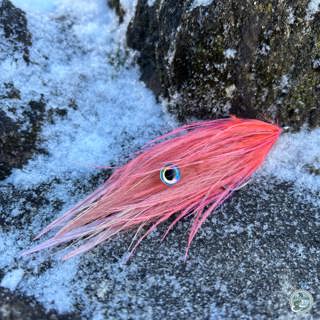
In this episode of The Articulate Fly, host Marvin Cash sits down with Jason Taylor — a Philadelphia-area fly tier, Tiers Row fixture at the Edison show and regular contributor to Masters of the Fly — for a wide-ranging conversation about fly tying philosophy, natural materials and the tradition of innovation rooted in Bob Popovics' work. On this fly fishing podcast episode, Taylor traces his journey from a 2008 Belize honeymoon that ignited his passion for the sport, to the early-2010s online forums — particularly Stripers Online — that connected him with a formative community of Northeast saltwater tiers including Popovics and David Nelson. Taylor shares the philosophy that drives every session at the vise: every feature in a fly must serve a purpose, and materials should be used as sparingly as possible to achieve it. The conversation digs into the enduring versatility of the hollow fleye platform — what Taylor calls "the Christmas tree" — its adaptability across materials and applications, and his own innovations including an ostrich herl hollow fleye variant and a Surf Candy adaptation with embedded foam for neutral buoyancy when targeting false albacore in calm, glassy conditions. Taylor also offers detailed guidance on selecting and handling bucktail and ostrich herl, shares tying tips rarely covered elsewhere, and takes listeners through the exotic and vintage natural materials currently occupying his tying bench.

Key Takeaways
  • How to apply Bob Popovics' "Christmas tree" principle to hollow fleye design — preserving the core profile shape while freely adapting materials, proportions and techniques.
  • Why using less material than you think you need almost always produces a more castable, livelier fly.
  • How to select bucktail for hollow fleyes by identifying soft, kinky fiber pulled from the middle half to two-thirds of the tail for the most predictable flare under thread pressure.
  • Why a neutrally buoyant fly presentation — using embedded foam under a hard body paired with an intermediate line — consistently outperforms standard Surf Candy patterns when false albacore become selective in calm, flat-water conditions.
  • How to stabilize thread wraps using brushable cyanoacrylate applied directly to the thread before making final wraps rather than to the hook or materials.
  • Why grading ostrich herl by length, taper and barb density — rather than just overall plume size — is critical to achieving consistent movement in large saltwater patterns.

Techniques & Gear Covered

The episode centers on hollow fleye construction — specifically the bucktail collar technique Bob Popovics developed and Taylor has refined over more than a decade, including his personal adaptation of palmering ostrich herl down a mono or shank base to create a mobile, feather-forward variant. Taylor details his Surf Candy–based neutral buoyancy modification, incorporating foam beneath the hard body to maintain a suspending presentation throughout the retrieve — not just the first few strips — which he argues better matches the behavior of bait sitting still in calm, low-turbulence water when paired with an intermediate fly line. He also covers his evolution of the Semper Fli, replacing time-consuming palmered feather fronts with commercially available fly tying brushes for consistent, production-speed results without sacrificing profile. On the tools and materials side, Taylor explains his preference for monofilament thread for virtually all saltwater work (with gel-spun for mounting eyes), walks through his grading process for both bucktail and ostrich herl, and advocates for brushable cyanoacrylate applied to the thread to more durably secure the final wraps. He references Regal as his favored vise, Tuffleye (a blue-light–cured resin with origins in dental applications) as his preferred coating for albie and Surf Candy patterns, and monofilament as the default thread for nearly all non-dry fly work.

Locations & Species

Taylor's saltwater fishing world centers on the Northeast coast — New Jersey beaches and jetty structure where he targets false albacore (albies) and striped bass. The neutral-buoyancy Surf Candy modification he developed addresses a specific condition: calm, glassy water where bait is suspended neutrally in the water column rather than being pushed and darting erratically, a situation that allows albies to scrutinize flies far more critically than in ripping current. The foam-infused body paired with an intermediate line creates the illusion of naturally suspended bait being dragged just below the surface — a presentation Taylor describes as reliably effective when albies appear finicky. Jetty fishing accounts for heavy fly loss in his program, which directly influences his bench work: efficient, repeatable tying at high quality is not just an aesthetic goal but a practical one.

FAQ / Key Questions AnsweredWhat is the "Christmas tree" principle and why has the hollow fleye remained relevant for decades?

Taylor borrows this framing directly from Bob Popovics: the hollow fleye's core construction — bucktail tied in parallel to the shank and then pushed back on itself in a reverse tie to form an umbrella shape — creates a foundational profile that can be dressed up or stripped down infinitely. In its simplest form it ties in under five minutes and catches fish for anything; at the other extreme it accommodates exotic feather work, articulations and brush-based enhancements while retaining the original profile logic. Taylor's own ostrich herl variant illustrates how elastic the platform is: by palmering ostrich around a mono or shank base — orienting the material perpendicular to the base rather than parallel — he achieved a different movement profile while staying true enough to the Christmas tree shape that Popovics immediately recognized the technique as sound. That openness to adaptation was always the point: a baseline any tier could take and make their own.

How do you select bucktail for hollow fleyes?

Look for fibers that are soft, slightly kinky or wavy rather than pin-straight, and of medium hollowness. Taylor recommends pulling material from the middle half to two-thirds of the tail, where hair has enough hollow structure to flare predictably but enough density to stay controlled. He warns that the softest, most hollow base fibers can be too erratic for general hollow collar work and are better reserved for specific profile applications near the front of a fly.

Why do false albacore seem to go finicky in calm, flat water?

Taylor's answer is that this behavior isn't true selectivity — it's a physics mismatch. In ripping current or choppy conditions, bait is pushed around and moves erratically; a fly stripped through that same water fits right in. In flat, glassy conditions, suspended bait is genuinely neutrally buoyant and barely moving, and albies can see that a standard fly doesn't replicate that suspension. His foam-infused body maintains the neutrally buoyant presentation throughout the retrieve rather than sinking progressively as trapped air escapes, which he argues is the key to the pattern's effectiveness in those conditions.

How should brushable cyanoacrylate be used correctly at the vise?

The standard approach — applying glue directly to the hook shank or finished materials — can stiffen fibers and make delicate collars unpredictable. Taylor applies brushable super glue to the thread itself, just before making final securing wraps, which locks the thread without affecting material movement or positioning. This is especially useful when controlling sparse bucktail or fine feathers where a traditional coat would ruin the texture and action of a finished collar.

Why does kinky or wavy bucktail produce a better hollow fleye than straight bucktail?

Taylor explains that kinky, wavy bucktail creates an illusion of greater bulk and size than the amount of material actually on the hook warrants. Just as straightening curly hair reveals how much longer it truly is, the kinks and curves in wavy bucktail compress into a shorter measured length — meaning the fibers occupy more visual space on the hook than pin-straight hair of the same count would. For hollow fleyes, where the goal is achieving profile and the illusion of size with the least possible material, that optical magnification effect is a direct advantage. Straight bucktail, by contrast, gives you exactly what it is and nothing more.

Sponsors

Thanks to TroutRoutes for sponsoring this episode. Use ARTFLY20 to get 20% off of your TroutRoutes Pro membership.

Related Content

S6, Ep 144: The Chocklett Factory: Conservation, New Products and a Legacy Remembered

S8, Ep 14: Crafting Connections: Blane Chocklett on Fly Design and Conservation at Tie Fest

S6, Ep 91: Predator Flies and Sparkle Boats: Steve Maldonado's Journey

S7, Ep 66: Tales of a...

Det här avsnittet är hämtat från ett öppet RSS-flöde och publiceras inte av Podme. Det kan innehålla reklam.

Avsnitt(1106)

S8, Ep 76: The Truth About Rod Action: Mac Brown's Guide to Better Casting Techniques

S8, Ep 76: The Truth About Rod Action: Mac Brown's Guide to Better Casting Techniques

Episode OverviewOn this episode of The Articulate Fly's Casting Angles series, fly casting instructor Mac Brown of Mac Brown Fly Fish in Bryson City, North Carolina, joins host Marvin Cash to take apa...

14 Okt 11min
S8, Ep 75: Autumn Angling Insights: George Costa's Tips for Central PA's Changing Waters

S8, Ep 75: Autumn Angling Insights: George Costa's Tips for Central PA's Changing Waters

Episode OverviewThis Central PA Fishing Report from The Articulate Fly, a fly fishing podcast, catches up with George Costa, manager of TCO Fly Shop in State College, Pennsylvania, for an early-fall l...

9 Okt 3min
S8, Ep 74: Pennsylvania Smallmouth Wrap-Up: Captain Brian Shumaker on Low Water and Stingy Fish

S8, Ep 74: Pennsylvania Smallmouth Wrap-Up: Captain Brian Shumaker on Low Water and Stingy Fish

Episode OverviewIn the final Pennsylvania Smallmouth Report of the season on The Articulate Fly, Captain Brian Shumaker of Susquehanna River Guides explains how to keep putting smallmouth bass in the ...

7 Okt 9min
S8, Ep 73: REDUX: The Fight for Our Future: Land Tawney on Grassroots Advocacy and Public Lands

S8, Ep 73: REDUX: The Fight for Our Future: Land Tawney on Grassroots Advocacy and Public Lands

Episode OverviewThis award-winning episode of The Articulate Fly, which took 1st place in the 2026 Outdoor Writers Association of America (OWAA) Excellence in Craft awards (Radio/Podcast: Conservation...

2 Okt 54min
S8, Ep 72: Casting Essentials: Mac Brown's Guide to Power and Arc

S8, Ep 72: Casting Essentials: Mac Brown's Guide to Power and Arc

Episode OverviewOn this Casting Angles episode of The Articulate Fly, host Marvin Cash and Mac Brown, fly casting instructor at Mac Brown Fly Fish in Bryson City, North Carolina, unpack the biggest li...

30 Sep 11min
S8, Ep 71: Fall Fishing Forecast: George Costa on Streamers, Hatches and Safety Tips

S8, Ep 71: Fall Fishing Forecast: George Costa on Streamers, Hatches and Safety Tips

Episode OverviewGeorge Costa, manager of TCO Fly Shop in State College, Pennsylvania, returns to The Articulate Fly for another Central PA Fishing Report as the region shifts firmly into fall. Recent ...

26 Sep 4min
S8, Ep 70: REDUX: Nomadic Waters and the Allure of Amazonian Peacock Bass

S8, Ep 70: REDUX: Nomadic Waters and the Allure of Amazonian Peacock Bass

Episode OverviewIn this episode of The Articulate Fly, host Marvin Cash sits down with Michael Williams, owner and host of Nomadic Waters, to explain how anglers catch Amazon peacock bass on the fly a...

24 Sep 1h 15min
S8, Ep 69: Navigating the Transition: Captain Brian Shumaker on Smallmouth Behavior and Fishing Techniques

S8, Ep 69: Navigating the Transition: Captain Brian Shumaker on Smallmouth Behavior and Fishing Techniques

Episode OverviewOn this Pennsylvania Smallmouth Report from The Articulate Fly fly fishing podcast, host Marvin Cash checks in with Captain Brian Shumaker of Susquehanna River Guides for an early fall...

23 Sep 8min

Populärt inom Utbildning

rss-bara-en-till-om-beroende-medberoende
historiepodden-se
det-skaver
nu-blir-det-historia
allt-du-velat-veta
harrisons-dramatiska-historia
roda-vita-rosen
not-fanny-anymore
husmodern-med-amanda-schulman
rss-dr-bjorklund
rss-viktmedicinpodden
johannes-hansen-podcast
sa-in-i-sjalen
rikatillsammans-om-privatekonomi-rikedom-i-livet
i-vantan-pa-katastrofen
rss-ai-med-jonas-benjamin
rss-foraldramotet-bring-lagercrantz
kan-jag-sa-kan-du-podden
sektledare
rss-basta-livet

















