Supernovae on the RISE: Why Dead Stars Wake Up Decades Later

Supernovae on the RISE: Why Dead Stars Wake Up Decades Later

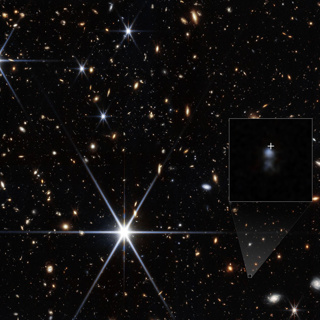
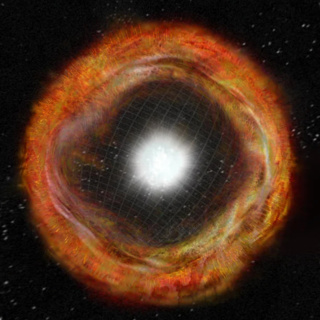
In this episode, we explore the fascinating phenomenon of core-collapse supernovae that refuse to fade away quietly. Years, or even decades, after their initial explosion, some of these stellar deaths experience a surprising "late-time radio rebrightening". We dive into how astronomers are using these delayed radio signals as a time machine to study the final centuries of a massive star's life.


Key Highlights:

  • The 18-Year Echo: We discuss the incredible discovery by the RISE (Rebrightening in Interacting Supernova Emission) collaboration, which detected radio emission from the Type II supernova SN 2007it a full 18 years after it exploded.
  • Smashing into the Past: Why do these dead stars light up again? We break down how the expanding supernova shockwave eventually slams into a dense shell of circumstellar material (CSM) that the star shed long before it died. For SN 2007it, this shell is estimated to be around 3 solar masses.
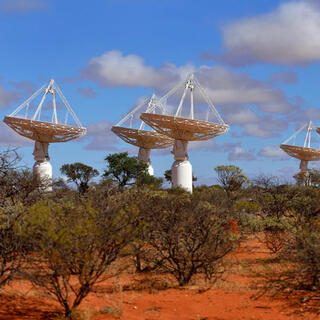
  • A Broader Look at Stellar Mass Loss: Drawing on a comprehensive study of 16 Type IIn and II-L supernovae using the Very Large Array (VLA), we explore how long-lasting radio emissions—sometimes persisting for 20 years post-explosion—reveal that these stars sustained extreme mass loss for hundreds or thousands of years before core collapse.
  • Blurring the Lines: We look at how this late-time radio data proves that different supernova classifications (like IIn and II-L) actually exist on a continuum, separated mainly by the density and timing of their pre-explosion mass loss.


Articles Discussed in this Episode:

  • Acero, F., et al. (The RISE Collaboration). (2026). SN 2007it on the RISE - a radio detection of an interacting supernova 18 years post-explosion.
  • Kilpatrick, C. D., et al. (2026). Probing the Mass-loss Histories of Type IIn and II-L Supernovae with Late-time Radio Observations.


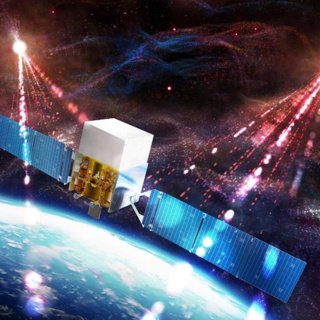
Acknowledements: Podcast prepared with Google/NotebookLM. Illustration credits: NRAO

Det här avsnittet är hämtat från ett öppet RSS-flöde och publiceras inte av Podme. Det kan innehålla reklam.

Avsnitt(99)

SN 2017egm : Fermi-LAT's Breakthrough Gamma-Ray Detection

SN 2017egm : Fermi-LAT's Breakthrough Gamma-Ray Detection

In today’s episode, we dive into the mystery of superluminous supernovae (SLSNe)—rare, extreme astronomical events that shine 10 to 100 times brighter than standard core-collapse supernovae. For years...

22 Maj 23min

The SVOM Satellite: A New Era in Multi-Messenger Astronomy

The SVOM Satellite: A New Era in Multi-Messenger Astronomy

In this episode, we dive into the fascinating world of gamma-ray bursts (GRBs) and high-energy transients through the lens of the SVOM (Space-based Multi-band Variable Object Monitor) mission. Launche...

29 Apr 24min

Chasing the Flash: Hunting Neutron Star Mergers with CTAO

Chasing the Flash: Hunting Neutron Star Mergers with CTAO

In this episode, we dive into the thrilling world of multi-messenger astronomy! Ever since the historic detection of GW170817, scientists have known that binary neutron star (BNS) mergers can produce ...

14 Apr 19min

Tiling the Sky: A New Strategy for Finding Elusive GRBs

Tiling the Sky: A New Strategy for Finding Elusive GRBs

In this episode, we dive into the intense and fast-paced world of **Gamma-ray bursts (GRBs)—the most luminous and rapidly evolving transients in the Universe**. While space-based instruments like the ...

13 Apr 19min

Fast Radio Bursts & Magnetar X-Rays: A Peculiar Discovery

Fast Radio Bursts & Magnetar X-Rays: A Peculiar Discovery

In this episode, we dive into the deep cosmos to explore a recent astronomical breakthrough linking Fast Radio Bursts (FRBs)—enigmatic, millisecond-long cosmic transients—to extreme stellar objects kn...

7 Apr 22min

Starbursts and Seyferts: The Mystery of the Missing Gamma Rays

Starbursts and Seyferts: The Mystery of the Missing Gamma Rays

In this episode, we dive deep into the fascinating world of "composite" galaxies—cosmic beasts that host both an actively feeding supermassive black hole (a Seyfert nucleus) and regions of intense sta...

30 Mars 22min

15 years hunting for GRBs with H.E.S.S.

15 years hunting for GRBs with H.E.S.S.

In this episode, we dive into the explosive world of Gamma-Ray Bursts (GRBs)—brief, intense pulses of sub-MeV gamma rays that are considered excellent laboratories for studying particle acceleration, ...

27 Mars 22min

Populärt inom Vetenskap

dumma-manniskor
allt-du-velat-veta
p3-dystopia
kapitalet-en-podd-om-ekonomi
rss-vetenskapsradion
rss-ufobortom-rimligt-tvivel
bildningspodden
paranormalt-med-caroline-giertz
rss-vetenskapsradion-2
svd-nyhetsartiklar
rss-spraket
sexet
det-morka-psyket
medicinvetarna
vetenskapsradion
halsorevolutionen
rss-ronden
rss-personlighetspodden
4health-med-anna-sparre
hacka-livet