
The Greatest Act of Political and Economic Spite in History

The Greatest Act of Political and Economic Spite in History

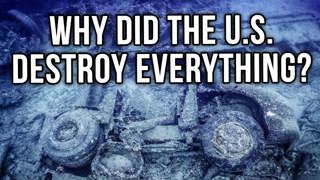
Nations can often be petty and spiteful when it comes to post-war relations, but rarely, if ever, in history did one nation get more petty with not an enemy, but their former ally than when the U.S. military created what is known today as "Million Dollar Point" out of sheer spite. 1,750 kilometres or 1,090 miles off the coast of Australia in the South Pacific Ocean lies the island nation of Vanuatu. Just off the southeast coast of the island, on the outskirts of the main settlement of Luganville, lies a truly remarkable sight: a giant underwater junkyard containing thousands upon thousands of pieces of WWII American military equipment, from tanks, artillery pieces, and bulldozers down to rifles, pistols, food tins and Coca-Cola bottles- all slowly rusting away on the ocean floor. Known as “Million Dollar Point”, every year this submerged museum of wartime logistics attracts hundreds of curious snorkelers and scuba divers from around the world. But what is all this abandoned equipment doing here? Are these the remains of an epic naval battle? A tragic shipwreck? Some gigantic whoopsie-doodle? Nope! The origins of Million Dollar Point are far, far sillier - and pettier - than that! This is the story of one the greatest acts of political and economic spite in modern history and how it helped inspire a Naked Cult that in turn helped lead this region to independence. The islands that make up modern Vanuatu, formerly New Hebrides, were first settled around 1300 BCE by peoples from Melanesian islands to the west such as New Guinea and the Solomons, followed by successive waves of migration by Polynesian peoples from the East, with later European overlords arriving and variously controlling the islands. For example, at one point the region had a complex and unwieldy bureaucracy, with separate British and French police forces and a judicial system presided over by a neutral judge appointed by the King of Spain - and by the way, while most commonly used today to describe a building with multiple individually-owned living units, the term condominium can also refer to a geographic area where multiple sovereign powers agree to share administrative duties. But for most of its history, Vanuatu remained a quiet colonial backwater, subsisting mainly on the trade of coconut meat, fish, sandalwood, and other natural resources. However, in the wake of the Imperial Japanese Navy’s surprise attack on Pearl Harbor on the morning of December 7, 1941 and the subsequent Japanese blitzkrieg across southeast Asia and the Pacific, the archipelago suddenly found itself in danger of invasion. In May 1942, American forces arrived on the islands, setting up a command post on Efate. Engineers from the U.S. Navy’s 1st Construction Batallion - better known as the Seabees - were soon dispatched to Espiritu Santo to construct a crushed-coral airstrip to support the then-ongoing battle on Guadalcanal. In an incredible feat of wartime logistics the Seabees, working round-the-clock, constructed Turtle Bay Airfield in only 20 days. Soon more CB detachments arrived and constructed three more airstrips, one of which is Santo International Airport today. Throughout the war, thousands of bombers, fighters, and other aircraft from the U.S. Navy, Marine Corps, and Army Air Corps as well as the Royal New Zealand Air Force operated from these airfields in support of operations throughout the South Pacific. In addition to the airstrips themselves, the Seabees also built extensive supporting infrastructure including barracks, repair shops, hangars, hospitals, fuel and ammunition depots, and water desalination plants. Espiritu Santo also served as a major supply and repair depot for U.S. Navy ships, stocking millions of tons of the fuel, food, ammunition, spare parts, and other materiel needed to fuel the gruelling island-hopping campaign against Imperial Japan. In particular, Espiritu Santo Naval Base was home to USS AFD-1, one of four Auxiliary Floating Dry Docks stationed in the South Pacific to repair and maintain U.S. Navy ships. Author: Gilles Messier Host/Editor: Daven Hiskey Producer: Caden Nielsen Learn more about your ad choices. Visit megaphone.fm/adchoices

Det här avsnittet är hämtat från ett öppet RSS-flöde och publiceras inte av Podme. Det kan innehålla reklam.

Avsnitt(343)

The Forgotten Plague Where Thousands of People Couldn't Stop Dancing Until They Died

The Forgotten Plague Where Thousands of People Couldn't Stop Dancing Until They Died

In this episode of The Brain Food Show, we skip the quick fact because this one took forever to research and put together and I ran out of time. Instead we jump right into the main topic which is a v...

16 Okt 1h 2min

The Insane Story of the Plane That Refused to Land for 64 Days

The Insane Story of the Plane That Refused to Land for 64 Days

The likes of renowned aerospace engineer Burt Rutan’s Voyager aircraft, which successfully completed the world’s first nonstop, unrefueled aerial circumnavigation of the globe in December of 1986 in f...

15 Okt 20min

How Far Back in Time Could an English Speaker Go and Still Communicate Effectively?

How Far Back in Time Could an English Speaker Go and Still Communicate Effectively?

Ever wonder how far back in time you could go and still talk to people effectively? Well, wonder no more! Learn more about your ad choices. Visit megaphone.fm/adchoices

14 Okt 17min
Was Doc Brown's 1885 Ice Machine Actually Possible?

Was Doc Brown's 1885 Ice Machine Actually Possible?

In the 1990 sci-fi comedy sequel Back to the Future Part III, intrepid time travelling 80’s duo Marty McFly and Dr. Emmett Brown find themselves trapped in Hill Valley, California, back in the year 18...

13 Okt 36min

The Bizarre Story of The Room, Were Nunchucks Real and Much, Much More

The Bizarre Story of The Room, Were Nunchucks Real and Much, Much More

In today's compilation episode we're looking at a handful of Hollywood vs Reality topics like the bizarre story behind "The Room", is genuine multiple personality disorder an actual thing or just a ho...

12 Okt 1h 20min

So, like, How Do Porcupines Mate? And Other Bizarre Animal Mating Practices

So, like, How Do Porcupines Mate? And Other Bizarre Animal Mating Practices

⁠⁠In this episode of The Brain Food Show, we start by looking at whether or not male humans can get pregnant and carry a baby to full term naturally. (Spoiler- yes and yes. And even breastfeed too! I...

9 Okt 44min

The Greatest Factory Ever Built

The Greatest Factory Ever Built

Following December 7, 1941 surprise attack on Pearl Harbor, which finally drew the United States into the Second World War, the attack’s architect, Imperial Japanese Navy Admiral Isoroku Yamamoto, inf...

8 Okt 37min

How to Survive Falling from a Plane Without a Parachute

How to Survive Falling from a Plane Without a Parachute

According to the Aircraft Crashes Record Office in Geneva, between 1940 and 2008 there were 157 people who fell out of planes without a parachute during a crash and lived to tell about it. A full 42 o...

7 Okt 20min

Populärt inom Utbildning

husmodern-med-amanda-schulman
rss-bara-en-till-om-beroende-medberoende
historiepodden-se
det-skaver
nu-blir-det-historia
rss-viktmedicinpodden
allt-du-velat-veta
harrisons-dramatiska-historia
not-fanny-anymore
rss-dr-bjorklund
roda-vita-rosen
johannes-hansen-podcast
sa-in-i-sjalen
rikatillsammans-om-privatekonomi-rikedom-i-livet
rss-ai-med-jonas-benjamin
rss-foraldramotet-bring-lagercrantz
i-vantan-pa-katastrofen
sektledare
rss-max-tant-med-max-villman
rss-basta-livet