
Episode #92: The $1.75 Trillion Bet: What WeWork Taught Us About the SpaceX IPO

Episode #92: The $1.75 Trillion Bet: What WeWork Taught Us About the SpaceX IPO

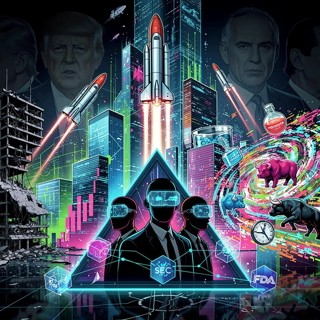
On this episode of the Stewart Squared podcast, host Stewart Alsop speaks with his father Stewart Alsop II about the SpaceX IPO and whether such a massive public offering could actually fail. Stewart Alsop II published his analysis just fifteen minutes before recording at sallsop.substack.com, questioning the logic behind the $1.75 trillion valuation and $75 billion raise, especially given that the company loses nearly $5 billion annually. The conversation ranges from the mechanics of IPOs and the SEC approval process to the only recent failed IPO (WeWork), SPACs versus traditional public offerings, the iron triangle of regulators and business interests, and comparisons between political figures' investment track records. Stewart Alsop II draws on his experience living through decades of Bay Area politics and business while analyzing whether institutions will actually buy into what he describes as a bet on Elon Musk rather than traditional fundamentals.

Timestamps

00:00 Stewart introduces the episode topic returning to SpaceX IPO discussion and what he learned writing his article about IPO failures
05:00 Discussion of how IPO conspiracy works between SEC regulators bankers and entrepreneurs creating iron triangle relationships that rarely result in failures
10:00 WeWork becomes example of rare IPO failure when institutions refused to buy shares despite SEC approval and banker support
15:00 Examination of Trump's public transparency about money-making versus traditional banana republic secrecy and oligarch networks
20:00 Debate over World Liberty Financial investments and whether Trump family portfolio signals SpaceX IPO success potential
25:00 Heated disagreement about Nancy Pelosi's husband's stock trading and conspiracy theories before ending the episode

Key Insights

1. An IPO can fail after the S-1 filing is published, though it has only happened once in recent memory with WeWork. When Adam Neumann pushed bankers to file WeWork's S-1, institutional investors reviewed the disclosed information and refused to buy the stock, preventing the company from going public through the traditional IPO process. This demonstrates that while the SEC, bankers, and company founders may all approve of an offering, the ultimate gatekeepers are the institutional investors who actually purchase the shares.
2. The SpaceX IPO represents an unusual situation where the company seeks a valuation of approximately 1.75 trillion dollars while only raising 75 billion dollars, representing roughly 2% of the company. This creates a challenging situation for potential investors because the upside is limited—for investors to make significant returns, SpaceX would need to become worth more than Apple, Google, or NVIDIA, all of which have twenty-year histories as public companies. This raises serious questions about the rational investment case for institutional buyers.
3. Investment bankers have strong financial incentives to push IPOs through to completion, as they receive approximately 6% of the proceeds. In the SpaceX case, this would amount to 6% of 75 billion dollars. This creates a structural problem in the IPO process where bankers may not adequately filter out questionable offerings, relying instead on the SEC approval process and institutional investor appetite to serve as quality controls.
4. Elon Musk has consolidated multiple companies into SpaceX before proposing to go public, including X AI and the company formerly known as Twitter, in addition to the core SpaceX rocket business and Starlink. While SpaceX itself generates about 4.5 billion in revenue and Starlink generates 11.5 billion in revenue growing at 50% annually, the company is currently losing almost 5 billion dollars per year. This makes the offering a bet on much more than just the space business, and Musk will control 85% of voting shares.
5. SPACs, or Special Purpose Acquisition Companies, represent an alternative path to going public that bypasses the traditional IPO process. These shell companies go public at 10 dollars per share without having an actual operating business, then search for a private company to merge with. WeWork eventually went public through a SPAC after its traditional IPO failed, though the company later went bankrupt. Most SPACs, approximately 95%, trade below their original value, making them generally problematic investment vehicles.
6. Elon Musk has successfully transformed two major industries through Tesla and SpaceX, which distinguishes him from other entrepreneurs like Adam Neumann who had not proven themselves before WeWork. Tesla proved the viability of electric cars, challenged dealer rules to sell directly to customers, built charging networks, and manufactured batteries at unprecedented scale. Similarly, SpaceX developed the reusable Falcon 9 rocket and built Starlink into a business three times larger than the rocket business itself, though Musk nearly went bankrupt three times in the process.
7. The traditional IPO process involves an iron triangle between the SEC regulators, investment bankers, and company founders, with institutional investors serving as the final check on whether an offering succeeds. Approximately 98% of IPO shares are purchased by institutions rather than individual investors. The SEC requires companies to publish an S-1 disclosure document revealing all company details, and if this document passes SEC review, bankers then attempt to sell shares to institutional investors who make the ultimate decision about whether to participate.

Det här avsnittet är hämtat från ett öppet RSS-flöde och publiceras inte av Podme. Det kan innehålla reklam.

Avsnitt(102)

Episode #102: AI Is Eating the World’s Memory

Episode #102: AI Is Eating the World’s Memory

In this episode of Stewart Squared, Stewart Alsop III and Stewart Alsop II sit into the shifting ground beneath the AI boom, starting with the strange saga of Leopold Aschenbrenner's hedge fund and th...

13 Aug 51min

Episode #101: Apple's AI Is Finally Here. Why Does It Still Feel Broken?

Episode #101: Apple's AI Is Finally Here. Why Does It Still Feel Broken?

In this episode of the Stewart Squared podcast, hosts Stewart Alsop and Stewart Alsop II dig into Apple's rocky iOS 27 rollout and the Apple Intelligence features that still don't quite work, before s...

6 Aug 54min

Episode #100: From Apple's iOS 27 to Anduril's Defense Tech: Where AI's Advantage Really Lies

Episode #100: From Apple's iOS 27 to Anduril's Defense Tech: Where AI's Advantage Really Lies

In this episode of Stewart Squared, Stewart Alsop III sits down with his father and co-host Stewart Alsop II for a wide-ranging conversation that jumps from Apple's iOS 27 preview beta and the long ro...

30 Juli 1h 4min

Episode #99: Can Money Buy Meta a Comeback in AI?

Episode #99: Can Money Buy Meta a Comeback in AI?

In this episode of the Stewart Squared podcast, host Stewart Alsop and guest Stewart Alsop II dive into Meta's latest AI model releases and their broader issues with user addiction, touching on the Eu...

23 Juli 37min

Episode #98: What Apple Gets That the Rest of Tech Doesn't: Trust Scales

Episode #98: What Apple Gets That the Rest of Tech Doesn't: Trust Scales

In this episode of the Stewart Squared podcast, host Stewart Alsop sits down with his father, guest Stewart Alsop II, to tackle a wide range of tech topics from AI chip design to cybersecurity vulnera...

16 Juli 57min

Episode #97: How AI Is Rewriting the Rules of Computing

Episode #97: How AI Is Rewriting the Rules of Computing

Stewart Alsop sits down with his father, Stewart Alsop II, to unpack what chip design even means anymore, starting with OpenAI's Jalapeno chip and the wild claim that it was designed in nine months us...

9 Juli 1h 3min

Episode #96: From Steve Jobs to AI: The Stories That Never Became Data

Episode #96: From Steve Jobs to AI: The Stories That Never Became Data

In this episode of Stewart Squared, Stewart Alsop III sits down with his father, Stewart Alsop II, for a wide-ranging conversation that moves from a heartfelt tribute to the late Brent Schlender — leg...

2 Juli 46min

Episode #95: Schrodinger's Bubble: Nobody's Keeping Up, And That's Okay

Episode #95: Schrodinger's Bubble: Nobody's Keeping Up, And That's Okay

In this episode of the Stewart Squared podcast, host Stewart Alsop sits down with his father, guest Stewart Alsop II, to tackle corrections from last week's show before diving into the rapid pace of A...

25 Juni 59min

Populärt inom Business & ekonomi

framgangspodden
badfluence
dynastin
varvet
rss-borsens-finest
uppgang-och-fall
avanzapodden
svd-tech-brief
rss-inga-dumma-fragor-om-pengar
fill-or-kill
borsmorgon
rss-dagen-med-di
lastbilspodden
tabberaset
rss-hos-psykologen
rss-kort-lang-analyspodden-fran-di
rikatillsammans-om-privatekonomi-rikedom-i-livet
borslunch-2
bathina-en-podcast
rss-veckans-trade