#23 Wired for Connection — 50 Years of Attachment Research with Dr. Alan Sroufe

#23 Wired for Connection — 50 Years of Attachment Research with Dr. Alan Sroufe

Episode Summary

In this episode, host Eli Harwood sits down with Dr. L. Alan Sroufe — Professor Emeritus at the University of Minnesota and lead researcher of the landmark Minnesota Longitudinal Study of Risk and Adaptation — to unpack over 50 years of groundbreaking research on how early relationships shape who we become. From the origins of secure attachment to the surprising durability of worldviews formed in childhood, this conversation is a masterclass in what actually matters in parenting — and what doesn't. Dr. Sroufe also shares details on his new book The Development and Organization of Meaning, co-authored with his wife, June Sroufe.

Key Takeaways
  • Secure attachment means confidence, not closeness. Dr. Sroufe redefines secure attachment as a child's confident belief that their caregiver will be there — not how physically close they are kept.
  • The best predictor of empathy is having received empathic care. You can't tell your child to be empathic — you have to show them through your own responsiveness.
  • Early experience matters enormously — but it is not destiny. The Minnesota Study showed that both continuity and change are possible. Protective factors at any stage of life can shift the developmental trajectory.
  • Worldviews formed in infancy shape how children interpret ambiguous situations. Kids with secure histories tend to assume accidents were accidental and people are helpful; kids with insecure histories may assume hostility where none exists.
  • Peer relationships are critical labs for learning conflict resolution. Children learn things in peer relationships they simply cannot learn from parents — because peers are equals.
  • Resilience is a developmental achievement, not a trait. It is not something you're born with and it's not permanent — it is built through experience and relationships over time.
  • "Good enough" parenting is real and validated by data. The Minnesota Study was surprised by how many children from poverty were securely attached — even with only modestly sensitive parenting.
  • You don't need tricks. You need a mindset. Secure attachment is not a checklist of behaviors — it is a relational orientation of attunement and responsiveness.
  • Your child will teach you what they need. Pay attention to their cues — even a baby turning their head away is communicating something real.
  • All research is "me-search." Dr. Sroufe and Eli both reflect on how their own histories drew them to this work — and why that's a strength, not a weakness.

About the Guest

Dr. L. Alan Sroufe is Professor Emeritus of Child Psychology at the University of Minnesota Institute of Child Development and the lead researcher of the Minnesota Longitudinal Study of Risk and Adaptation — one of the most important and longest-running prospective studies of human development ever conducted, now spanning over 50 years. He is the author of A Compelling Idea and co-author (with his wife June Sroufe) of the new book The Development and Organization of Meaning: How Individual Worldviews Develop in Relationships.

🔗 Connect with Dr. Sroufe on LinkedIn

Resources MentionedBooks
  • 📖 The Development and Organization of Meaning: How Individual Worldviews Develop in Relationships — L. Alan Sroufe & June Sroufe Cambridge University Press | Amazon
  • 📖 A Compelling Idea: How We Become the Persons We Are — L. Alan Sroufe Amazon | Safer Society Press
  • 📖 How to Deal with Your Beep So Your Kids Don't Have To — Eli Harwood (coming soon — sign up at attachmentnerd.com for updates)

Research & Organizations
Connect with Eli

Learn more about secure parenting: https://www.attachmentnerd.com/secure-parenting-program

Connect with Eli:


Music by Gold Child: https://www.goldchildmusic.com/

Det här avsnittet är hämtat från ett öppet RSS-flöde och publiceras inte av Podme. Det kan innehålla reklam.

Avsnitt(48)

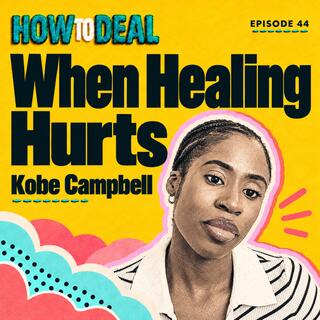
#44 How to Deal with Trauma When Healing Hurts | With Kobe Campbell

#44 How to Deal with Trauma When Healing Hurts | With Kobe Campbell

Why can healing make the past hurt more?Eli Harwood sits down with therapist and author Kobe Campbell to explore how past wounds can shape our identity, relationships, and expectations of the future. ...

30 Okt 28min

#43 Navigating Pregnancy and Infant Loss | With Heather & Cody Baker

#43 Navigating Pregnancy and Infant Loss | With Heather & Cody Baker

Heather and Cody Baker join Eli Harwood to talk about pregnancy and infant loss, grieving differently as partners, and parenting through grief. Drawing on their experience of losing their daughter Bla...

16 Okt 41min

#42 How to Deal with Food, Bodies and Connection | With Kathryn Garland & Vanessa Scaringi

#42 How to Deal with Food, Bodies and Connection | With Kathryn Garland & Vanessa Scaringi

Food can bring up a lot of worry for parents. How do we stay curious about what a child is experiencing when our first instinct is to fix what they are eating?Eli talks with Kathryn Garland and Vaness...

9 Okt 31min

#41 How to Deal with Childhood Wounds | With Galit Atlas

#41 How to Deal with Childhood Wounds | With Galit Atlas

]Why can it feel easier to understand everyone else than to let yourself be known?Eli Harwood joins psychoanalyst Dr. Galit Atlas to explore how childhood experiences can shape the ways we seek closen...

2 Okt 32min
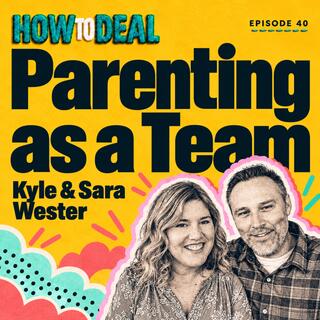
#40 When a Partner Isn’t on Board with Connection Focused Parenting | With Kyle & Sara Wester

#40 When a Partner Isn’t on Board with Connection Focused Parenting | With Kyle & Sara Wester

What do you do when you want to parent through connection and your partner keeps reaching for control? Eli talks with Kyle and Sara Wester about the years when they were on different pages, the moment...

25 Sep 37min

#39 Nerd Notes | Victim Mentality vs. Real Harm

#39 Nerd Notes | Victim Mentality vs. Real Harm

In this solo episode, Eli dives into one of the most nuanced — and most needed — conversations in the world of relational health: the difference between genuinely being victimized and holding a victim...

18 Sep 14min
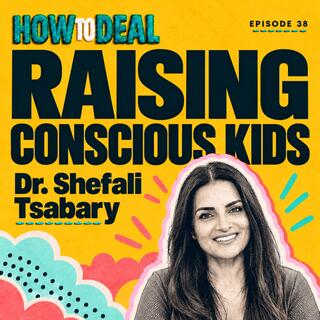
#38 How to Deal with Raising Conscious Sons and Daughters in an Anxious and Chaotic World | With Dr. Shefali Tsabary

#38 How to Deal with Raising Conscious Sons and Daughters in an Anxious and Chaotic World | With Dr. Shefali Tsabary

Dr. Shefali Tsabary, Columbia-trained clinical psychologist and multiple NYT bestselling author, joins Eli to discuss her groundbreaking new companion books: Raising Conscious Sons and Raising Conscio...

14 Sep 33min
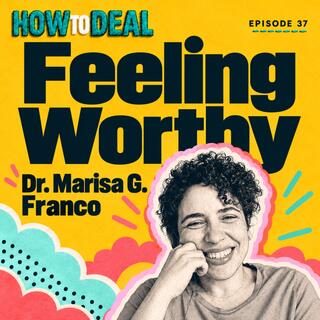
#37 How to Feel Worthy | With Dr. Marisa G. Franco

#37 How to Feel Worthy | With Dr. Marisa G. Franco

What if feeling unworthy isn't a flaw — it's a memory? In this deeply moving episode, Eli sits down with NYT bestselling psychologist Dr. Marisa G. Franco to unpack the science of self-worth: where it...

4 Sep 29min

Populärt inom För unga lyssnare

rss-jossan-nina
the-power-meeting-podcast
louise-och-julia-poddar
magiska-godnattsagor
rss-onskepodden
badfluence
rss-vuxna-pa-latsas
lojsan-buster
rss-2under2
fatta-familjen
rss-barnens-sagovarld-godnattsagor-for-barn-barnsagor
tabberaset
rss-ska-inte-ljuga
rss-skilsmassopodden
godnattstund
rss-fran-blojor-till-brollop
rss-hastnetpodden
rss-foraldramotet-bring-lagercrantz
mammasanningar-med-vivi-och-carin
vattnet-gar