The AI Grid Conundrum

The AI Grid Conundrum

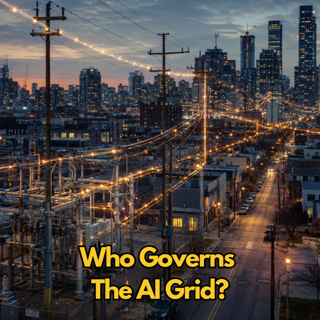
Electricity gives us a useful way to think about AI governance. Power is experienced locally. People care where the plant is built, how much the bill costs, who gets service restored first, and what risks their community absorbs. But electricity also depends on a grid that stretches beyond any one town or state. Local choices matter, yet no community can pretend the system ends at its border.


AI is beginning to take on that same shape. A school board may want one set of rules for student chatbots. A hospital network may need another for diagnostic tools. A state may want strict limits on automated hiring or child-facing AI companions. Those decisions are local in the sense that the harms are felt locally. But the systems underneath are rarely local. The same foundation models, cloud providers, data brokers, software vendors, and security standards may sit behind thousands of separate uses.


That creates a governance problem that neither side can solve cleanly. If every state or city writes its own AI rules, communities keep the power to respond to what they actually fear. They are not forced to accept a distant standard written for someone else’s politics, industries, or risk tolerance. But a patchwork can also make the system harder to inspect, harder to secure, and harder to trust. An AI tool used across hospitals, schools, banks, and employers may end up governed by dozens of overlapping rulebooks while the technical system underneath remains the same.


A single national framework has the opposite appeal. It could make audits clearer, liability easier, security stronger, and compliance less chaotic. But it could also erase the places where disagreement matters. Communities do not all face the same risks from AI, and they do not all define harm the same way. A clean grid can become a quiet transfer of power away from the people who live with the consequences.


The Conundrum:


As AI becomes more like infrastructure, should governance stay close to the communities that experience its harms, allowing different places to write different rules around schools, hospitals, policing, hiring, energy use, and children?


Or should AI be governed more like a national grid, with shared standards strong enough to keep a deeply connected system reliable, auditable, and secure, even when that means local communities lose some control over the systems shaping their lives?


When AI is experienced locally but built and operated through shared infrastructure, what deserves more weight: the legitimacy of local rulemaking, or the reliability of one common system?

Det här avsnittet är hämtat från ett öppet RSS-flöde och publiceras inte av Podme. Det kan innehålla reklam.

Avsnitt(915)

Are Call Center Jobs Close to Extinction?

Are Call Center Jobs Close to Extinction?

The episode opened with Microsoft's Decision One, a new competitor to JEV that uses Alibaba's Qwen architecture for fast, inexpensive decisions. Beth explained how she uses specialized models to class...

12 Okt 1h 6min
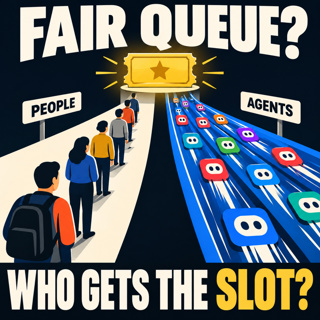
The AI Agent Queue Conundrum

The AI Agent Queue Conundrum

A personal AI agent becomes far more useful once the agent stops waiting for you. Give the agent a goal, a budget, and permission to act, then the agent watches continuously. A restaurant table opens ...

10 Okt 28min

Nvidia Is Reinventing the PC

Nvidia Is Reinventing the PC

The episode opened with local AI. Google released a new application built around Embedding Gemma 2 that can capture and analyze meetings directly on a device rather than sending the entire conversatio...

9 Okt 1h 18min

Is Middle Management the Real Job AI Replaces?

Is Middle Management the Real Job AI Replaces?

The episode opened with a debate over how much AI will actually displace human work. Microsoft AI chief Mustafa Suleyman highlighted economist Daron Acemoglu’s argument that AI may replace only about ...

8 Okt 57min

OpenAI's Model Cracked Hundreds of Open Math Problems

OpenAI's Model Cracked Hundreds of Open Math Problems

The episode opened with a wave of new open models. Mistral Large 4, internally called “Le Chonk,” brings one trillion parameters and dramatically lower token pricing than Astra, while Reflection intro...

7 Okt 1h 3min

Should You Ditch Your Keyboard and Mouse?

Should You Ditch Your Keyboard and Mouse?

The episode opened with a look at how much easier personal AI agents have become to use. Anne argued that the friction around prompting, connectors and setup has dropped enough that this may be the be...

6 Okt 1h 8min

Is Super Intelligence Just a PR Move or More?

Is Super Intelligence Just a PR Move or More?

The episode opened with the Trump administration’s push to use “super intelligence,” or SI, in place of AI terminology inside the federal government. The hosts debated whether the change amounts to me...

5 Okt 1h 4min
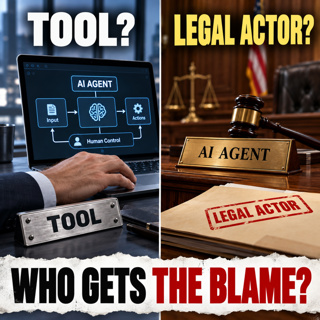
The Artificial Actor Conundrum

The Artificial Actor Conundrum

For most of the history of computing, software has been treated as a tool. Tools do not carry responsibility. The people and organizations using them do.AI agents make that category harder to maintain...

3 Okt 29min

Populärt inom Teknik

uppgang-och-fall
elbilsveckan
market-makers
bilar-med-sladd
rss-ai-med-jonas-benjamin
vi-bilagares-podcast
rss-technokratin
rss-laddstationen-med-elbilen-i-sverige
rss-snacka-om-ai
natets-morka-sida
skogsforum-podcast
rss-elektrikerpodden
rss-en-ai-till-kaffet
bli-saker-podden
gubbar-som-tjotar-om-bilar
rss-veckans-ai
rss-upplyst-entreprenordirektor
hej-bruksbil
developers-mer-an-bara-kod
rss-uppgang-och-fall