Fun Facts About Pistachios

Fun Facts About Pistachios

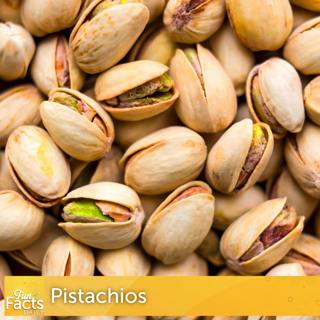
Pistachios have a rich history and distinct botanical characteristics. Though commonly categorized as nuts, they are scientifically classified as the edible seeds of a stone fruit, or drupe, closely related to peaches, almonds, and olives. The growth and harvest of pistachios require a long-term investment. Pistachio trees are dioecious, meaning separate male and female plants are required for wind pollination, and they have an alternate bearing cycle where a heavy crop year is naturally followed by a lower-yield season. These trees grow slowly, taking seven to ten years to produce a significant initial harvest, but once matured, they can survive and remain productive for over three centuries. Humans have prized this resilient crop since the dawn of civilization, with archaeological evidence of pistachio consumption in Central Asia dating back nearly 9,000 years to 6750 BCE. Throughout history, their long shelf life and high nutritional density made them a favored travel food across arid regions, eventually leading to their inclusion in royal diets and historical texts like the Bible. Beyond their historical significance, pistachios offer exceptional nutritional benefits and possess unique physical properties that influence how they are handled globally. A single one-ounce serving provides six grams of complete, plant-based protein containing all nine essential amino acids alongside three grams of dietary fiber and high concentrations of potassium. When the fruit matures, a natural splitting process known as dehiscence breaks open the hard protective shell, indicating they are ready for harvest. While this partial opening allows for a satisfying snack and helps with portion control, bulk transport of unshelled pistachios carries a surprising maritime risk. Due to their high oil content and low moisture levels, tightly packed bulk cargo can undergo self-heating and spontaneous combustion through oxidation if moisture levels fluctuate. Consequently, global shipping guidelines require strictly regulated, well-ventilated, and temperature-controlled environments to safely distribute the more than one million metric tons of pistachios produced annually. ⁠Listen Ad-Free on Patreon. ⁠ For just $3 per month, you can get ad-free versions of Fun Facts Daily, Who ARTed and Art Smart. Head over to ⁠https://www.patreon.com/cw/FunFactsDailyPod⁠ if you are interested. Want to learn more? Head over to my website www.funfactsdailypod.com and be sure to listen to my other podcasts Who ARTed: Weekly Art History for All Ages or Art Smart. For family fun, check out my son's podcast Rainbow Puppy Science Lab The image used in the episode cover art came from Adobe's stock photos. Fun Facts Daily is an Airwave Media Podcast. If you are interested in advertising on this or any other Airwave Media show, email: advertising@airwavemedia.com Learn more about your ad choices. Visit megaphone.fm/adchoices

Det här avsnittet är hämtat från ett öppet RSS-flöde och publiceras inte av Podme. Det kan innehålla reklam.

Avsnitt(365)

Fun Facts About DayGlo Colors

Fun Facts About DayGlo Colors

Day-Glo colors owe their existence to an accidental discovery made by brothers Bob and Joe Switzer in the 1930s while Bob was recovering from an injury in a dark basement. Unlike standard pigments, wh...

11 Sep 16min
Fun Facts About Carrots

Fun Facts About Carrots

Carrots are nutrient-dense root vegetables rich in carotenoids, natural pigments synthesized by plants, most notably beta-carotene. Once digested, beta-carotene converts to vitamin A, supporting cellu...

10 Sep 13min

Fun Facts About the Solar System

Fun Facts About the Solar System

The solar system operates on immense scales governed by extreme physical environments, orbital mechanics, and surprising planetary characteristics. At its center, the Sun contains approximately 99.86%...

9 Sep 15min

Fun Facts About the Sistine Chapel

Fun Facts About the Sistine Chapel

The Sistine Chapel, commissioned in 1473 by Pope Sixtus IV and built to echo the biblical proportions of Solomon’s Temple, is one of the pinnacle achievements of Renaissance architecture and art. Span...

8 Sep 14min

Fun Facts About Unusual Jobs

Fun Facts About Unusual Jobs

While many careers follow traditional paths, several vital professions operate far outside conventional office environments. From certified water slide inspectors using multi-axis accelerometers and f...

7 Sep 16min
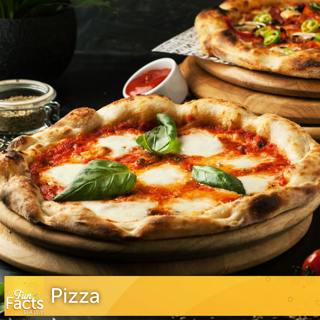
Fun Facts About Pizza

Fun Facts About Pizza

Pizza has evolved from a traditional Mediterranean staple into one of the most commercially significant foods on the planet, with origins tracing back to ancient flatbreads and medieval Italian manusc...

4 Sep 16min

Fun Facts About Your Olfactory System (Sense of Smell)

Fun Facts About Your Olfactory System (Sense of Smell)

The human olfactory system is an intricate sensory network capable of distinguishing an estimated one trillion distinct odor combinations through combinatorial receptor codes. Positioned high within t...

3 Sep 13min

Fun Facts About Duct Tape

Fun Facts About Duct Tape

Duct tape originated during World War II when ordnance worker Vesta Strout designed a durable, waterproof cloth-backed adhesive tape to keep moisture out of ammunition cases. It was originally manufac...

2 Sep 15min

Populärt inom Utbildning

historiepodden-se
rss-bara-en-till-om-beroende-medberoende
det-skaver
nu-blir-det-historia
harrisons-dramatiska-historia
not-fanny-anymore
allt-du-velat-veta
rss-viktmedicinpodden
johannes-hansen-podcast
sa-in-i-sjalen
i-vantan-pa-katastrofen
rss-max-tant-med-max-villman
rikatillsammans-om-privatekonomi-rikedom-i-livet
roda-vita-rosen
rss-basta-livet
rss-autismandan
rss-ar-det-rimligt
rss-foraldramotet-bring-lagercrantz
rss-okrystat
rss-traningsklubben