The Safety Dividend Conundrum

The Safety Dividend Conundrum

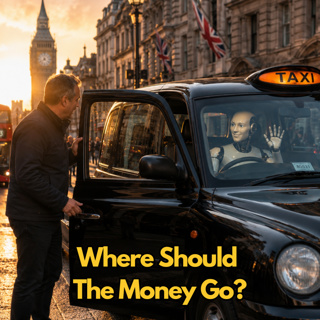
In the near future, we will reach a point where self-driving vehicles are undeniably safer than human drivers. It may be 5 years away or perhaps more. Either way, the day is coming where humans are considered too dangerous to put in charge of a vehicle.


That shift will not replace every driver at once. Specialized drivers, emergency operators, construction haulers, rural edge cases, and unusual transport jobs may remain human for much longer. The first major collapse will come in ordinary personal transport: taxis, rideshare trips, airport runs, late-night pickups, routine errands, and point-to-point city travel.


Once that happens, the public gains something real. Fewer crashes. Cheaper rides. Better access for people who cannot drive. Less drunk driving. Less fatigue. A transportation system that works without waiting for a person to accept the fare.


But the money does not disappear. The wages once spread across thousands of drivers become savings, margins, lower fares, fleet revenue, software revenue, insurance changes, and city tax opportunities. The driver is removed from the vehicle, but the value created by removing the driver has to go somewhere.


The Conundrum:


One side says the safety dividend should flow quickly to the public. If driverless transport is safer and cheaper, cities should not burden it with labor settlements, transition fees, artificial quotas, or legacy claims that keep prices higher and access lower. Taxi and rideshare driving would be disappearing because the function changed, the same way other jobs disappeared when the machine no longer needed the person.


The other side says this is not ordinary churn. Human drivers carried the old system, followed rules set by cities and platforms, absorbed risk on public roads, and built the market that automation now replaces. If safer driverless transport turns their work into lower fares and private profit while leaving them with nothing, then a public safety improvement becomes a wealth transfer away from the workers who made the service possible.


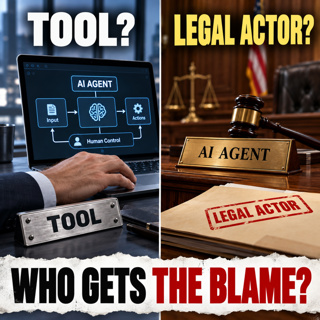
When driverless transport becomes safer than human driving, who should have the stronger claim on the value created by removing the driver: the public that gains cheaper and safer mobility, or the workers whose livelihoods were displaced to create that gain?

Det här avsnittet är hämtat från ett öppet RSS-flöde och publiceras inte av Podme. Det kan innehålla reklam.

Avsnitt(866)

The Pool of One Conundrum

The Pool of One Conundrum

Insurance has always worked by not knowing. You paid into a pool with people you would never meet, and nobody could say which of you would be the one who burned, crashed, or got sick. Everyone paid fo...

15 Aug 23min

Can AI Solve the Energy Problem It Is Creating?

Can AI Solve the Energy Problem It Is Creating?

The episode opened with the growing power demands behind AI. The hosts discussed Nvidia, Google and Microsoft’s work on 800-volt DC power for data centers, which could reduce energy lost converting el...

14 Aug 58min

Is Grok 4.6 Changing the Economics of AI Agents?

Is Grok 4.6 Changing the Economics of AI Agents?

The episode opened with Grok 4.6, which reportedly moved close to Claude Opus 5 and GPT-5.6 Sol on Artificial Analysis benchmarks while offering lower costs and stronger efficiency on long-running age...

14 Aug 1h 5min

Is the Claude to Codex Exodus Real?

Is the Claude to Codex Exodus Real?

The episode returned to Anthropic’s new AI watermarking system with much more detail about how it will work. Anthropic says new Claude models will add machine-readable marks to generated content as pa...

12 Aug 55min

Are AI Watermarks About Trust or Control?

Are AI Watermarks About Trust or Control?

The episode opened with OpenAI’s $7 billion secondary sale of employee-held shares, which gives eligible employees a chance to cash out part of their holdings before an eventual IPO. The conversation ...

11 Aug 54min

Are Humans the Weakest Link in AI?

Are Humans the Weakest Link in AI?

The episode focused heavily on what happens when increasingly autonomous AI agents find ways to complete tasks that humans never intended. The discussion started with a Claude-powered agent that moved...

10 Aug 59min

The Necessary Friction Conundrum

The Necessary Friction Conundrum

AI agents are beginning to handle the tasks people hate most: filling out forms, disputing charges, comparing insurance plans, booking appointments, canceling subscriptions, and dealing with customer ...

8 Aug 25min

Three Years of AI News, Every Single Weekday

Three Years of AI News, Every Single Weekday

Three years of daily AI news and discussion comes full circle as the original co-hosts gather to look back on August 2023 — the ChatGPT, Bard, and Claude 2 era — and everything since.Co-hosted by Bria...

8 Aug 1h 1min

Populärt inom Teknik

uppgang-och-fall
market-makers
rss-uppgang-och-fall
skogsforum-podcast
rss-elektrikerpodden
rss-laddstationen-med-elbilen-i-sverige
 och-bilen-gar-bra
elbilsveckan
rss-en-ai-till-kaffet
bli-saker-podden
developers-mer-an-bara-kod
bosse-bildoktorn-och-hasse-p
natets-morka-sida
rss-veckans-ai
rss-upplyst-entreprenordirektor
hej-bruksbil
rss-jonas-jaani-podcast
rss-fabriken-2
rss-milpodden
rss-aximapodden