Trust as the Foundation with Greg Hill: How Great Leaders Create the Conditions for Learning, Growth and Performance

Trust as the Foundation with Greg Hill: How Great Leaders Create the Conditions for Learning, Growth and Performance

In episode 401 Andrea Samadi welcomes Greg Hill to explore why trust is the essential foundation for learning, growth, and high performance. They discuss how trust creates psychological safety, encourages risk-taking and creativity, and acts as a multiplier for organizational results.

Greg shares practical leadership practices—truthfulness, consistency, competence, and genuine care—and personal stories about marathon training to show how movement builds confidence and supports clear thinking, resilience, and sustained motivation. This episode launches Phase 3: Movement, Adaptation, and Learning in the podcast's brain operating system series.

Welcome back to Season 16 of the Neuroscience Meets Social and Emotional Learning Podcast. I'm Andrea Samadi, and on this podcast, we bridge the science behind social and emotional learning, emotional intelligence, and practical neuroscience so we can create measurable improvements in well-being, achievement, productivity, and results.

Watch the full YouTube interview here https://youtu.be/kfvSFMQZ3dk

On EP 401, You Will Learn:

✔ Why trust is the foundation of learning, growth, and high performance.

✔ How psychological safety changes the brain, reducing threat and increasing engagement.

✔ Why great leaders create environments where people feel safe enough to learn, take risks, and perform at their best.

✔ How trust influences attention, confidence, decision-making, and long-term success.

✔ The connection between movement, trust, and the brain's readiness to learn as we launch Phase 3: Movement, Learning & Cognition.

✔ Practical leadership strategies from Greg Hill to build trust with your team, family, classroom, or organization.

Before the brain can learn, grow, adapt, or perform at its highest level, it must first feel safe enough to trust. In this episode, Greg Hill explains why trust is the hidden foundation of every high-performing individual and team.

Trust → Engagement → Movement → Brain Activation → Attention → Learning → Memory → Performance → Confidence.

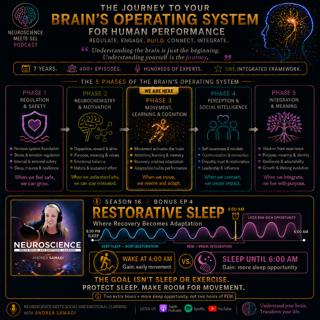
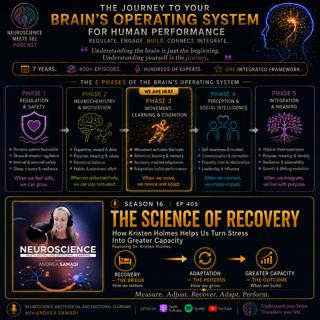
Over the past several months, we've been building what I've called The Brain's Operating System for Human Performance.

In Phase 1, we explored Regulation and Safety, learning why the brain performs best when the nervous system feels regulated, balanced, and secure.

In Phase 2, we examined Motivation and Neurochemistry, uncovering what drives action, what sustains effort, and what breaks the motivation loop.

Next we will move into Phase 3: Movement, Adaptation and Learning. The theme for Phase 3 did change and I’ll explain that once we dive into EP 403.

But before we can get there, we are going to go a bit deeper into something the brain needs to feel safe: trust.

EP 401 — Trust: The Foundation of Learning

Question: What must happen before learning or any change can occur?

Trust → Safety → Engagement → Action → Learning

Before movement changes the brain, the brain must feel safe enough to engage.

With Trust.

Because trust creates psychological safety.

Safety creates engagement.

Engagement creates action.

And action creates learning.

When trust is present, people are more willing to take risks, embrace challenges, learn from mistakes, and move beyond what is comfortable. When trust is absent, the brain shifts its energy toward protection rather than growth.

We've explored the importance of trust before on this podcast. Back on EP 207[i], we spoke with Greg Link, co-founder of the Covey Leadership Center and founder of FranklinCovey's Global Speed of Trust Practice. Greg Link shared how trust accelerates relationships, strengthens organizations, and serves as a multiplier for performance.

Today's conversation takes that idea one step further.

Throughout my career, whenever I've met someone who consistently brings out the very best in others, I've wanted to understand why.

What are they doing differently?

What principles guide them?

How do they create environments where people feel safe enough to grow, learn, and perform at their highest levels?

That's why I invited today's guest, Greg Hill, to join us.

I've had the opportunity to work directly with Greg for over a year and a half, and one thing stood out immediately: I always knew that Greg trusted me to do my best work.

That trust wasn't something we talked about. It was something he demonstrated. I felt it every day.

Over time, I began to notice that this wasn't unique to my experience. Greg seemed to create the same environment for everyone around him. People wanted to do their best work, not because they had to, but because they felt trusted, valued, and supported by him.

It made me curious.

Was there something deeper happening beneath the surface?

Could trust be one of the hidden factors that unlocks learning, growth, confidence, and high performance?

Greg Hill is a respected leader, mentor, and trusted advisor who has spent years helping people and organizations reach their highest potential through relationships built on trust, accountability, and genuine human connection.

Today, we'll explore the neuroscience of trust, its connection to leadership and performance, and why trust may be one of the most important foundations for learning, growth, and human potential.

As we launch Phase 3, you'll hear why trust may be the bridge between motivation and action, and why people are often willing to enter the learning cycle only when they feel safe enough to take the first step.

Welcome to Episode 401.

Let's meet Greg Hill.

Greg Hill, welcome to the podcast, and thank you for joining me. I've been looking forward to this conversation for quite some time because I've experienced firsthand the impact you've had on people around you, and today I'd love to explore some of the principles you've learned over the years that have helped you build trust, develop leaders, and bring out the best in others.

Question #1

Greg, when most people hear the word trust, they think about whether they trust another person (in relationship to them). But I've always wondered if trust begins long before that. What do you believe are the foundations of trust, and what is it about certain leaders that makes people naturally feel safe enough to trust them?

Question #2

Why is trust so important for performance?

Stephen R Covey said that “trust is the one thing that affects everything else you’re doing. It’s a performance multiplier and it takes your trajectory upwards.”

Why do you think this happens? Why do we perform best when we are in an environment where trust exists? Also, what happens when trust is absent?

Question #3

We've spent the past season exploring regulation, safety, motivation, and performance.

I wonder how do you foster trust and safety with those you work with? Is it an intentional part of your philosophy, or is it just something that comes naturally to you?

Question #4 (Movement Connection)

As we launch our phase on Movement, Adaptation and Learning, I couldn't help but notice that many high-performing leaders seem to have some form of movement practice in their lives. For me it's hiking mountains. For you it was marathon running.

What role has movement played in helping you think clearly, manage stress, make decisions, and perform at your best throughout your career?

Final Question

As we begin this new phase focused on movement, adaptation and learning,

What is one thing every leader, educator, parent, or coach can do right away to build more trust and create an environment where people can learn, grow, and perform at their best?

Thank you, Greg, I appreciate the time you took to share your thoughts on trust and leadership as we launch Phase 3 of our podcast. Your ideas have helped to explain why people are willing to enter the learning cycle in the first place, with trust that reduces threat, increases attention, strengthens relationships, and creates the conditions for growth. You’ve been an incredible mentor and leader in my life and I’m grateful that we are able to stay in touch.

Final Thoughts

Next week, we'll begin Phase 3: Movement, Adaptation and how this all ties into our performance, exploring what happens after engagement occurs and how movement literally changes the brain's ability to learn, remember, think, and perform.

Because when trust creates safety, movement creates change.

If Phase 1 taught us how to regulate the brain, and Phase 2 taught us what motivates the brain, today's episode showed us what creates the conditions for growth. Trust reduces threat and opens the door to learning. Next episode (in 2 more weeks), we'll discover what happens when movement steps through that door and begins changing the brain itself.

See you the middle of July.

REFERENCES:

[i] Neuroscience Meets Social and Emotional Learning Podcast EPISODE 207 with Greg Link on “Unleashing Greatness with Neuroscience, SEL, Trust and the 7 Habits” https://andreasamadi.podbean.com/e/co-founder-of-coveylink-greg-link-on-unleashing-greatness-with-neuroscience-sel-trust-and-the-7-habits/

Det här avsnittet är hämtat från ett öppet RSS-flöde och publiceras inte av Podme. Det kan innehålla reklam.

Avsnitt(405)

Episode 400: Sales Leadership Under Pressure with Majid Samadi: 7 Lessons Learned from 7 Years of Neuroscience

Episode 400: Sales Leadership Under Pressure with Majid Samadi: 7 Lessons Learned from 7 Years of Neuroscience

In this milestone episode (400), Andrea Samadi celebrates seven years of the Neuroscience Meets SEL Podcast with her husband Majid Samadi. They reflect on the journey of translating neuroscience into ...

20 Juni 47min

Phase 2 Review: The Motivation Loop: How to Keep Effort Worthwhile

Phase 2 Review: The Motivation Loop: How to Keep Effort Worthwhile

Episode 399 reviews Phase 2 of Season 15 and introduces the Motivation Loop — the sequence of meaning, belief, attention, action, reward, and recovery that drives sustained effort. The episode explain...

14 Juni 28min

Fun, Fear, Focus: Closing the Motivation Loop with Friederike Fabritius

Fun, Fear, Focus: Closing the Motivation Loop with Friederike Fabritius

Episode 398 revisits neuroscientist Friederike Fabritius (from November 2022) to explain how three ingredients — fun (dopamine), fear (productive challenge), and focus — create the neurochemical condi...

9 Juni 23min

Move to Learn: How Movement Activates the Brain and Fuels Motivation (with Dr. Chuck Hillman and Paul Zientarski)

Move to Learn: How Movement Activates the Brain and Fuels Motivation (with Dr. Chuck Hillman and Paul Zientarski)

Season 15, Episode 397 revisits research and real-world practice showing movement is more than fitness: it activates the brain, boosts attention, enhances learning, and sustains motivation. Dr. Chuck ...

31 Maj 35min

Dopamine, Motivation and Why the Brain Repeats Behavior with Dr. Anna Lembke

Dopamine, Motivation and Why the Brain Repeats Behavior with Dr. Anna Lembke

Host Andrea Samadi welcomes Dr. Anna Lembke to explain how pleasure and pain share the same neural circuitry and how dopamine governs motivation. The episode explores why overconsumption of easy rewar...

24 Maj 23min

Theory of Mind: The Missing Link Between Attention, Reward, and Motivation with John Medina

Theory of Mind: The Missing Link Between Attention, Reward, and Motivation with John Medina

Episode 395 explores how theory of mind — our ability to understand others' intentions — drives attention, emotional relevance, and reward, shaping motivation and behavior. Dr. John Medina explains wh...

17 Maj 37min

Thought Patterns & Neurochemistry — The Hidden Drivers of Your Life (Revisiting Dr. Caroline Leaf)

Thought Patterns & Neurochemistry — The Hidden Drivers of Your Life (Revisiting Dr. Caroline Leaf)

In this episode Andrea Samadi revisits her October 2022 interview with Dr. Caroline Leaf about how our thought patterns act as biological instructions that shape brain chemistry, behavior, and results...

26 Apr 25min

Populärt inom Utbildning

historiepodden-se
det-skaver
rss-bara-en-till-om-missbruk-medberoende-2
harrisons-dramatiska-historia
nu-blir-det-historia
roda-vita-rosen
not-fanny-anymore
rss-viktmedicinpodden
i-vantan-pa-katastrofen
sektledare
johannes-hansen-podcast
allt-du-velat-veta
rss-foraldramotet-bring-lagercrantz
kan-jag-sa-kan-du-podden
rss-ar-det-rimligt
rikatillsammans-om-privatekonomi-rikedom-i-livet
sa-in-i-sjalen
sex-pa-riktigt-med-marika-smith
vi-gar-till-historien
rss-traningsklubben