What a harness is and how to build one with Claude Agent SDK
How I AI8 Juli

What a harness is and how to build one with Claude Agent SDK

Everybody is saying, “It’s not the model, it’s the harness,” but almost nobody stops to explain what a harness actually is. So I did. I built one live on the show: a Sentry bug-debugging harness for my company ChatPRD, using the Claude Agent SDK, a custom terminal UI built with the Ink library, and opinionated adapters for Sentry, Linear, GitHub, and Vercel. The harness handles evidence gathering, root-cause analysis, and follow-up artifact creation, all without me needing to type “dear agent, please fix this bug” ever again. I also walk through the architecture, share the code structure, and give you the exact process I used so you can build your own harness for any repetitive, structured workflow in your business.


What you’ll learn:

  1. What a harness actually is
  2. When to build a harness versus when to stick with a general-purpose tool like Claude Code or Codex
  3. How to encode specific permissions into a harness
  4. The three components every harness needs
  5. How I used GPT-5.5 and Claude Opus to build the harness code itself (and where they both initially resisted)
  6. How to structure the artifacts your harness produces so the whole team can use the output

Brought to you by:

Bolt.new—Turn your idea into a real product

Customer.io—Build customer engagement campaigns from a single prompt

In this episode, we cover:

(00:00) What is an AI harness?

(03:19) When to build a harness

(04:33) Why Claire picked bug triage

(06:00) Why not just use Claude Code?

(07:48) Demo: The custom harness interface

(11:04) Architecture: runs, tasks, tools, and artifacts

(13:44) Building it with Codex and Claude

(15:08) Code map and file layout

(16:51) A look at the code

(19:18) The live investigation result

(21:01) How to build your own harness

Tools referenced:

• Claude Agent SDK (Anthropic): https://code.claude.com/docs/en/agent-sdk/overview

• Claude Sonnet 4.6 (model used inside the harness): https://www.anthropic.com/news/claude-sonnet-4-6

• Claude Opus (used to build the harness): https://www.anthropic.com/claude/opus

• GPT-5.5 (Codex, used to build the harness): https://openai.com/index/introducing-gpt-5-5/

• Ink (terminal UI library for Node.js): https://github.com/vadimdemedes/ink

• Sentry (error monitoring): https://sentry.io/

• Linear (project management): https://linear.app/

• GitHub: https://github.com/

• Vercel: https://vercel.com/

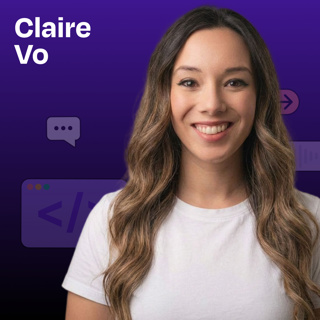
Where to find Claire Vo:

ChatPRD: https://www.chatprd.ai/

Website: https://clairevo.com/

LinkedIn: https://www.linkedin.com/in/clairevo/

X: https://x.com/clairevo

Production and marketing by https://penname.co/. For inquiries about sponsoring the podcast, email jordan@penname.co.

Det här avsnittet är hämtat från ett öppet RSS-flöde och publiceras inte av Podme. Det kan innehålla reklam.

Avsnitt(93)

This solo builder runs 24/7 local AI on his own hardware | Alex Finn

This solo builder runs 24/7 local AI on his own hardware | Alex Finn

Alex Finn is an AI builder, YouTuber, and the creator of Vibe Code Academy, a community for people learning to build with AI tools. He runs one of the most ambitious local AI setups I’ve come across: ...

13 Juli 35min

GPT-5.6 Sol vs. Claude Fable: Why OpenAI’s new model crushes my benchmark

GPT-5.6 Sol vs. Claude Fable: Why OpenAI’s new model crushes my benchmark

GPT-5.6 Sol is back, and I ran it through my full How I AI vibe benchmark against GPT-5.6 Terra, Luna, Claude Fable 5, and Sonnet 5 across five categories: PRDs, prototypes, wireframes, debugging, and...

9 Juli 36min

How I run autonomous coding agents from my phone with OpenAI Symphony + Linear | Alessio Fanelli (Kernel Labs)

How I run autonomous coding agents from my phone with OpenAI Symphony + Linear | Alessio Fanelli (Kernel Labs)

Alessio Fanelli, founder of Kernel Labs and co-host of Latent Space podcast, walks us through two very different AI workflows: (1) a fully autonomous coding setup using OpenAI Symphony + Linear, where...

6 Juli 35min

Sonnet 5 review: I ran 64 generations to find out if it's worth it

Sonnet 5 review: I ran 64 generations to find out if it's worth it

I’ve been testing every major frontier model release since the start of the year, and when Anthropic dropped Sonnet 5, I wanted more than a vibe check. I got tired of one-off tests I couldn’t repeat o...

30 Juni 25min

No Figma. No Jira. No docs. How Gusto built a new product line with Claude Code | Eddie Kim (CTO)

No Figma. No Jira. No docs. How Gusto built a new product line with Claude Code | Eddie Kim (CTO)

Eddie Kim is the co-founder and CTO of the payroll and HR platform Gusto, which just crossed $1 billion in revenue and serves more than 500,000 small businesses. Recently he did something most CTOs do...

29 Juni 51min

GLM 5.2: why I’m replacing Opus in Claude Code with this new model

GLM 5.2: why I’m replacing Opus in Claude Code with this new model

I put GLM 5.2, the open-weight coding model from Z.AI, through four real tasks inside my actual codebase: a codebase architecture audit, a UI redesign, and a 45-minute autonomous bug-hunting session p...

24 Juni 27min

How Claude Mythos found a 15-year-old bug in Mozilla Firefox | Brian Grinstead

How Claude Mythos found a 15-year-old bug in Mozilla Firefox | Brian Grinstead

Brian Grinstead is a distinguished engineer at Mozilla, where he’s worked on Firefox and the web platform since 2013 (he joined to help launch Firefox DevTools). Recently he and his team pointed an ag...

22 Juni 48min

Populärt inom Teknik

uppgang-och-fall
elbilsveckan
market-makers
natets-morka-sida
rss-elektrikerpodden
rss-technokratin
developers-mer-an-bara-kod
skogsforum-podcast
bli-saker-podden
rss-heja-framtiden
rss-veckans-ai
har-vi-akt-till-mars-an
rss-uppgang-och-fall
rss-en-ai-till-kaffet
rss-snacka-om-ai
allt-du-behover-veta-om-ny-teknik
solcellskollens-podcast
rss-kack-tech-podcast
rss-inet-patch-notes
rss-hit-med-dina-lunchpengar