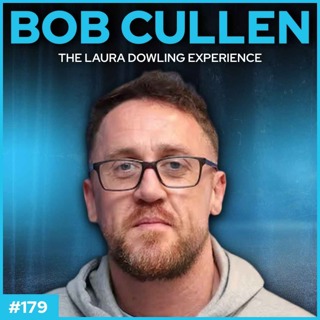
Where Violence Comes From with Bob Cullen #179

Where Violence Comes From with Bob Cullen #179

Bob Cullen isn't a doctor or a traditional academic — he's a man who spent his early life around violence and addiction, spent years in prison, and has spent the time since trying to understand where that violence actually comes from. Now finishing a master's and preparing to start a PhD, he leads the Success Stories Programme, running workshops with men — including in prisons and on probation — about patriarchy, masculinity and the beliefs that quietly shape how boys become men.


In this conversation, Bob and Laura trace violence back to its roots: the way boys are taught that emotion is weakness, how shame and poverty drive harm, and why Bob believes we can't reduce violence against women without understanding masculinity itself. He's honest about the misogyny he still hears from men when no women are around, and clear that shaming men or simply telling them to "talk more" misses how the harm is learned in the first place.


The episode also turns inward. Bob speaks openly about the drugs, the self-harm and the years he couldn't look at himself in the mirror, and about the education, meditation and steady relationships that slowly turned things around. It closes on regret, accountability and self-forgiveness — and why, after all the work he's done, he still chooses to hold on to some of the guilt he carries.


Please note: this episode discusses violence, prison, abuse, misogyny and suicide, and may be difficult to listen to. Support links are included below.


🔑 Key Points


Violence has roots we rarely look at

Bob argues we'll never reduce violence against women by focusing on it alone — it has to be traced back to patriarchy and how masculinity is formed.


Boys learn early that emotion is weakness

From "boys don't cry" to the fear of being called weak by friends, boys are taught to suppress feeling and to prove they'll use violence if needed.


Shame is one of the biggest drivers of violence

Drawing on James Gilligan's work, Bob links most harm to shame, poverty and exposure to violence, and notes people are usually victims before they become perpetrators.


Misogyny didn't start with social media

He traces how men talk about women when none are around back through history, rather than blaming figures like Andrew Tate alone.


"Just get men talking" isn't enough

Bob explains why shaming men or telling them to open up misses how the harm is learned, and why his work is built on accountability and community instead.


Change came through education and connection

Getting clean in prison, meditation, journaling and a teacher named Andrea opened a path into study, feminism and the Success Stories work he now leads.


Accountability over easy self-forgiveness

Bob speaks honestly about the guilt he still carries, and why he chooses to hold it: not to punish himself, but as a reminder of who he doesn't want to become.


📚 Resources


Violence: Our Deadly Epidemic and Its Causes — James Gilligan

On shame, poverty and the roots of violence.


The Will to Change — bell hooks

On men, masculinity and love.


The Patriarchs — Angela Saini

How patriarchy took hold.


Success Stories Programme

The anti-patriarchy, anti-violence programme Bob runs with men.


Samaritans Ireland

Free 24/7 on 116 123.


Pieta

Free 24/7 crisis support on 1800 247 247.


⏱️ Timestamps


00:00 — Introduction and the Success Stories Program

03:52 — Patriarchy, domination and masculinity

06:34 — Why focusing only on violence against women falls short

09:56 — "Boys don't cry" and the fear of weakness

12:45 — Shame, poverty and the roots of violence

13:40 — Misogyny's long history, from Pandora to Descartes

27:40 — Why "men just need to talk" isn't enough

32:56 — Victims before perpetrators

41:30 — Accountability, integrity and community

50:00 — Drugs, self-harm and going to prison

63:00 — The teacher who changed everything

79:23 — Regret, accountability and self-forgiveness

Thanks for listening! You can watch the full episode on YouTube here. Don’t forget to follow The Laura Dowling Experience podcast on Instagram @lauradowlingexperience for updates and more information. You can also follow our host, Laura Dowling, @fabulouspharmacist for more insights and tips. If you enjoyed this episode, please subscribe and leave a review—it really helps us out! Stay tuned for more great conversations.

Hosted on Acast. See acast.com/privacy for more information.

Det här avsnittet är hämtat från ett öppet RSS-flöde och publiceras inte av Podme. Det kan innehålla reklam.

Avsnitt(214)

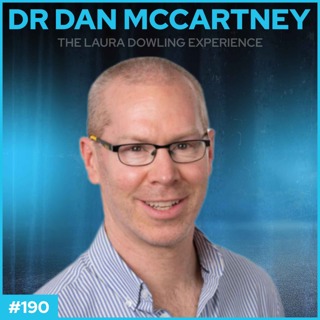
Half the Population Aren't Getting Enough of These Essential Nutrients with Dr Dan McCartney #190

Half the Population Aren't Getting Enough of These Essential Nutrients with Dr Dan McCartney #190

Dr Dan McCartney, dietitian, lecturer in Human Nutrition and Dietetics and Programme Director of the Human Nutrition and Dietetics programme at TU Dublin and Trinity College Dublin, joins Laura to dis...

8 Okt 1h 9min
Bitesize Moment: "It Has No Boundaries." — Dr Denis O'Driscoll on Addiction and Recovery

Bitesize Moment: "It Has No Boundaries." — Dr Denis O'Driscoll on Addiction and Recovery

In this bitesize moment pulled from the Laura Dowling Experience back catalogue, Dr Denis O'Driscoll, pharmacist working in the HSE addiction services gives a straight, compassionate answer on how har...

6 Okt 6min
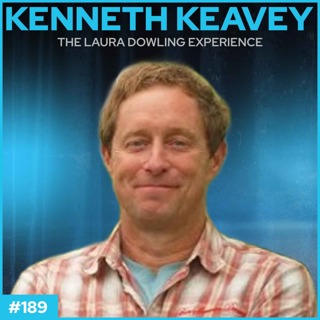
Ireland Has 60 Vegetable Growers Left with Kenneth Keavey #189

Ireland Has 60 Vegetable Growers Left with Kenneth Keavey #189

Kenneth Keavey has a PhD in chemistry and spent his early career in pharma and biotech. He now grows organic vegetables on twenty-five acres outside Galway, and he's the first to point out the irony: ...

1 Okt 56min

Bitesize Moment: "It Makes My Heart Happy." — Prof Robert Kelly on Real Work-Life Balance

Bitesize Moment: "It Makes My Heart Happy." — Prof Robert Kelly on Real Work-Life Balance

In this bitesize moment pulled from the Laura Dowling Experience back catalogue, Prof Robert Kelly admits he lost his own balance after a TED Talk and book launch, then shares the pillars-of-life exer...

29 Sep 6min

Bitesize Moment: "Self Care Is Now Care of Self." — Siobhan Murray on Beating Burnout

Bitesize Moment: "Self Care Is Now Care of Self." — Siobhan Murray on Beating Burnout

In this bitesize moment pulled from the Laura Dowling Experience back catalogue, Siobhan Murray, psychotherapist and burnout strategist explains why she has banned the phrase self care, and shares the...

25 Sep 16min
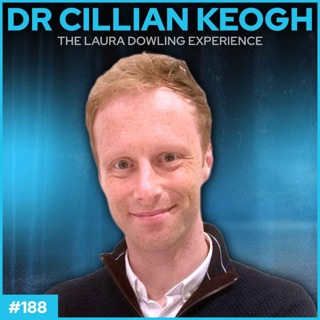
Most People Don't Need Surgery for Haemorrhoids with Dr Cillian Keogh #188

Most People Don't Need Surgery for Haemorrhoids with Dr Cillian Keogh #188

Laura is joined by Dr Cillian Keogh, a GP and co-founder of Dublin City Clinic, for a frank and surprisingly funny conversation about haemorrhoids — what they actually are, who gets them, and why almo...

24 Sep 38min
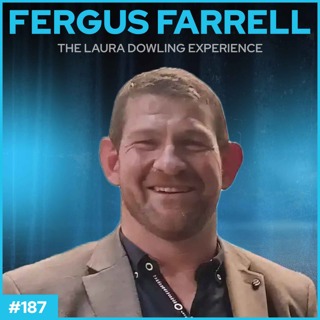
From Moving One Toe to 6 Million Steps with Fergus Farrell #187

From Moving One Toe to 6 Million Steps with Fergus Farrell #187

In this episode, former Connacht rugby player Fergus Farrell tells Laura what happened after he lifted a metal bench in his own yard in October 2018 — and severed his spinal cord by ninety per cent.He...

17 Sep 36min

World Bodhrán Champion on Music, Belonging and Motherhood with Aimée Farrell-Courtney #186

World Bodhrán Champion on Music, Belonging and Motherhood with Aimée Farrell-Courtney #186

Aimée Farrell-Courtney was six years old when she saw three girls playing the bodhrán in her school yard, the sun behind them and the sound going round the walls. She went home and announced she wante...

10 Sep 1h 4min

Populärt inom Samhälle & Kultur

podme-dokumentar
gynning-berg
p3-dokumentar
svenska-fall
en-mork-historia
aftonbladet-krim
killradet
hor-har
rss-creepypodden
rss-hemlispodden
flashback-forever
rss-kansli-med-jessica-sebastian
aftonbladet-daily
mardromsgasten
rss-schyffert-sundin-ar-det-har-nat
rss-nemo-moter-en-van
kod-katastrof
vad-blir-det-for-mord
p1-dokumentar
rss-mer-an-bara-morsa