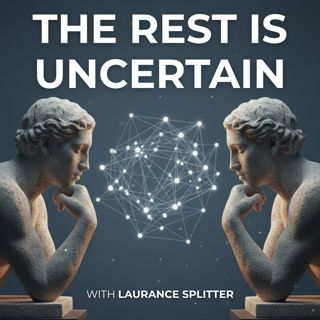
A Dialogue about “Dialogue”

A Dialogue about “Dialogue”

Are there different types of dialogues with different aims and structures?

In this episode, Dr. Laurance Splitter finally engages in a real dialogue with another person, in this case, Professor Maughn Rollins Gregory, Director of the Institute for the Advancement of Philosophy for Children in the USA, and an outstanding scholar and teacher in both education and philosophy. Maughn has written extensively about the nature of dialogue itself and this is the subject of their conversation.

In previous episodes, Laurance expressed some puzzlement over the question of whether there are different forms of dialogue with different aims and structures. He and Maughn share a common background in the theory and practice of the community of inquiry, where the inquiry – and the ensuing dialogue – are driven by a commitment to solving a problem or answering a question which is puzzling or intriguing. In this kind of process, our reasoning “riders” tend to lead the way over our more intuitive or emotive “elephants” (using a metaphor previously attributed to Jonathan Haidt), although it will still be driven by such emotions as curiosity, surprise, wonder, intellectual humility, etc.

In previous episodes, Laurance has proposed a slogan for this kind of inquiry and dialogue: we aim for truth but are extremely wary of proclaiming that we have found it. Coming from the philosophical tradition of American Pragmatism, Maughn prefers to talk about aiming for what is most reasonable to believe, rather than for truth per se, but they are willing to live with this difference for the sake of the discussion.

Laurance invites Maughn to address types of dialogue that are not part of, or aimed at, inquiry, particularly the dialogue required when different groups not only disagree on fundamental issues, but are being led by their rampaging “elephants” which prevent any real dialogue from even taking place, because each side is so committed to its own narrative that it does not even recognize the legitimacy of the other side. In short, they are not willing or able to treat one another as persons. Citing scholars including Emily Robertson, Douglas Walton, Cleo Cherry Holmes, Miles Holton and Stephen Festmeier, Maughn provides some examples of different sorts of dialogue with their own aims and structures (aiming at affirming solidarity or strengthening relationships, or developing a mutual sense of personhood through group dynamic exercises where inquiry itself is not involved, etc.). Those engaged in such dialogues are often learning how to negotiate together; there is no “truth” to be discovered or constructed, rather the aim is working out what we can all live with.

Maughn and Laurance agree that regardless of which type of dialogue is involved, neither those directly engaged or those looking on from outside should try to pre-empt the outcomes of the dialogue. Like inquiry, dialogue has a life of its own and we should follow it where it leads.

Connect with Dr. Laurance Splitter: LinkedIn

Det här avsnittet är hämtat från ett öppet RSS-flöde och publiceras inte av Podme. Det kan innehålla reklam.

Avsnitt(17)

The Middle East

The Middle East

A never-ending quagmire?In this extended episode, Laurance asks why the Middle East, focusing on the Israeli-Palestinian situation, remains such a quagmire. He attempts to give a balanced perspective ...

6 Aug 39min

Drugs

Drugs

A history of inconsistencies.In this episode, Laurance begins by noting that there are several areas of dispute surrounding the nature and use of drugs – both legal and illegal – some of which are fac...

23 Juli 25min

AI

AI

What exactly is AI and how concerned should we be about it?In this episode, host Dr. Laurance Splitter notes the distinction between empirical and more conceptual questions regarding AI, with question...

9 Juli 26min

Explanations in the sciences, the humanities and ordinary human affairs.

Explanations in the sciences, the humanities and ordinary human affairs.

Aiming for truth and the dangers of retreating to narratives.In this episode, host Dr. Laurance Splitter invites listeners to think about why they make the decisions and choices that they make, which ...

25 Juni 25min

“The intersection of philosophy and public life” and the Enlightenment

“The intersection of philosophy and public life” and the Enlightenment

Good thinking and dialogue are more important than ever.In this episode, host Dr. Laurance Splitter begins by reflecting on topics previously discussed, including: social and cultural polarization; th...

11 Juni 23min

Identity (Cont’d)

Identity (Cont’d)

Tying up some loose ends….In this episode, host Dr. Laurance Splitter provides further clarification of the concept of quantitative, or strict, identity. Objects and people can and do change – we call...

30 Apr 29min

Identity

Identity

A concept both familiar and puzzling.In this episode, host Dr. Laurance Splitter begins with some examples which reveal that the ideaof identity has been, and is still, used to mean different things. ...

16 Apr 29min
Populärt inom Samhälle & Kultur

podme-dokumentar
gynning-berg
p3-dokumentar
en-mork-historia
aftonbladet-daily
svenska-fall
creepypodden-med-jack-werner
killradet
aftonbladet-krim
hor-har
rss-schyffert-sundin-ar-det-har-nat
rss-nemo-moter-en-van
mardromsgasten
flashback-forever
badfluence
rss-mer-an-bara-morsa
rss-vill-du-veta-en-hemlis-2
tv4-nyheterna-story
p3-historia
p1-dokumentar