
John D. Rockefeller Junior

John D. Rockefeller Junior

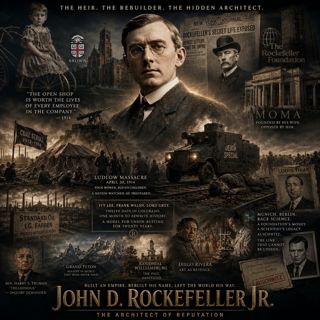
Part one left the old man under an obelisk in Cleveland, ninety-seven years old, the richest human being who had ever lived, and remembered by most of America as a kindly figure who handed out dimes and beat hookworm in the South.

That reputation did not build itself. Somebody constructed it, deliberately, over decades — and it was not John D. Rockefeller Senior. He was too rigid and too contemptuous of the public to bother. It was his son.This is the part of the story that is harder to tell, because the man at the center of it was not a robber baron. John D. Rockefeller Junior was shy, dutiful, terrified of doing wrong, and by every account sincere. He gave away more than five hundred million dollars.

He never took a drink or a cigarette in ninety-six years. He collapsed at thirty from the weight of a name he had not chosen. And in the spring of 1914 that name was on a coal company in southern Colorado when the militia set up a machine gun above a tent colony full of immigrant families.We start at his birth in 1874, in a house where the children shared one bicycle and kept ledgers of their chore money, and where the only son wore his sisters' hand-me-down dresses and was teased about the photograph for the rest of his life.

We follow him through Brown, through his marriage to a senator's daughter who would go on to found the Museum of Modern Art over his objections, through the Hearst letters and the exposure of his grandfather's double life, and out of the boardroom entirely in 1910.Then Colorado. The company towns where the firm owned your house and your store and your church and the man who weighed your coal. The armored car the strikers called the Death Special.

Mother Jones held nine weeks in a hospital basement without charge. Junior's testimony to Congress that the open shop was worth the lives of every employee in the company, sixteen days before the shooting started. Louis Tikas with a rifle stock broken across his skull and three bullets in his back, left along the railway tracks for three days. And the pit under a burning tent where four women and eleven children were sheltering, and what a telephone linesman found when he lifted the bedstead the next morning.What happened after is the real inheritance.

A publicity man named Ivy Lee, a chairman named Frank Walsh who took Junior apart on the witness stand, a future Prime Minister of Canada hired to design an answer, and a two-week trip to Colorado that ended with the richest young man in America in his shirtsleeves, dancing with miners' wives while the photographers worked.

The union was destroyed. The reputation recovered inside a month. And the arrangement that replaced the union became the national model for keeping unions out for the next twenty years.The episode also goes where I said it would, into the Rockefeller Foundation's money in Germany — the Munich institute, the Berlin race-science laboratories, and the twin research the Foundation funded from 1932 to 1935 by a scientist named Otmar von Verschuer, who a decade later was receiving blood and human eyes from Auschwitz sent by his former assistant Josef Mengele.

I draw that line carefully and narrowly, because the version that circulates online is wrong in ways that do not need the help.Then Grand Teton, bought under a false company name from neighbors who were never told. Colonial Williamsburg with the slavery left out. Diego Rivera's revenge.

Email Brian

Join Our FREE Newsletter

Get Brian's Books

Leave Us A Voicemail

Visit Our Website


Have a forgotten historical mystery, disturbing event, unsolved crime, or hidden conspiracy you think deserves investigation?

Send your suggestions to brian@paranormalworldproductions.com.

Disturbing History is a dark history podcast exploring unsolved mysteries, secret societies, historical conspiracies, lost civilizations, and the shadowy stories buried beneath the surface of the past.

Follow the show and enable automatic downloads so you never miss a deep dive into history’s most unsettling secrets.

Because sometimes the truth is darker than fiction.

Det här avsnittet är hämtat från ett öppet RSS-flöde och publiceras inte av Podme. Det kan innehålla reklam.

Avsnitt(154)

The 1990's

The 1990's

On July 16, 1990, Time magazine put a group of young adults on its cover beneath the word “twentysomething” and asked whether they were laid back, late blooming, or simply lost. The story said they st...

30 Sep 1h 12min
The Siege At Ruby Ridge

The Siege At Ruby Ridge

Listener discretion is advised. This episode contains descriptions of real-life violence and death, including the shooting deaths of a fourteen-year-old boy, his mother, and a federal law enforcement ...

27 Sep 1h 18min

The 1980's

The 1980's

The 1980s began with 52 Americans still being held hostage in Tehran and ended with crowds tearing open the Berlin Wall. Between those two moments came one of the most turbulent, contradictory decades...

25 Sep 1h 9min
Halley's Comet

Halley's Comet

On the night of May 18, 1910, people across the world waited for Halley’s Comet to kill them.Hotels in New York opened their rooftops. Miners in Pennsylvania refused to go underground. A religious sec...

23 Sep 1h 1min
The Freeway Killer

The Freeway Killer

This episode discusses sexual violence against children and teenagers, torture, and murder and is not suitable for younger audiences. Listener discretion is strongly advised. On the night of June 11, ...

21 Sep 1h 19min
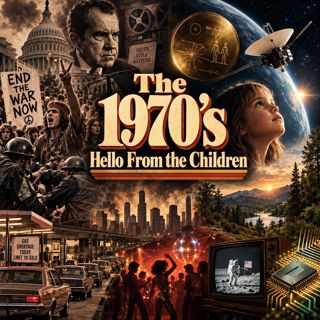
The 1970's

The 1970's

The 1970s opened in conflict.On April 30, 1970, President Richard Nixon announced the expansion of U.S. military operations into Cambodia.Days later, four students were killed by the Ohio National Gua...

18 Sep 1h 2min
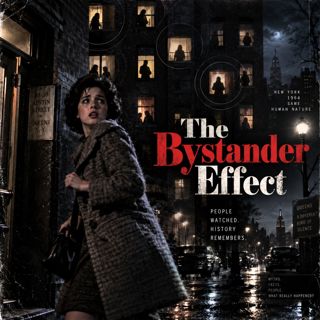
The Bystander Effect

The Bystander Effect

On March 27, 1964, The New York Times published a story that would become one of the most famous examples of human indifference ever told. According to the report, 38 people in Queens watched as 28-ye...

16 Sep 1h
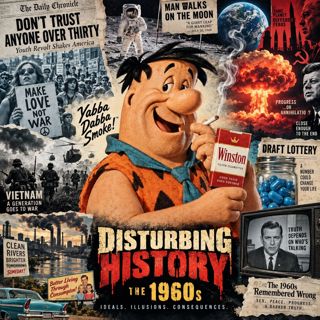
The 1960's

The 1960's

Everybody knows the line: “Don’t trust anyone over thirty.” It became shorthand for an entire generation, even though the man who said it was a 24-year-old Berkeley graduate student who would turn thi...

13 Sep 1h 2min

Populärt inom Samhälle & Kultur

podme-dokumentar
en-mork-historia
gynning-berg
svenska-fall
p3-dokumentar
aftonbladet-krim
rss-creepypodden
hor-har
flashback-forever
rss-schyffert-sundin-ar-det-har-nat
aftonbladet-daily
rss-hemlispodden
kod-katastrof
killradet
spar
rss-expressen-dok
p1-dokumentar
rss-mer-an-bara-morsa
rss-nemo-moter-en-van
vad-blir-det-for-mord