Jerry Parker on Big Game Hunting in the Market | #647

Jerry Parker on Big Game Hunting in the Market | #647

Today’s guest is Jerry Parker, founder and CEO of Chesapeake Capital and one of the original Turtles trained by Richard Dennis. Together we run the Cambria Chesapeake Pure Trend ETF (MFUT). In today's episode, Jerry explains why managed futures isn't the same as trend following. He breaks down the math and psychology of hunting outliers, letting a few winners pay for many small losses, and why he'd never chase crisis alpha at the cost of returns. To close, Jerry explains why MFUT trades individual stocks rather than just indices. Learn more about the Cambria Chesapeake Pure Trend ETF www.cambriafunds.com/mfut Have questions? Reach out to us any time at info@cambriainvestments.com. Full show notes: Link (0:00) Jerry Parker (3:09) Trend following vs managed futures (11:00) Misconceptions about crisis alpha (18:42) Portfolio construction, volatility targeting, and strategy complexity (23:47) Trend following in individual stocks (32:18) Performance reflection and importance of sticking to a strategy (37:46) Allocation challenges and memorable recent trades TO DETERMINE IF THIS FUND IS AN APPROPRIATE INVESTMENT FOR YOU, CAREFULLY CONSIDER THE FUND'S INVESTMENT OBJECTIVES, RISK FACTORS, CHARGES AND EXPENSE BEFORE INVESTING. THIS AND OTHER INFORMATION CAN BE FOUND IN THE FUND'S FULL OR SUMMARY PROSPECTUS WHICH MAY BE OBTAINED BY CALLING 855-383-4636 (ETF INFO) OR VISITING OUR WEBSITE AT WWW.CAMBRIAFUNDS.COM. READ THE PROSPECTUS OR SUMMARY PROSPECTUS CAREFULLY BEFORE INVESTING OR SENDING MONEY. Past performance is not indicative of future results. The material above has been provided for informational purposes only and is not intended as legal or investment advice or a recommendation of any particular security or strategy. The Cambria ETFs are distributed by ALPS Distributors Inc., 1290 Broadway, Suite 1000, Denver, CO 80203, which is not affiliated with Cambria Investment Management, LP. MFUT: This fund is new and has a limited operating history. There is no guarantee that the Fund will achieve its investment goal. Investing involves risk, including the possible loss of principal. Commodities Risk: Exposure to the commodities markets may subject the Fund to greater volatility than investments in traditional securities. Fixed Income Securities Risk: The prices of fixed income securities respond to economic developments, particularly interest rate changes, as well as to changes in an issuer’s credit rating or market perceptions about the creditworthiness of an issuer. Foreign Securities Risk: The Fund may invest in foreign securities. Such investments involve certain risks not involved in domestic investments and may experience more rapid and extreme changes in value than investments in securities of U.S. companies. Leverage Risk: The derivative instruments in which the Fund may invest provide the economic effect of financial leverage by creating additional investment exposure to the underlying instrument, as well as the potential for greater loss. If the Fund uses leverage through purchasing derivative instruments, the Fund has the risk that losses may exceed the net assets of the Fund. Derivatives Risk: Derivatives are financial instruments that derive value from the underlying reference asset or assets, such as stocks, bonds, commodities, currencies, funds (including ETFs), interest rates or indexes. Short Selling Risk: If a security sold short or other instrument increases in price, the Fund may have to cover its short position at a higher price than the short sale price, resulting in a loss. Commodity-Linked Derivatives Tax Risk: The tax treatment of commodity-linked derivative instruments may be adversely affected by changes in legislation, regulations, or other legally binding authority. Non-Diversification Risk: Because the Fund is “non-diversified,” it may invest a greater percentage of its assets in the securities of a single issuer or a smaller number of issuers than if it was a diversified fund. Commodities Risk. Exposure to the commodities markets may subject the Fund to greater volatility than investments in traditional securities. Fixed Income Securities Risk. The prices of fixed income securities respond to economic developments, particularly interest rate changes, as well as to changes in an issuer’s credit rating or market perceptions about the creditworthiness of an issuer. Foreign Securities Risk. The Fund may invest in foreign securities. Such investments involve certain risks not involved in domestic investments and may experience more rapid and extreme changes in value than investments in securities of U.S. companies. Leverage Risk. The derivative instruments in which the Fund may invest provide the economic effect of financial leverage by creating additional investment exposure to the underlying instrument, as well as the potential for greater loss. If the Fund uses leverage through purchasing derivative instruments, the Fund has the risk that losses may exceed the net assets of the Fund. Derivatives Risk. Derivatives are financial instruments that derive value from the underlying reference asset or assets, such as stocks, bonds, commodities, currencies, funds (including ETFs), interest rates or indexes. Short Selling Risk. If a security sold short or other instrument increases in price, the Fund may have to cover its short position at a higher price than the short sale price, resulting in a loss. Commodity-Linked Derivatives Tax Risk. The tax treatment of commodity-linked derivative instruments may be adversely affected by changes in legislation, regulations, or other legally binding authority. Non-Diversification Risk. Because the Fund is “non-diversified,” it may invest a greater percentage of its assets in the securities of a single issuer or a smaller number of issuers than if it was a diversified fund. New Fund Risk. The Fund is a recently organized management investment company with no operating history. Diversification does not guarantee against a loss. Definitions: Alpha: The portion of an investment's return that differs from its benchmark after adjusting for risk, measured over a specific historical period and not predictive of future results. Crisis Alpha: Returns a strategy seeks to generate during periods of significant equity market stress — a stated objective, not a guaranteed or expected outcome. Stop Loss: A standing order to sell a security once it reaches a specified price, which does not guarantee execution at that price in fast-moving or gapping markets. Trailing Stop: A stop order set at a fixed distance from the market price that adjusts upward as the price rises and holds when it falls, carrying the same execution risks as a stop loss. Shorting: Selling a borrowed security intending to repurchase it later, which profits if the price falls and carries theoretically unlimited loss potential if the price rises. Correlation: A statistical measure of how two assets move relative to one another, ranging from -1.0 to +1.0, which changes over time and often rises during market stress. Derivatives: Financial contracts deriving value from an underlying asset, rate, or index — including futures, options, and swaps — that may involve leverage, counterparty risk, and losses exceeding the initial investment. Futures: Standardized exchange-traded contracts to buy or sell an asset at a set price on a future date, traded on margin so that leverage magnifies both gains and losses. Long: Owning or holding a position expected to benefit from an increase in the price of the underlying asset. S&P GSCI (formerly the Goldman Sachs Commodity Index): A production-weighted, energy-heavy index of commodity futures created by Goldman Sachs in 1991 and acquired by S&P in 2007, which is unmanaged and cannot be invested in directly. Get Stopped Out: Having a position closed automatically when a stop order triggers, which can occur on a temporary price move and exit the position before any recovery. MSCI EAFE Index: A market-capitalization-weighted index of developed-market equities outside the US and Canada, covering Europe, Australasia, and the Far East, which is unmanaged and not directly investable. MSCI Emerging Markets Index: A market-capitalization-weighted index of equities across emerging-market countries, which is unmanaged and not directly investable. Commodity Trading Advisor (CTA): An individual or firm advising others on futures, options on futures, or certain swaps, generally required to register with the CFTC and join the NFA — registration that implies no skill level or regulatory endorsement.

Det här avsnittet är hämtat från ett öppet RSS-flöde och publiceras inte av Podme. Det kan innehålla reklam.

Avsnitt(717)

FT’s Robin Wigglesworth: Why Bonds, Not Stocks, Rule Everything Around Us | #650

FT’s Robin Wigglesworth: Why Bonds, Not Stocks, Rule Everything Around Us | #650

Today’s guest is Robin Wigglesworth, editor of FT Alphaville at the Financial Times and the author of A Fabulous Debt: The Epic Story of How Bonds Built the Modern World. In today’s episode, Robin ma...

11 Sep 49min
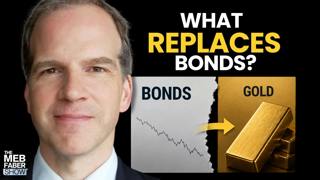
Why Gold Stopped Being a Commodity (AllianceBernstein’s Inigo Fraser Jenkins) | #649

Why Gold Stopped Being a Commodity (AllianceBernstein’s Inigo Fraser Jenkins) | #649

Today’s guest is Inigo Fraser Jenkins, Chief Investment Strategist at AllianceBernstein. In today’s episode, Inigo argues that the golden era of easy diversification and high real returns is ending. ...

8 Sep 50min

Paul Kedrosky: AI is the First Bubble With Every Ingredient at Once | #648

Paul Kedrosky: AI is the First Bubble With Every Ingredient at Once | #648

Today’s guest is Paul Kedrosky, a fellow at the MIT Institute for the Digital Economy, partner at SK Ventures and former sell-side analyst. In today’s episode, Paul Kedrosky explains why AI sits at t...

31 Aug 45min
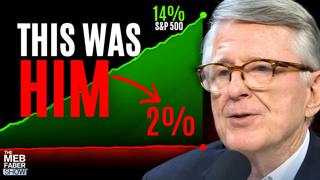
David Booth: 45 Years to $1 Trillion at Dimensional | #646

David Booth: 45 Years to $1 Trillion at Dimensional | #646

Today’s guest is David Booth, founder of Dimensional Fund Advisors, which now manages over $1 trillion. He studied under Eugene Fama at Chicago and helped build one of the first index funds at Wells F...

21 Aug 38min
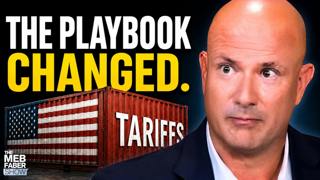
Luke Gromen: The Bull Market That Loses You Money | #645

Luke Gromen: The Bull Market That Loses You Money | #645

Today’s guest is Luke Gromen, founder of the macro research firm Forest for the Trees, or FFTT. In today's episode, Luke argues that free trade is dead, and the US is pivoting to Hamiltonian economi...

14 Aug 53min
Teaser: Investing in America: The Rise Of A 250-Year Bull Market

Teaser: Investing in America: The Rise Of A 250-Year Bull Market

In today's episode, I read the opening of my new book, Investing in America: The Rise of a 250-Year Bull Market, plus a couple of sidebars. The book is available now. Grab a copy on Amazon or learn mo...

12 Aug 12min
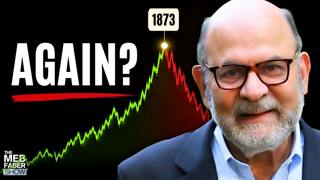
Liaquat Ahamed on the Railroad Bubble That Crashed the World | #642

Liaquat Ahamed on the Railroad Bubble That Crashed the World | #642

Today’s guest is Liaquat Ahamed, the Pulitzer Prize–winning author of Lords of Finance: The Bankers Who Broke the World, one of the greatest financial history books ever written. His new book is calle...

31 Juli 41min

Populärt inom Business & ekonomi

framgangspodden
varvet
rss-jossan-nina
rss-borsens-finest
24fragor
svd-tech-brief
uppgang-och-fall
badfluence
avanzapodden
rss-inga-dumma-fragor-om-pengar
bathina-en-podcast
lastbilspodden
rss-dagen-med-di
tabberaset
fill-or-kill
rss-kort-lang-analyspodden-fran-di
affarsvarlden
market-makers
rikatillsammans-om-privatekonomi-rikedom-i-livet
rss-hos-psykologen