BPC-157 and Cancer: What the Studies Actually Show

BPC-157 and Cancer: What the Studies Actually Show

Does BPC-157 cause cancer — or is that claim being oversimplified?

In this episode of Peptides Explained, we take a study-review approach to one of the biggest concerns surrounding BPC-157: its potential angiogenic effects and whether that could theoretically contribute to cancer proliferation.

Angiogenesis means new blood vessel formation. It is essential for normal wound healing and tissue repair, but it also plays a role in tumor biology. That overlap has led to concerns that BPC-157 could "feed" cancer growth.

But what do the studies actually show?

In this episode, we review key papers on BPC-157, including:

• Hsieh et al., 2017 — VEGFR2 activation and angiogenesis • Radeljak, Seiwerth, and Sikiric, 2004 — melanoma cell-line data • Kang et al., 2018 — cancer cachexia context • Masnec et al., 2015 — corneal injury and neovascularization

We break down the difference between physiologic repair signaling and pathologic tumor angiogenesis, and explain why the current evidence does not support the simple claim that BPC-157 causes cancer proliferation.

That said, the lack of strong human oncology safety data means caution is still appropriate, especially for anyone with active cancer, prior cancer, unexplained symptoms, or elevated cancer risk.

This episode is designed as a literature review for clinicians, physicians, and scientifically curious listeners who want a balanced, evidence-based explanation.

Disclaimer: This content is for informational and educational purposes only and is not medical advice. Always consult a licensed healthcare professional before considering any therapy.

Affiliate disclosure: Peptides Explained is an affiliate partner with OfflinePeptides.com. If you use my link, I may earn a commission at no additional cost to you. https://offlinepeptides.com/ref/JohnGarrett/

#BPC157 #PeptidesExplained #CancerRisk #Angiogenesis #PeptideScience #VEGF #TissueRepair #MedicalEducation #PhysicianReview #Peptides

Det här avsnittet är hämtat från ett öppet RSS-flöde och publiceras inte av Podme. Det kan innehålla reklam.

Avsnitt(46)

What Is Pinealon? Brain Aging, Neuroprotection, and the Evidence

What Is Pinealon? Brain Aging, Neuroprotection, and the Evidence

Check out The Peptide App here: thepeptide.app/explained What is Pinealon, and does this three-amino-acid peptide really protect the aging brain? Pinealon—also called EDR or Glu-Asp-Arg—is a synthetic...

31 Aug 22min
Khavinson Peptide Bioregulators: What Do They Actually Do?

Khavinson Peptide Bioregulators: What Do They Actually Do?

What are Khavinson peptide bioregulators, and what do they actually do? John Garrett examines the Russian research tradition behind organ-derived peptide complexes and synthetic ultrashort peptides. T...

30 Aug 19min
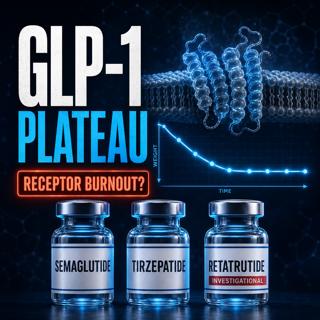
Did Your GLP-1 Stop Working? Appetite, Receptors and Weight-Loss Plateaus

Did Your GLP-1 Stop Working? Appetite, Receptors and Weight-Loss Plateaus

Does a weight-loss plateau mean your GLP-1 receptors have become desensitized? John separates cellular receptor biology from whole-body weight regulation and compares semaglutide, tirzepatide, and inv...

30 Aug 21min

Should You Be Using Peptides? The Honest Answer

Should You Be Using Peptides? The Honest Answer

Visit Peptide-Solutions.info for more info Check out App.PeptidesExplained.info Should you be using peptides? The honest answer is that not everyone should. Peptides are not a nutritional requirement,...

20 Aug 18min

ARA-290: Can It Repair Small Nerve Fibers?

ARA-290: Can It Repair Small Nerve Fibers?

ARA-290, also called cibinetide, is an investigational 11-amino-acid peptide designed from erythropoietin biology to activate tissue-protective signaling without stimulating red-blood-cell production....

18 Aug 17min
Lipo-C Injections: What Do They Actually Do?

Lipo-C Injections: What Do They Actually Do?

Check out Peptide.Solutions.info/Pathways and submit a request to see what companies I have partnered with to get products. Lipo-C injections are often marketed for fat burning, energy, liver support,...

12 Aug 15min
FOXO4-DRI: Can It Really Remove Senescent Cells and Reverse Aging?

FOXO4-DRI: Can It Really Remove Senescent Cells and Reverse Aging?

FOXO4-DRI has been called a "zombie-cell killer," a senolytic peptide, and even a possible anti-aging breakthrough. The mechanism is fascinating—but the claims have moved much faster than the human ev...

10 Aug 23min
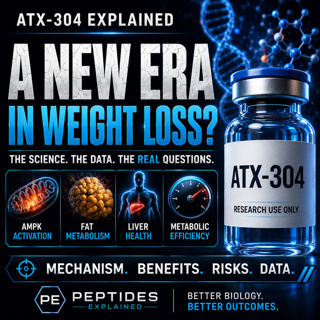
ATX-304: AMPK Activation, Metabolic Demand, and the Limits of "Exercise in a Pill"

ATX-304: AMPK Activation, Metabolic Demand, and the Limits of "Exercise in a Pill"

ATX-304 is often called "exercise in a pill," but it is more accurate to describe it as an investigational oral small molecule that activates AMPK and alters mitochondrial energy demand. John explains...

5 Aug 22min

Populärt inom Hälsa

somna-med-henrik
rss-jossan-nina
rss-bara-en-till-om-beroende-medberoende
bullfika
inga-beiga-morsor
rss-vuxna-pa-latsas
not-fanny-anymore
rss-viktmedicinpodden
angestpodden
sexnoveller-deluxe
johannes-hansen-podcast
rss-hos-psykologen
sa-in-i-sjalen
rss-basta-livet
sova-med-dan-horning
tyngre-traningssnack
halsoveckan-by-tyngre
rss-autismandan
rss-angra-inget-3
brottarbroder