
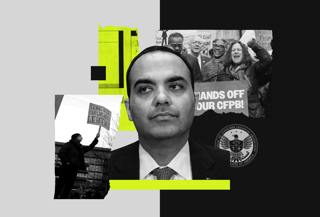
Why DOGE is killing the agency that stops banks from ripping you off
Rohit Chopra was the Consumer Financial Protection Bureau head until the end of January, when President Donald Trump fired him and Elon Musk’s DOGE began trying to dismantle the agency. The CFPB has been pretty popular since it was founded in the wake of the 2008 financial crisis to protect consumers, so shutting it down has kicked off a bunch of controversies — not least of which was whether Trump and Musk even had the power to do it. This all led me to ask several times who made the decision to fire him, who is currently responsible for the various policies of our government, and whether any of those things add up to a clear plan. Some of the most powerful executives in the world answer questions like this on Decoder all the time. But Rohit just didn’t know — and that should probably be as worrying as anything. Links: Trump fires CFPB director Rohit Chopra | Associated Press Trump orders CFPB to stop work, closes building | Associated Press CFPB workers reinstated after court order but still can’t work | The Verge Trump admin to appeal order blocking CFPB shutdown | Bloomberg Law A shady tech bootcamp may be sneaking back online | The Verge CFPB won’t enforce long-awaited payday lending rule | Bloomberg Law CFPB seeks to vacate redlining settlement, refund lender | Banking Dive CFPB signals it will drop rule regulating BNPL like credit cards | PYMTS CFPB drops fraud lawsuit against banks, Zelle | CNBC Credits: Decoder is a production of The Verge and part of the Vox Media Podcast Network. Our producers are Kate Cox and Nick Statt. Our editor is Ursa Wright. The Decoder music is by Breakmaster Cylinder. Learn more about your ad choices. Visit podcastchoices.com/adchoices
10 Apr 48min

UiPath CEO Daniel Dines on AI agents replacing our jobs
Today, I’m talking with Daniel Dines, the co-founder and once again the CEO of UiPath, a software company that specializes in something called robotic process automation. We’ve been featuring a lot of what I like to call full-circle Decoder guests on the show lately, and Daniel is a perfect example. He was first on the show in 2022, and UiPath has had a lot of changes since then, including a short stint with a different CEO. Daniel is now back at the helm, and the timing is important: the company needs to shift, fast, to a world of agentic AI, which is radically changing the RPA business. We got into all that and more in this episode. It’s a fun one. Links: UiPath’s Daniel Dines thinks automation can fight the great resignation | Decoder Daniel Dines: Why Agents Do Not Mean RPA is Fucked | Harry Stebbings UiPath to re-appoint Daniel Dines as CEO | UiPath UiPath shares tank 30% after company announces CEO shakeup | CNBC UiPath to lay off 10% of workforce in companywide restructuring | CNBC UiPath looks for a path to growth with Peak agentic AI acquisition | TechCrunch How RPA vendors aim to remain relevant in a world of AI agents | TechCrunch UiPath finds firmer footing with pivot to general automation, AI | TechCrunch Transcript: https://www.theverge.com/e/643562 Credits: Decoder is a production of The Verge and part of the Vox Media Podcast Network. Our producers are Kate Cox and Nick Statt. Our editor is Ursa Wright. The Decoder music is by Breakmaster Cylinder. Learn more about your ad choices. Visit podcastchoices.com/adchoices
7 Apr 1h 6min
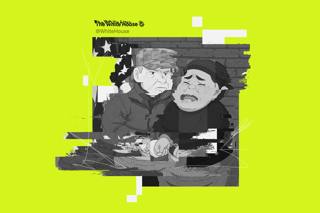
What AI anime memes tell us about the future of art and humanity
Today, we’re diving head first into the AI art debate, which to be honest, is an absolute mess. If you’ve been on the internet this past week, you’ve seen the Studio Ghibli memes. These images are everywhere — and they’ve widened an already pretty stark rift between AI boosters and critics. Brian Merchant, author of the newsletter and book Blood in the Machine, wrote one of the best analyses of the Ghibli trend last week. So I invited him onto the show not only to discuss this particular situation, but also to help me dissect the ongoing AI art debate more broadly. Links: OpenAI's Studio Ghibli meme factory is an insult to art itself | Brian Merchant Seattle engineer’s Ghibli-style image goes viral | Seattle Times OpenAI just raised another $40 billion round from SoftBank | Verge ChatGPT “added one million users in the last hour.” | Verge ChatGPT’s Ghibli filter is political now, but it always was | Verge OpenAI, Google ask the government to let them train on content they don’t own | Verge Studio Ghibli in the age of A.I. reproduction | Max Read OpenAI has a Studio Ghibli problem | Vergecast AI slop is a brute force attack on the algorithms that control reality | 404 Media The New Aesthetics of Fascism | New Socialist Credits: Decoder is a production of The Verge and part of the Vox Media Podcast Network. Our producers are Kate Cox and Nick Statt. Our editor is Ursa Wright. The Decoder music is by Breakmaster Cylinder. Learn more about your ad choices. Visit podcastchoices.com/adchoices
3 Apr 55min

How Unity CEO Matt Bromberg stopped the ‘war’ against its customers
Unity is one of those hidden in plain sight companies we love here on Decoder, and CEO Matt Bromberg is in many ways the perfect Decoder guest. He's been on the job less than a year and took over in a moment of crisis. He describes the company as being "at war with its customers" before he joined, and he's not wrong. The game industry right now is also contracting overall — studios are closing, and some big bets on things like the metaverse and live service games haven’t paid off. So we talked about all that, and where Matt sees growth ahead: Unity isn’t just a game engine provider, but the platform for everything from running those big live services and the monetization on top of them. Links: Unity’s struggles continue with fresh wave of layoffs | The Verge Unity attempts to turn things around with latest game engine release | The Verge Unity has eliminated its controversial runtime fee | The Verge ‘We want to be a fundamentally different and better company’ | IGN John Riccitiello is out at Unity, effective immediately | The Verge Unity is laying off 25% of its staff | The Verge Unity cancels town hall over reported death threats | The Verge Unity has changed its pricing model and developers are pissed off | The Verge Toyota chooses Unity for next-generation interface | Unity Credits: Decoder is a production of The Verge and part of the Vox Media Podcast Network. Our producers are Kate Cox and Nick Statt. Our editor is Ursa Wright. The Decoder music is by Breakmaster Cylinder. Learn more about your ad choices. Visit podcastchoices.com/adchoices
31 Mars 1h 10min
Capitalism vs. the bird flu
Today we’re talking about bird flu, but in a pretty Decoder way. Science journalist Lauren Leffer, who recently wrote a piece for The Verge about bird flu and how it’s becoming a forever war, is joining me on the show. We’re going to talk about the systems, structure, and culture that might control bird flu — and those that might make it worse. Links: We’ve entered a forever war with bird flu | Verge Kennedy’s alarming prescription for bird flu on poultry farms | NYT First bird flu death in US reported in Louisiana | NYT Bird flu found in sheep in UK, a world first | NYT Shell shocked: how small eateries are dealing with record egg prices | NYT Animal Farm: eggflation’s monopoly problem | The Lever At the ‘Wall Street of Eggs,’ Demand Is Surging | WSJ How to protect your pets from bird flu | Popular Science What to know about the bird flu outbreak in wild birds | AP Bird flu continues to spread as Trump experts are MIA | Ars Technica Credits: Decoder is a production of The Verge and part of the Vox Media Podcast Network. Our producers are Kate Cox and Nick Statt. Our editor is Ursa Wright. The Decoder music is by Breakmaster Cylinder. Learn more about your ad choices. Visit podcastchoices.com/adchoices
27 Mars 45min
Splice CEO Kakul Srivastava on why push-button AI is “insulting” to musicians
Today, I’m talking with Kakul Srivastava, CEO of music creation platform Splice, which is one of the biggest marketplaces around for loops and samples. You can just go sign up, pay the money, and download these loops to try to make pop hits all day long. Take, for instance, Sabrina Carpenter’s Espresso, which was composed almost entirely out of Splice loops. Now, if you’re a Decoder listener, you know that some of my favorite conversations are with people building technology products for creatives, and that I am obsessed with how technology changes the music industry, because it feels like whatever happens to music happens to everything else five years later. So this one was really interesting, because Splice is all wrapped in all of that. Links: Sabrina Carpenter’s Espresso highlights the way new music is made | Bloomberg Major record labels sue AI company behind ‘BBL Drizzy’ | Verge Splice CEO’s message for AI sceptics? “Trust the artists” | MusicTech Splice launches voice recording on Splice Mobile at SXSW | Splice OpenAI & Google ask government to let them train AI on content they don’t own | Verge AI Drake just set an impossible legal trap for Google | Verge Pharrell Williams: $7.3 million Blurred Lines verdict threatens all artists | Verge Lady Gaga, nostalgia, and the ‘reheated nachos’ phenomenon in pop culture | Her World AI music startups say copyright violation is just rock and roll | Verge Suno CEO says musicians don’t actually like making music | Vice Transcript: https://www.theverge.com/e/632036 Credits: Decoder is a production of The Verge and part of the Vox Media Podcast Network. Our producers are Kate Cox and Nick Statt. Our editor is Ursa Wright. The Decoder music is by Breakmaster Cylinder. Learn more about your ad choices. Visit podcastchoices.com/adchoices
24 Mars 1h 6min
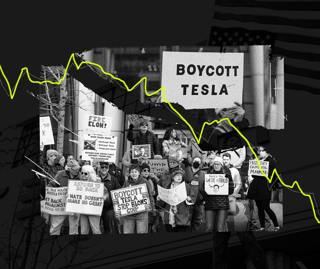
The movement to take down Tesla
Today we're talking about the Tesla Takedown protest movement, which has emerged as a way for people to express how deeply unhappy they are with Elon Musk installing himself as a not-so-shadow president who is tearing the federal government apart, leaving confusion and destruction in his wake. Tesla's stock price is sinking, new car registrations and down, and hype around the company is fading rapidly. There's an opportunity there for the protestors, and I asked Ed Niedermeyer on the show to help me pull it all apart. Links: Is Tesla cooked? | Verge Elon Musk Has Become Too Toxic for YouTube | New York Magazine ‘Tesla Takedown’ wants to hit Elon Musk where it hurts | Verge The Tesla protests are getting bigger — and rowdier | Verge ‘Tesla Takedown’ protesters planning ‘biggest day of action’ | Verge Tesla registrations — and public opinion — are in a free fall | Verge Multiple Teslas set on fire in Las Vegas and Kansas City | Verge Mark Rober’s Tesla video was more than a little weird | Verge Tesla sales fell year-over-year for the first time | Verge The cybertruck isn’t all it’s cracked up to be | Verge Tesla autopilot, FSD linked to hundreds of crashes, dozens of deaths | Verge Tesla crash victims’ families worried about Musk influence on investigations | Verge Credits: Decoder is a production of The Verge and part of the Vox Media Podcast Network. Our producers are Kate Cox and Nick Statt. Our editor is Ursa Wright. The Decoder music is by Breakmaster Cylinder. Learn more about your ad choices. Visit podcastchoices.com/adchoices
20 Mars 47min
How Trump's tariff chaos is already changing global trade
I'm talking to Evan Smith, who started Altana in 2019 because he predicted the first wave of globalized manufacturing and trade would end, and that companies would want new powerful tools to adapt their supply chains as the world grew more complex. Here in 2025, that looks like a pretty good bet — even if the way it's playing out is more stressful and chaotic than anyone really wants it to be. There are some big, unsettling ideas here, but talking about them directly and with clarity at least made me feel like I had a framework to understand the endless on-again, off-again news cycle on tariffs and trade. Links: Globalization 2.0 Manifesto | Altana The ‘giant sucking sound’ of NAFTA | The Conversation ‘Offensive Realism’: The never-ending struggle for power | American Diplomacy (2002) Foreign Affairs Big Mac I | NYT (1996) The end of the Golden Arches Doctrine | Financial Times Trump could scale back tariffs, Lutnick says | CNBC China joined rule-based trading system — then broke the rules | Politico Open Source and China: Inverting Copyright? | Wisconsin International Law Journal How the US lost out on iPhone work | NYT Credits: Decoder is a production of The Verge and part of the Vox Media Podcast Network. Our producers are Kate Cox and Nick Statt. Our editor is Ursa Wright. The Decoder music is by Breakmaster Cylinder. Learn more about your ad choices. Visit podcastchoices.com/adchoices
17 Mars 1h 7min





















