The Velveteen Rabbit and Old Home Movies: What Is Real?

The Velveteen Rabbit and Old Home Movies: What Is Real?

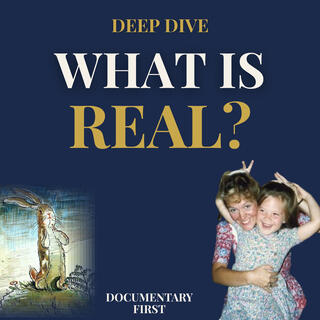
What does The Velveteen Rabbit, a 1922 children's book about a stuffed toy, have to do with old home movies and AI?

In Margery Williams' classic story, an old toy called the Skin Horse tells a stuffed rabbit that being real isn't about how you are made. It is something that happens to you when you are loved for a long time. In this episode of Documentary First: The Deep Dive, Christian Taylor follows that idea from the nursery to old home movies, the scratchy 8mm reels families shot for decades, and asks what it means to keep things real now that tools can make footage of things that never happened.

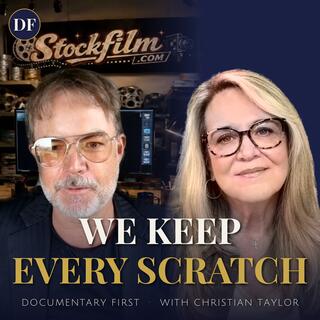
In this Deep Dive on Documentary First Episode 287 with Phil Maher, founder of Stockfilm, a home movie archive with over 200,000 clips from the 1930s to the 1980s, Christian picks up on something Phil told her. Stockfilm keeps the scratches and the dust, because they make the footage feel original and real. That sent her back to Christmas Day, 1986, in her family's home in Arlington, Virginia. She was 17. Her little sister Annie, then three, had been given The Velveteen Rabbit as a book and cassette, read by Meryl Streep with George Winston playing the music underneath. Annie fell asleep in her lap. Christian kept listening, had never heard the story before, and found herself crying. It became her favorite story to read to children.

From there, Christian brings the Skin Horse's idea back to Phil's archive. Phil has seen hundreds of Christmases on those reels and thinks of himself as a steward of these people's lives. Christian looks at why that kind of real matters more now that AI can show a face that never existed or a moment in history nobody was there to see, and at Phil's clear line: the footage itself stays 100 percent real, because it is the historical record. She shares why she has spent weeks setting up a NAS, network-attached storage, at home: she doesn't want to lose years of work, and the RAID drive holding her film The Girl Who Wore Freedom is failing. She also talks about why so many people want to own the album or the CD again instead of licensing it. She closes with practical steps for anyone with a box of old reels in the closet, and with the end of the rabbit's story, where his spots still show through.

In this episode, Christian explores:

  • Why Phil Maher keeps the scratches and dust in Stockfilm's home movies
  • Hearing The Velveteen Rabbit for the first time on Christmas Day, 1986
  • What the Skin Horse tells the Rabbit about becoming real
  • Why, once you are real, shabbiness doesn't matter
  • Why imperfection can be what makes an audience believe a film
  • What changes when AI can make footage of things that never happened
  • Why Phil says real footage is the historical record, and AI recreations should be disclosed
  • Why Christian is setting up a NAS while the RAID drive holding her film is failing
  • Owning a movie or an album versus licensing it
  • What Phil sees again and again on old reels: people dancing together
  • How to preserve old home movies, from digitizing to keeping copies in three places

CHAPTERS

0:00 The Velveteen Rabbit, Christmas 1986

4:21 What Is Real? The Skin Horse

6:34 Scratches, Dust and AI Footage

9:40 Why Physical Media Still Matters

13:50 The Splendid New Bunny

FREQUENTLY ASKED QUESTIONS

What is the Skin Horse's quote about being real in The Velveteen Rabbit?

In Margery Williams' 1922 book, the old Skin Horse tells the Rabbit that "Real isn't how you are made" and that "It's a thing that happens to you." A toy becomes real when a child loves it for a long time, not just to play with. By then most of its hair has been loved off and it is shabby, but, as the Skin Horse says, once you are real you can't be ugly, except to people who don't understand.

Why do filmmakers leave the scratches and dust in old home movies?

Phil Maher, who founded Stockfilm, keeps his footage as close to the original as he can, scratches included. He says those marks make footage feel original and real, and show that this is how it looked. In this Deep Dive, Christian Taylor argues the imperfection is sometimes the very thing that lets an audience believe a film, and suggests filmmakers leave the scratches in when they tell the truth.

How do you preserve old home movies and film reels?

Start by not throwing them out. Phil Maher of Stockfilm says that is how many family memories get lost: reels sit in a closet in a format nobody knows how to play, until someone tosses them. Get them digitized, but keep the originals, and keep them away from heat and humidity. Then store copies in more than one place. Phil keeps three: on-site, in the cloud, and off-site with no internet connection.

Who narrated the 1985 recording of The Velveteen Rabbit?

The 1985 Rabbit Ears Productions recording of The Velveteen Rabbit was narrated by Meryl Streep, with music by pianist George Winston. It was sold as a book and cassette. Christian Taylor first heard it on Christmas Day, 1986, when her little sister Annie, then three, was given the set as a gift. Annie fell asleep, but Christian, then 17, kept listening and has read the story to children ever since.

Should filmmakers tell audiences when they use AI to recreate history?

Yes, according to Phil Maher, founder of the home movie archive Stockfilm. He uses AI to date and search footage, but he keeps the footage itself 100 percent real, because it is the historical record. If a filmmaker uses AI to recreate a moment in history, he says, the audience should be told what is real and what isn't. Christian Taylor agrees, and adds that viewers will likely trust the film more for it.

LISTEN AND FOLLOW

Listen and subscribe wherever you get podcasts: https://podfollow.com/documentary-first

Watch on YouTube: https://www.youtube.com/@documentaryfirst

SUPPORT THE SHOW

Join the Documentary First community on Patreon: https://www.patreon.com/c/DocumentaryFirst

CONNECT WITH DOCUMENTARY FIRST

All platforms: https://linktr.ee/doc1st

Christian Taylor on LinkedIn: https://www.linkedin.com/in/meetchristiantaylor

ABOUT THE TOPIC

The Velveteen Rabbit

The Velveteen Rabbit, or How Toys Become Real, was written by Margery Williams and first published in 1922 with illustrations by William Nicholson. It is in the public domain in the United States and free to read through Project Gutenberg.

The 1985 Recording

Rabbit Ears Productions released The Velveteen Rabbit in 1985, narrated by Meryl Streep with music by pianist George Winston. It was sold as a book and cassette.

Phil Maher and Stockfilm

Phil Maher founded Stockfilm in 2015, after digitizing his grandfather's 8mm home movies. Stockfilm licenses real 8mm and Super 8 home movie footage from the 1930s through the 1980s, keeps every physical reel after scanning, and uses AI to search and catalog the archive, never to alter the footage.

Website: https://stockfilm.com

LinkedIn: https://www.linkedin.com/in/philmaher/

Facebook: https://www.facebook.com/stockfilm

X: https://x.com/stockfilmcom

YouTube: https://www.youtube.com/@StockFilmFootage

The Source Episode

Archival Footage: Why Use Home Movies?, Documentary First Episode 287 with Phil Maher

Listen: https://pod.fo/e/699995

Watch: https://youtu.be/pQ7OXqY2av4

ABOUT DOCUMENTARY FIRST: THE DEEP DIVE

Documentary First is a weekly podcast about the people behind documentaries and how the work changed them. Host Christian Taylor, director of the award-winning The Girl Who Wore Freedom, talks with filmmakers from Ken Burns to first-time directors. Listen Notes ranks the show in the top 5% of all podcasts worldwide. The Deep Dive is the companion series where Christian takes one insight from a recent conversation and follows it wherever it leads.

RESOURCES MENTIONED

The Velveteen Rabbit by Margery Williams (Project Gutenberg): https://www.gutenberg.org/ebooks/11757

The Velveteen Rabbit, Rabbit Ears Productions recording, 1985 (Wikipedia): https://en.wikipedia.org/wiki/The_Velveteen_Rabbit_(album)

Det här avsnittet är hämtat från ett öppet RSS-flöde och publiceras inte av Podme. Det kan innehålla reklam.

Avsnitt(298)

Archival Footage: Why Use Home Movies?

Archival Footage: Why Use Home Movies?

What happens to a family's home movies when no one knows what to do with them?Phil Maher was a software engineer looking for a sense of purpose when he started watching his grandfather's family reels ...

8 Okt 49min
How Do You Get a Documentary Made? Ask the Woman Who Co-Runs RKO

How Do You Get a Documentary Made? Ask the Woman Who Co-Runs RKO

Do you have a documentary, or do you have a Wikipedia entry?Somebody decides whether your documentary gets made. Sophia Dilley is one of those people. She runs Concord Originals, the division behind S...

10 Sep 53min
Beyond Banners: How to Make a Documentary With No Film School

Beyond Banners: How to Make a Documentary With No Film School

Who finishes your film if you can't?Andre N. Jackson had never made a film. He had twenty years in technology and security, an idea that arrived while he was sitting in a barber's chair, and no way in...

21 Aug 40min
Why Can't Your Documentary Find an Audience? l Deep Dive on Ep. 284

Why Can't Your Documentary Find an Audience? l Deep Dive on Ep. 284

When did your audience stop being people and become a number?Most independent films and podcasts do not fail because the work is bad. They fail because no one ever felt like they belonged to them. Thi...

13 Aug 13min
Ep. 284 I How to Fund a Documentary Without the Industry

Ep. 284 I How to Fund a Documentary Without the Industry

How do you fund a documentary when the whole industry says no?How do you fund a documentary without film funds, grants, or a commissioning broadcaster, and still reach a huge audience? Dutch filmmaker...

6 Aug 51min
Who Believed in You First?

Who Believed in You First?

Who believed in you before you could believe in yourself? In this Deep Dive, documentary filmmaker Christian Taylor makes a quiet case that we rarely overcome self-doubt on our own. Almost no one fini...

30 Juli 13min
Cold War in Philly: Joe Amodei Directs His First Documentary

Cold War in Philly: Joe Amodei Directs His First Documentary

What happens when a film distributor with more than 40 years in the business finally makes his own documentary?Joe Amodei grew up in Philadelphia watching the Flyers with his parents, sisters and brot...

23 Juli 54min
Populärt inom Samhälle & Kultur

podme-dokumentar
gynning-berg
svenska-fall
aftonbladet-krim
p3-dokumentar
rss-creepypodden
en-mork-historia
p1-dokumentar
hor-har
rss-kansli-med-jessica-sebastian
killradet
rss-schyffert-sundin-ar-det-har-nat
rss-hemlispodden
flashback-forever
mardromsgasten
aftonbladet-daily
vad-blir-det-for-mord
kod-katastrof
rss-mer-an-bara-morsa
rss-nemo-moter-en-van