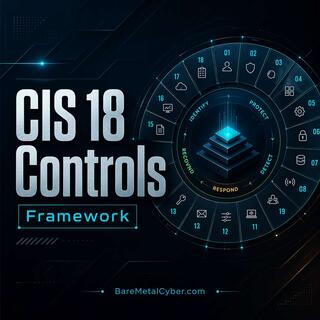
Episode 2 — How to use CIS 18 in your organization

Episode 2 — How to use CIS 18 in your organization

Implementing the CIS 18 effectively begins with understanding how the Controls fit into your organization’s governance, risk management, and compliance efforts. The framework is intentionally flexible, allowing it to integrate seamlessly with existing standards and policies rather than replace them. The first step is conducting a baseline assessment against each Control to determine your organization’s current level of maturity. This helps identify strengths, weaknesses, and opportunities for quick wins that demonstrate measurable progress. Next, organizations should map their assets, business processes, and regulatory obligations to relevant Controls, ensuring that implementation directly supports mission-critical objectives. Rather than attempting to deploy all 18 Controls at once, teams are encouraged to start with the Implementation Group appropriate to their risk profile—usually IG1 for essential security hygiene. By establishing governance around the program, assigning clear ownership, and tracking progress over time, enterprises can mature their security practices in structured, auditable phases.

Practical use of the CIS 18 requires translating each safeguard into operational reality. For example, Control 1’s asset inventory may rely on network discovery tools, while Control 7’s vulnerability management process can tie directly into patch automation workflows. Integrating the Controls into existing workflows, ticketing systems, and metrics dashboards ensures that cybersecurity becomes part of daily operations rather than an occasional audit exercise. Because the Controls are measurable, organizations can use them to define key performance indicators (KPIs) and report progress to leadership or regulators. Over time, adopting CIS 18 fosters a culture of accountability and resilience—where employees, processes, and technologies are continuously aligned toward defense. Many organizations also use CIS Controls as a steppingstone toward broader frameworks like NIST 800-53 or ISO 27001, providing a solid operational base for compliance-driven certifications. When applied consistently, the Controls transform cybersecurity from a reactive task into a proactive, repeatable discipline anchored in real-world effectiveness.
Produced by BareMetalCyber.com, where you’ll find more cyber audio courses, books, and information to strengthen your educational path. Also, if you want to stay up to date with the latest news, visit DailyCyber.News for a newsletter you can use, and a daily podcast you can commute with.

Det här avsnittet är hämtat från ett öppet RSS-flöde och publiceras inte av Podme. Det kan innehålla reklam.

Avsnitt(83)

Welcome to the CIS 18 Control Framework

Welcome to the CIS 18 Control Framework

18 Okt 20251min

Episode 82 — Safeguard 18.2 – Internal and red team exercises

Episode 82 — Safeguard 18.2 – Internal and red team exercises

Safeguard 18.2 extends penetration testing to include internal assessments and red team exercises that emulate an attacker with initial access. Internal testing evaluates how far a threat could move l...

18 Okt 202512min

Episode 81 — Safeguard 18.1 – External testing programs

Episode 81 — Safeguard 18.1 – External testing programs

Safeguard 18.1 requires organizations to establish and maintain a formal penetration testing program that includes recurring external assessments. External tests simulate real-world attackers operatin...

18 Okt 202510min

Episode 80 — Overview – Why penetration testing validates defenses

Episode 80 — Overview – Why penetration testing validates defenses

Control 18—Penetration Testing—closes the CIS framework by validating how well all other controls perform under real-world conditions. While vulnerability scanning identifies potential weaknesses, pen...

18 Okt 202510min

Episode 79 — Remaining safeguards summary (Control 17)

Episode 79 — Remaining safeguards summary (Control 17)

The remaining safeguards in Control 17 reinforce the full lifecycle of incident response—spanning preparation, communication, testing, and continuous improvement. These include assigning key response ...

18 Okt 20259min

Episode 78 — Safeguard 17.2 – Tabletop exercises

Episode 78 — Safeguard 17.2 – Tabletop exercises

Safeguard 17.2 emphasizes the importance of testing the incident response plan through structured tabletop exercises. These simulations bring together key personnel—from technical teams to executives—...

18 Okt 202510min

Episode 77 — Safeguard 17.1 – IR plan and playbooks

Episode 77 — Safeguard 17.1 – IR plan and playbooks

Safeguard 17.1 requires organizations to establish and maintain a comprehensive incident response process that defines scope, roles, responsibilities, and communication procedures. This process must i...

18 Okt 202510min

Episode 76 — Overview – Incident response principles

Episode 76 — Overview – Incident response principles

Control 17—Incident Response Management—defines how an organization prepares for, detects, responds to, and learns from security incidents. Even the most robust defenses can be breached, and when that...

18 Okt 202511min

Populärt inom Utbildning

husmodern-med-amanda-schulman
historiepodden-se
rss-bara-en-till-om-beroende-medberoende
det-skaver
rosceremoni
nu-blir-det-historia
harrisons-dramatiska-historia
rss-viktmedicinpodden
roda-vita-rosen
rss-dr-bjorklund
allt-du-velat-veta
not-fanny-anymore
sa-in-i-sjalen
sektledare
i-vantan-pa-katastrofen
johannes-hansen-podcast
rss-basta-livet
rss-max-tant-med-max-villman
rss-traningsklubben
sektpodden