Nefertiti and the Uluburun Shipwreck

Nefertiti and the Uluburun Shipwreck

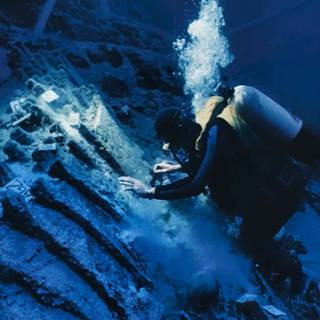
Or, the Life Aquatic with Gold Scarabs... Around 1325 BCE (estimates vary) a vessel sank near the cape of Uluburun, Turkey. The cargo was immense: twenty tonnes of goods, including copper, ivory, ornamental objects, spices, and more. Amid the finds, a curious item came to light: a gold scarab, bearing the name Neferneferuaten Nefertiti... What was a Nefertiti scarab doing on a trade ship, far from Egypt? And what do the finds tell us about the ship, its crew, and ancient trade? The Uluburun Shipwreck: Date: c.1325 BCE (estimated). Cultures: Multiple, including Egyptian, Canaanite, Syrian, and Mycenaean. Ship destination: Possibly the Aegean, western Anatolia, or even the Balkans. Website: www.egyptianhistorypodcast.com. Support the show via Patreon www.patreon.com/egyptpodcast. Make a one-time donation via PayPal payments. Logo image: Divers working on the Uluburun wreck, via The Institute of Nautical Archaeology website. Catalogue of objects in Beyond Babylon, 2008. Free pdf from MMA. Image gallery at The Institute of Nautical Archaeology website. Artefacts in the Bodrum museum, on Flickr.com. Miscellaneous items, at Wikimedia. A replica of the ship, Uluburun II, at Underwater360. A lecture by Cemal Pulak, one of the lead excavators. YouTube. Select Bibliography: G. Bass et al., ‘The Bronze Age Shipwreck at Ulu Burun: 1986 Campaign’, American Journal of Archaeology 93 (1989), 1–29. C. M. Monroe, ‘Sunk Costs at Late Bronze Age Uluburun’, Bulletin of the American Schools of Oriental Research 357 (2010), 19–33. C. Pulak, ‘Analysis of the Weight Assemblages from the Late Bronze Age Shipwrecks at Uluburun and Cape Gelidonya, Turkey, Volume I’, Unpublished PhD. Thesis, Texas A&M University (1996). C. Pulak, ‘The Uluburun Shipwreck: An Overview’, The International Journal of Nautical Archaeology 27 (1998), 188–224. C. Pulak, ‘The Uluburun Shipwreck and Late Bronze Age Trade’, in Beyond Babylon: Art, Trade, and Diplomacy in the Second Millennium B.C. (2008), 289–310. Book available free, from the Metropolitan Museum of Art. C. Pulak, ‘Uluburun Shipwreck’, in The Oxford Handbook of the Bronze Age Aegean (2012), 863—876. C. Pulak, lecture on YouTube. J. Weinstein, ‘The Bronze Age Shipwreck at Ulu Burun: 1986 Campaign, Part 3: The Gold Scarab of Nefertiti from Ulu Burun: Its Implications for Egyptian History and Egyptian-Aegean Relations’, American Journal of Archaeology 93 (1989), 17–29. Learn more about your ad choices. Visit megaphone.fm/adchoices

Avsnitt(408)

198: Servants in the Place of Truth (The Tomb-Builders)

198: Servants in the Place of Truth (The Tomb-Builders)

Deir el-Medina’s Golden Age (Part 1). In the age of Sety I, the village of the tomb-builders expanded significantly. Likewise, our evidence for daily life, families, households, and business begins to...

6 Dec 202444min
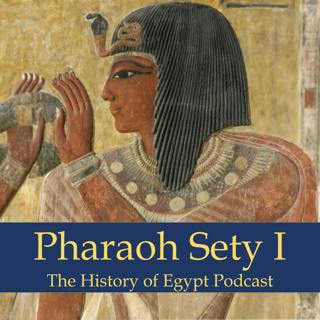
197: How to Make a Pharaoh's Tomb

197: How to Make a Pharaoh's Tomb

Sety I in the Valley of the Kings (Part 1). Archaeological remains and ancient texts reveal a great deal about tomb-building in the 19th and 20th Dynasties (c.1303—1070 BCE). Records, artefacts, and a...

29 Nov 202431min

Sety, Thutmose, and Royal Coffins (with Prof. Kara Cooney)

Sety, Thutmose, and Royal Coffins (with Prof. Kara Cooney)

In 1881, a remarkable discovery took place in Luxor, Egypt. In the hills of Deir el-Bahari, a secret tomb held the reburied mummies of Egypt’s famous pharaohs. Figures like Sety I, Ramesses II, Thutmo...

22 Nov 20241h 47min

196: The Golden Path

196: The Golden Path

The plan of an honest ruler. Around 1300 BCE, as today, gold was big business. King Sety I personally led an expedition into the eastern desert, to establish a new mining operation. Back in the Nile V...

15 Nov 202451min

195: A Quest for Gold

195: A Quest for Gold

Sety in the Desert. Around 1300 BCE, King Sety led an expedition into the Red Sea hills. His purpose? Gold. The King brought soldiers and charioteers out to mine precious metals for his treasuries. Th...

8 Nov 202437min
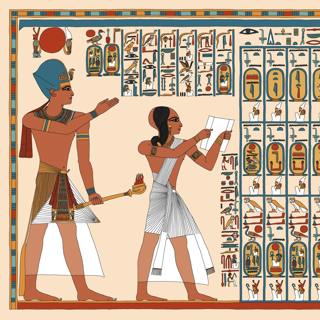
194: A Prince of Egypt (feat. Prof. Peter Brand)

194: A Prince of Egypt (feat. Prof. Peter Brand)

Ramesses Rising. Traditionally, Egyptian princes are almost invisible. The pharaohs downplayed the presence of their sons, to reduce political competition and maintain religious order. Sety I (c.1300 ...

1 Nov 20241h 13min
Cleopatra (All Seven of Them) with Prof. Lloyd Llewellyn-Jones

Cleopatra (All Seven of Them) with Prof. Lloyd Llewellyn-Jones

Recorded May 2024. A name more famous than its owners. The Cleopatras of Egypt (all seven of them) were remarkably influential women and rulers. Frequently taking up power and responsibilities far bey...

27 Okt 20241h 8min
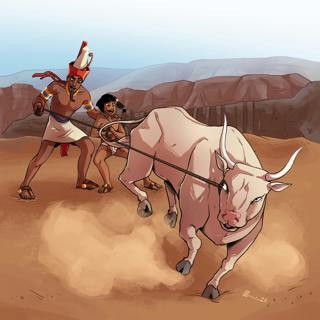
193: Slaying the Bull of Seth (Ramesses’ First Rodeo)

193: Slaying the Bull of Seth (Ramesses’ First Rodeo)

In the Temple of Sety I at Abydos, an out-of-the-way corridor preserves a unique image. The King of Egypt, and his eldest son, wrangle and subdue a bull. This scene appears simple, at first glance. Bu...

25 Okt 202445min

Populärt inom Samhälle & Kultur

en-mork-historia
podme-dokumentar
gynning-berg
p3-dokumentar
aftonbladet-krim
svenska-fall
skaringer-nessvold
killradet
mardromsgasten
hor-har
creepypodden-med-jack-werner
kod-katastrof
flashback-forever
rss-brottsutredarna
vad-blir-det-for-mord
rss-mer-an-bara-morsa
rss-nemo-moter-en-van
rattsfallen
historiska-brott
rss-sanning-konsekvens