How much power does pornography have?

How much power does pornography have?

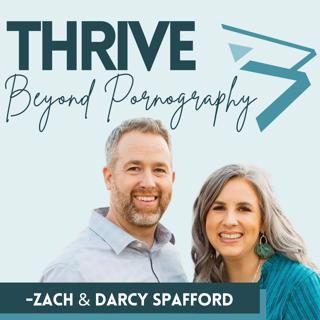
Webinar: https://us02web.zoom.us/webinar/register/1016012548152/WN_9v9d7yYxTtyZ9RVzLRmJ3g How much power does pornography have? So many of us want pornography to have no power over husbands, over our children, over our own lives. Yet, so many of us allow pornography to have so much power over us. Why? Let’s just talk, for a minute about the attractive capacity of pornography. Let’s be honest – the human body is beautiful, arousal feels great, climax is enjoyable. When we see others doing something that is beautiful, arousing and enjoyable even outside of pornography, that fires all kinds of empathic receptors in us. As humans, part of this group of creatures that our Father in Heaven has put on the earth to learn and grown, empathy and mimicry are key components of our survival and success. We are also creatures of comparison. We look at someone and we think about how we compare to them. Are we taller or shorter, better looking or not as handsome, stronger or weaker, all of that is part of the game our brains play to determine if we are sexually compatible with or mating rivals with others. Add to that the human sex response, which is one of the strongest drives within our system, and you can see how pornography might draw you in and keep you entertained for a long time. When I think of all the things I just mentioned and how so much of our biology drives us toward this highly pleasurable, highly rewarding, low cost option, it’s no wonder that the statics show that in one study of 18-35 year olds over a six month period, 98% of men and 73% of women reported internet pornography use. That is astounding. I would hope that the figures are lower among LDS Men and Women, but without data on that, I’ll just say that these figures give us a picture of it’s overall usage within society. So what does someone get from viewing pornography. And again, my goal is to be clear and honest about what I perceive to be the realities of the issue. Just as we discussed on my podcast “get on the map” you need to know where you are so you can get to where you want to be. From my perspective the number one and most significant reason, and possibly the only reason many people who have a moral objection to pornography viewing continue to view pornography is, pornography relieves uncomfortable or negative feelings. I want to note that I saw a post on social where a wife was saying that the husband was viewing pornography occasionally but that they were unclear why he kept going back to it. It was something they had tried to figure out, but had no success doing. This is why coaches often say, it’s hard to read the label from inside the bottle. This is one of those things that demonstrates to me why everyone should have a coach. Tiger Woods has a coach, Tom Brady has a coach, CEO’s, business leaders, world leaders and presidents all have coaches because they want to be the best they can be. And even the most brilliant among us sometimes has trouble seeing how our swing might be adjusted, how our actions might be improved, and how our thoughts are creating a result that is no longer serving us. For those men and women who are dealing with pornography use that they would rather not have in their lives, most often they are doing so as a way to address the feelings they are untrained in dealing with. What I mean by that is, all of us have coping mechanisms that we use to feel more at ease in various situations, some of them create long term positive outcomes and others create long term negative outcomes. For most pornography users that I work with, they feel the momentary and immediate relief created by arousal and as a result their...

Avsnitt(169)

Agency and Addictive behaviors

Agency and Addictive behaviors

Agency is a really important part of everyday life. Many of us think of it as our freedom of choice and in a lot of ways that’s right. For individuals who believe they are addicted to some behavior or another the phrase, “I can’t stop” is a typical refrain. I find it interesting and powerful that the phrase “I can’t stop” is the one we use. True addiction seems to include some compulsion, but we don’t say, “my body makes me do x” or some other phrase that indicates the external forces driving us to the end result. In terms of the Gospel we often discuss how agency is an important part of our time here on Earth. To have agency we must have three key items: 1 – Knowledge of what is right and what is wrong 2 – Consequences for our actions 3 – The ability to choose our actions The knowledge of what is right and wrong is something that most of us have a grasp on. We usually know that certain behaviors are not good and that others are. Consequences for our actions can come in many forms. They may be natural consequences that come without any intervention, like our conscience holding us accountable to ourselves. They may also come from external sources, such as the anger a spouse may show because we have violated their trust. Both of these first two items usually occur without much difficulty. The third item on the list, the ability to choose, is the place where all the friction happens. Yes, obviously, making good decisions and making bad decisions is built into our freedom of choice. But where we are going wrong, especially when it comes to addictive behavior, is when we say, “I can’t”. I have a lot of kids and my least favorite phrase out of their mouths is “I can’t”. They say it when it comes to cleaning, they say it when it comes to calling people on the phone, they even say it when it comes to interacting with other people outside of their comfort zone. At that moment, they are abdicating their agency by abdicating their ability to choose. They are creating, within their minds a mental block over which they believe they have no power. They are creating a mental construct where they are not granted the capacity to choose to do or not do something but that they are at the mercy of external forces. Think about it, when your kid says “I can’t clean my room” and you threaten them with not being able to go out and play until it is done, even if they then clean the room they have not “chosen” it. It has been forced on them, in their mind at least. The same thing is happening with pornography use and other addictive behaviors. We say, “I can’t” because our lower brain is running a script that our higher brain, seems unable to interrupt without a great deal of will power. That is partly because what we have done is set a habit that our lower brain controls, by giving into urges that feed one of our primal brain’s three main goals. Those goals are to conserve energy, seek pleasure and avoid pain. Then, in a type of automatic assembly line, our lower brain gets set on a path that is well worn, starting with an urge. When we say, “I can’t stop”, our brain wants to be right. When we keep on the path of our addictive behavior, we begin to prove how right we are to our own brain. There is a lot of complicated science that bears this out in the field of epigenetics, but for the purpose of this article none of that really matters. What matters is taking back our agency. Agency is a tricky thing. When we choose habits and behaviors that have negative consequences there comes a whittling away of our agency. Like the kid who cannot choose to play because he chose to not clean his room. But when we choose habits and behaviors that have positive impact our consequences are just as direct but leave us with more choices. None of this is probably new to you. set up a free mini-session at zachspafford.com/workwithme

3 Okt 201913min

Populärt inom Utbildning

historiepodden-se
rss-bara-en-till-om-missbruk-medberoende-2
det-skaver
alska-oss
nu-blir-det-historia
johannes-hansen-podcast
harrisons-dramatiska-historia
sektledare
allt-du-velat-veta
roda-vita-rosen
not-fanny-anymore
rss-sjalsligt-avkladd
sa-in-i-sjalen
vi-gar-till-historien
rss-npf-podden
rss-max-tant-med-max-villman
rikatillsammans-om-privatekonomi-rikedom-i-livet
efterlevandepodden
rss-makabert
rss-basta-livet