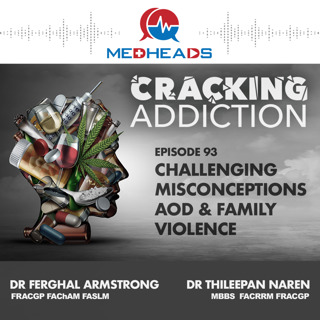
Challenging Misconceptions: AOD Use ≠ Elimination of Family Violence

Challenging Misconceptions: AOD Use ≠ Elimination of Family Violence

In this thought-provoking episode of Cracking Addiction, Dr Ferghal Armstrong and Steve Herd delve into the complex intersection between AOD (alcohol and other drugs) use and family violence. The duo challenges the common misconception that stopping AOD use would automatically eliminate family violence. According to Armstrong and Herd, family violence is a long-term set of behaviours that require a comprehensive approach to tackle effectively.

The discussion also covers the broader picture of family violence, including the personality traits and skills of the perpetrator, such as narcissism, lack of empathy, and cognitive ability. While Armstrong suggests that IQ does not increase or decrease the risk of family violence, Herd argues that people with disabilities have a greater chance of experiencing and using family violence.

The episode also touches on the issue of gender inequality as a risk factor for using violence, as well as why people choose to stay in abusive relationships. Armstrong and Herd emphasise that the perpetrator is solely responsible for family violence, and supporting the situation better involves identifying and focusing on the perpetrator's behaviours.

The duo also addresses the role of alcohol in family violence, debunking the notion that alcohol fuels violence. They argue that alcohol absolves perpetrators of responsibility and gives them permission to relapse long before it occurs.

The episode concludes with a discussion of the importance of treating clients with unconditional positive regard and not laying blame on men who use family violence. Armstrong and Herd highlight the need to be more agile in the delivery of services to victims of family violence and the importance of believing their stories. This insightful video offers a fresh perspective on the intersection between AOD use and family violence and offers practical solutions for addressing this pressing issue.

Discussions and comments in our videos are for informational purposes only and should not replace the advice of your medical professional. Please consult with your doctor before making any changes to your medical treatment or lifestyle.

Latest Blogs

https://www.meducate.com.au/blog

About Meducate ®

Meducate provides online education for doctors, clinicians, health professionals and the public.

See the website to browse the many different talks and courses available https://www.meducate.com.au

Det här avsnittet är hämtat från ett öppet RSS-flöde och publiceras inte av Podme. Det kan innehålla reklam.

Avsnitt(246)

Meth Withdrawal — Why It Takes 6 Months to Feel Normal Again

Meth Withdrawal — Why It Takes 6 Months to Feel Normal Again

Why does meth withdrawal take 6 months when alcohol withdrawal takes days?It's all about dopamine depletion and neuroplasticity 🧠Dr. Ferghal breaks down:• The 3-phase withdrawal timeline• What happen...

27 Maj 6min
Childhood Obesity: Why 30% of Kids We Help Have Food Trauma Issues

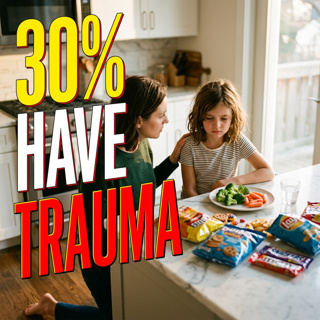
Childhood Obesity: Why 30% of Kids We Help Have Food Trauma Issues

30% of kids with excess weight that we help have trauma-based eating patterns. That's not willpower failure — that's biology. When children experience domestic violence, financial stress, or emotional...

20 Maj 16min
Binge Drinking: The Hidden Truth About Weekend Warriors

Binge Drinking: The Hidden Truth About Weekend Warriors

MYTH: You need to hit 'rock bottom' to recover from addiction. But here's what addiction specialist Dr. Ferghal Armstrong's guest Tom reveals: his worst moment wasn't losing everything – it was waking...

13 Maj 21min
Attachment Issues Cause Addiction - 4 Types That Lead to Drugs

Attachment Issues Cause Addiction - 4 Types That Lead to Drugs

Think trauma only happens from big events like car crashes? Wrong. Dr. Ferghal here with a myth-bust that'll change how you see childhood forever.The biggest trauma isn't what you think — it's relatio...

6 Maj 24min

Benzodiazepine Withdrawal Waves Explained | Ashton Protocol

Benzodiazepine Withdrawal Waves Explained | Ashton Protocol

Most people are told that benzodiazepine withdrawal should improve in a straight line. That myth keeps many people trapped in shame, fear, and confusion when symptoms come back in waves. But brain rec...

23 Apr 7min

Quit Smoking: 30% Better Recovery from Drug Addiction

Quit Smoking: 30% Better Recovery from Drug Addiction

Dopamine pathways and addiction recovery: Why smoking during addiction treatment reduces your chances of lasting sobriety by 30%🚬 THE MYTH WE'VE ALL BELIEVEDFor decades, addiction treatment centres h...

15 Apr 3min

3 Evidence-Based Recovery Models That Actually Work

3 Evidence-Based Recovery Models That Actually Work

Recovery paths aren't one-size-fits-all. Dr. Fergal Armstrong explains why neuroplasticity supports multiple evidence-based approaches to addiction recovery.**THE MYTH: One "Right" Way to Recover**Soc...

8 Apr 7min

The Neuroscience of Cravings and Brain Recovery

The Neuroscience of Cravings and Brain Recovery

Addiction neuroscience explains why cravings feel urgent, physical, and overpowering—and why that does not mean recovery is impossible.Many people still believe cravings happen because of weak willpow...

3 Apr 5min

Populärt inom Hälsa

somna-med-henrik
rss-bara-en-till-om-missbruk-medberoende-2
inga-beiga-morsor
rss-vuxna-pa-latsas
johannes-hansen-podcast
angestpodden
sova-med-dan-horning
sexnoveller-deluxe
rss-viktmedicinpodden
not-fanny-anymore
rss-jossan-nina
sa-in-i-sjalen
brottarbroder
rss-basta-livet
tyngre-radio
rss-relationsrevolutionen
smartare-fitness-podden
halsoveckan-by-tyngre
sex-pa-riktigt-med-marika-smith
rss-sjalsligt-avkladd