Brave New World vs Ninety Eighty-Four

Brave New World vs Ninety Eighty-Four

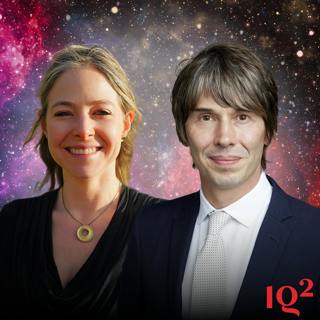
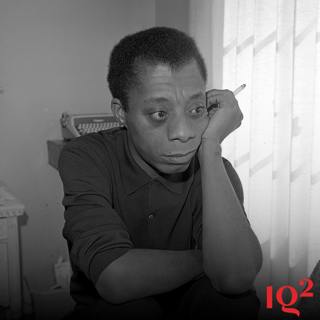
Dystopian books and films are in the zeitgeist. Reflecting the often dark mood of our times, Intelligence Squared are staging a contest between two of the greatest dystopian novels, Brave New World and Nineteen Eighty-Four. Each book captured the nightmares of the 1930s and 40s. But which vision looks more prescient to us now in the 21st century? Are we living in George Orwell’s sinister surveillance state? Or in Aldous Huxley’s vapid consumerist culture? To battle it out, we are bringing two celebrated writers, Adam Gopnik and Will Self, to our stage. After Donald Trump was elected, it seemed as if Nineteen Eighty-Four had clinched it. The book shot to the top of the bestseller charts. It felt so ominously familiar. In Orwell’s dystopia, the corporate state controls the news, insisting that ‘whatever the Party holds to be truth is truth’. That sounds very like Trump’s ‘alternative facts’, and the war he is waging on the ‘fake news’ media. Orwell imagined two-way telescreens spying on every citizen’s home. Today we have Amazon’s ‘always listening’ Alexa device, while Google, Facebook and the security agencies hoover up our personal data for their own ends. Orwell also described an Inner Party – two percent of the population – enjoying all the privileges and political control. Isn’t that scarily close to the ‘one percent’, reviled for their wealth and influence by anti-capitalists today? No wonder everyone rushed out to buy the book. But Orwell’s critics say Nineteen Eighty-Four is a dated dystopia, a vision that died along with communism. The novel that better resonates with our present, they say, is Brave New World. Here Aldous Huxley imagined a plastic techno-society where sex is casual, entertainment light and consumerism rampant. There are pills to make people happy, virtual reality shows to distract the masses from actual reality, and hook-ups to take the place of love and commitment. Isn’t that all a bit close to home? Huxley even imagined a caste system created by genetic engineering, from alpha and beta types right down to a slave underclass. We may not have gone down that road, but gene-editing might soon enable Silicon Valley’s super-rich to extend their lifespans and enhance the looks and intelligence of their offspring. Will we soon witness the birth of a new genetic super-class? Both these novels imagined extraordinary futures, but which better captures our present and offers the keener warning about where we may be heading? Join us on November 28th as our advocates go head to head, with a cast of top actors who will illustrate their arguments with readings from the novels. Support this show http://supporter.acast.com/intelligencesquared. See acast.com/privacy for privacy and opt-out information. Learn more about your ad choices. Visit podcastchoices.com/adchoices

Avsnitt(1533)

Is the Russia–Ukraine War a Failure of Strategy? With Lawrence Freedman

Is the Russia–Ukraine War a Failure of Strategy? With Lawrence Freedman

In an age of grinding wars, nuclear brinkmanship, and political volatility, what does strategy really mean - and how do leaders make decisions when the world feels chaotic? In this episode, Lawrence ...

15 Mars 49min

What Is Really at Stake at the North Pole? With Neil Shea

What Is Really at Stake at the North Pole? With Neil Shea

What Do Wolves, Caribou, and Global Superpowers Have in Common? In this episode, Professor Helen Czerski speaks to journalist and author Neil Shea about the Arctic’s changing face and the struggles t...

13 Mars 48min

Sotheby's Talks | How Do Objects Achieve Iconic Status, with Grayson Perry and Xa Sturgis

Sotheby's Talks | How Do Objects Achieve Iconic Status, with Grayson Perry and Xa Sturgis

On today’s episode, an episode from our friends at Sotheby's exploring the question: How do objects achieve iconic status? Taking inspiration from the book Icons: 100 Extraordinary Objects from Sotheb...

11 Mars 46min

Fiona Hill: The World in 2026 (Part Two)

Fiona Hill: The World in 2026 (Part Two)

Fiona Hill is one of the most authoritative voices on the forces reshaping global politics today. Born in County Durham, from 2017 to 2019 she was a senior adviser on European and Russian Affairs at t...

9 Mars 34min

Fiona Hill: The World in 2026 (Part One)

Fiona Hill: The World in 2026 (Part One)

Fiona Hill is one of the most authoritative voices on the forces reshaping global politics today. Born in County Durham, from 2017 to 2019 she was a senior adviser on European and Russian Affairs at t...

8 Mars 36min

How has American hubris shaped Iran? With Scott Anderson

How has American hubris shaped Iran? With Scott Anderson

Scott Anderson is a veteran foreign reporter and war correspondent, and a contributing writer for The New York Times. Over his career he has reported from Bosnia, Libya, Palestine and across the Middl...

6 Mars 33min

What Does It Take to Run Goldman Sachs During a Meltdown? With Former CEO Lloyd Blankfein

What Does It Take to Run Goldman Sachs During a Meltdown? With Former CEO Lloyd Blankfein

What does it take to lead one of the world’s most powerful banks when the global financial system is on the brink of collapse? As CEO for Goldman Sachs from 2006 to 2018, Lloyd Blankfein was at the h...

4 Mars 44min

CNN's Christiane Amanpour on Trump, Iran and the World in 2026 (Part Two)

CNN's Christiane Amanpour on Trump, Iran and the World in 2026 (Part Two)

As one of the world’s most respected journalists, CNN’s chief international anchor Christiane Amanpour has witnessed some of the most consequential events of our time. In the Middle East, she has repo...

2 Mars 38min

Populärt inom Politik & nyheter

svenska-fall
aftonbladet-krim
p3-krim
rss-krimstad
fordomspodden
rss-expressen-dok
flashback-forever
motiv
aftonbladet-daily
rss-sanning-konsekvens
spar
blenda-2
rss-vad-fan-hande
olyckan-inifran
svd-ledarredaktionen
rss-krimreportrarna
rss-frandfors-horna
dagens-eko
rss-flodet
kungligt