Gerald Ashley & Rory Sutherland on Prosilience

Gerald Ashley & Rory Sutherland on Prosilience

What is Prosilience, and how can organisations ensure their people provide it?

That’s where the discussion between my guests on this episode, Gerald Ashley and Rory Sutherland, begins. Where it goes from there, is a joyous adventure in which two great thinkers explore a range of Human Risk related topics.

* Listener Warning: the episode contains adult language *

This episode is the 100th in the Human Risk podcast series and is a continuation of a discussion which began in the 99th episode. I recommend listening to that first before exploring this one.

You'll find my earlier discussion with Rory here: https://www.podpage.com/the-human-risk-podcast/rory-sutherland-on-compliance/
and Gerald here: https://www.podpage.com/the-human-risk-podcast/gerald-ashley-on-uncertainty/

As with the previous episode, I’m providing more detailed show notes given the breadth and depth of issues covered.

05:18 Rory refers to Seeing Like A State by James C Scott. More on that here: https://en.wikipedia.org/wiki/Seeing_Like_a_State

05:54 Gerald talks about the metrics used to measure Soviet bicycle manufacturing. This article doesn’t feature bicycles, but covers the idea and features a wonderful cartoon from a Soviet magazine: https://econlife.com/2015/08/the-incentives-that-metrics-create/

09:32 Rory talks about his appearance on Bloomberg TV. You can watch that here: https://www.bloomberg.com/news/videos/2015-03-25/advertisers-becoming-too-obsessed-with-tech-sutherland

11:50 Rory mentions Rod Liddell in the context of a story about the BBC’s travel policy. To learn more about Rod: https://en.wikipedia.org/wiki/Rod_Liddle

12:34 Gerald mentions Peter Turchin, who Rory explains is a Cliodynamicist. You’ll find Peter’s website here: http://peterturchin.com/ and a guide to Cliodynamics one that website here: http://peterturchin.com/cliodynamics/

14:10 A rare intervention by me to mention David Graber’s book Bullshit Jobs - https://en.wikipedia.org/wiki/Bullshit_Jobs

14:30 Rory refers to 14th Century Middle Eastern Historian Ibn Khaldoun - https://www.britannica.com/biography/Ibn-Khaldun

15:04 Gerald talks about The Great Wave by David Hackett Fischer - https://en.wikipedia.org/wiki/The_Great_Wave_(book)

18:25 Rory talks about Daniel Kahneman’s research into risk appetites of CEOs and division heads. You can read more about that in this HBR article: https://hbr.org/2020/03/your-company-is-too-risk-averse

19:40 Gerald talks about the Lockheed Martin Skunkworks. You can read about the history of that unit here https://www.lockheedmartin.com/en-us/news/features/history/skunk-works.html and its current role here: https://www.lockheedmartin.com/en-us/who-we-are/business-areas/aeronautics/skunkworks.html

22:59 Gerald talks about Nudgestock, the annual Behavioural Science festival hosted by Rory. You can read about that here: https://www.nudgestock.co.uk/
The presentation he refers to is by Jules Goddard called The Fatal Bias and can be seen here: https://www.youtube.com/watch?v=oNlzl37GLdA

24:46 Rory highlights the story of mathematician’s Abraham Wald intervention in the Second World War. It is explained in this excerpt from Jordan Ellenberg’s excellent How Not To Be Wrong: https://medium.com/@penguinpress/an-excerpt-from-how-not-to-be-wrong-by-jordan-ellenberg-664e708cfc3d

25:56 Rory talks about IBM’s Thomas Watson and his desire to have Wild Geese. In actual fact, Watson talked about Wild Ducks (https://www.mbiconcepts.com/watson-sr-and-wild-ducks.html). Interestingly, the Duck story actually comes from an original fable by Søren Kierkegaard about a Wild Goose. For some reason Watson preferred Ducks! You can read the Kierkegaard story here: https://www.maxelon.co.uk/2015/01/domestic-geese/

26:18 Rory refers to James C Scott’s idea of an Anarchist’s Squint. You can read more about that in his collection of essays called Two Cheers for Anarchism: https://theanarchistlibrary.org/library/james-c-scott-two-cheers-for-anarchism

32:33 Gerald talks about how the British government sold Rolls Royce engines to the Russian government. You can read about that here: https://nationalinterest.org/blog/the-buzz/how-british-turbojet-allowed-russias-mig-15-fight-the-air-26385

32:50 Rory explains how penicillin was passed by America to supposedly neutral countries during World War Two, against British instructions. It ended up saving Adolf Hitler’s life after a bomb plot on 20th July 1940. More on the research behind that here: https://www.sheffield.ac.uk/news/nr/154-1.175018

40:05 Rory references British supergroup The Travelling Wilburys. Find out who they are here: https://en.wikipedia.org/wiki/Traveling_Wilburys. You can hear them on Spotify here: https://open.spotify.com/artist/2hO4YtXUFJiUYS2uYFvHNK?si=eqMFhifpSIai03kZPFHOVQ

Det här avsnittet är hämtat från ett öppet RSS-flöde och publiceras inte av Podme. Det kan innehålla reklam.

Avsnitt(368)

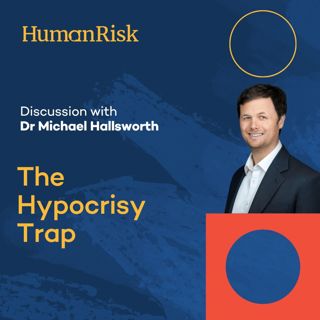
Dr Michael Hallsworth on The Hypocrisy Trap

Dr Michael Hallsworth on The Hypocrisy Trap

We all intuitively know that hypocrisy is a bad thing. But what if it isn’t a flaw, but a feature? But maybe the real problem isn’t hypocrisy, it’s how we think about it.Episode SummaryOn this episode...

16 Nov 202558min
James Geary on The Art of The Aphorism

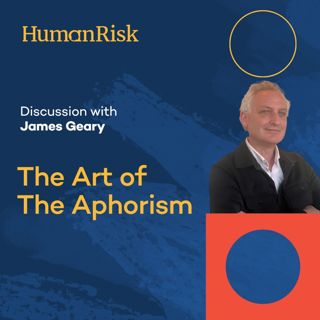
James Geary on The Art of The Aphorism

Can a single sentence change the way you see the world? My guest on this episode, James Geary thinks so.Episode SummaryOn this episode, I speak with writer and journalist James, whose lifelong fascina...

9 Nov 20251h 4min
Dr Nicholas Wright on How the Brain Shapes War and War Shapes The Brain

Dr Nicholas Wright on How the Brain Shapes War and War Shapes The Brain

What can war teach us about how the human brain really works? And why is human decision-making a more significant factor than military strength in wars?Episode SummaryOn this episode, I'm exploring ho...

1 Nov 20251h 2min
Dr Nikolay Kukushkin on Memory

Dr Nikolay Kukushkin on Memory

What if your body is learning things your mind doesn’t know? What if memory wasn't just something that our brain has?Episode Summary On this episode, I'm exploring a bold idea with neuroscientist Dr N...

25 Okt 20251h 6min
Richard Chataway on Designing AI for Humans

Richard Chataway on Designing AI for Humans

What if the biggest AI risk isn’t bias or data, but human behaviour itself? How might AI impact the people using it and what does that mean for how we design solutions and deploy the technology?Episod...

18 Okt 20251h 8min

Tom Hardin On Turning A Crime Into A Calling

Tom Hardin On Turning A Crime Into A Calling

What happens when the worst thing you’ve ever done becomes the foundation for your life’s work?Episode SummaryMy guest on this episode is Tom Hardin, otherwise known as Tipper X.  He's been on the sho...

5 Okt 202555min
James Healy on BS at Work (Bullshit & Behavioural Science)

James Healy on BS at Work (Bullshit & Behavioural Science)

Why do so many workplaces run on bullshit processes and procedures?  And how might Behavioural Science help resolve them?Episode SummaryIn this episode, I sit down with author, speaker and advisor Jam...

27 Sep 20251h 4min

Pep Rosenfeld on Work Laugh Balance

Pep Rosenfeld on Work Laugh Balance

What if the most powerful tool at work isn’t logic, but laughter? On this episode I'm speaking to a comedian who far from thinking humour is a workplace distraction, thinks it might be one of our most...

6 Sep 20251h 3min

Populärt inom Vetenskap

allt-du-velat-veta
p3-dystopia
dumma-manniskor
rss-ufobortom-rimligt-tvivel
ufo-sverige
kapitalet-en-podd-om-ekonomi
svd-nyhetsartiklar
hacka-livet
rss-spraket
paranormalt-med-caroline-giertz
ufo-sverige-2
medicinvetarna
rss-vetenskapsradion
dumforklarat
sexet
det-morka-psyket
rss-dennis-world
rss-vetenskapsradion-2
rss-tidsmaskinen
halsorevolutionen