Dr Ludmila Praslova on The Canary Code

Dr Ludmila Praslova on The Canary Code

What can canaries in coalmines teach us about diversity and inclusion? In this episode, I’m speaking to an academic who has some fascinating ideas and insights into how we can create more inclusive work environments and cultures — in other words, how to get the best out of all employees.

Guest Bio
My guest, Dr. Ludmila Praslova, is a Professor and the Founding Director of Graduate Programs in Organizational Psychology at Vanguard University in Costa Mesa, California. She is an industrial organizational psychologist with a background in global diversity, intercultural relations, and, more recently, neurodiversity in the workplace.

She’s also the author of a new book called 'The Canary Code: A Guide to Neurodiversity, Dignity, and Intersectional Belonging at Work’ which takes a concept you’ve heard of — the canary in the coal mine — and applies it to the world of inclusion.

Her simple yet fascinating idea is that if we can focus on meeting the needs of those who are most sensitive to negative workplace dynamics and then create an environment that allows them to flourish, we can create an environment where everyone can flourish.


Episode Description:
In our discussion, we explore the importance of removing barriers in the workplace, the pitfalls of traditional hiring practices, and how the Canary Code works in practice. You'll hear
insights on creating inclusive environments, addressing workplace biases, and why something I've often done, viewing neurodivergent traits as 'superpowers', is actually unhelpful.

AI-generated timestamp summary
[00:00:00] - Introduction
  • Christian Hunt introduces Dr. Ludmila Praslova, discussing her book "The Canary Code" and its focus on inclusive work environments.
[00:01:00] - Ludmila's Background
  • Ludmila, an industrial-organizational psychologist, specializes in global diversity, intercultural relations, and neurodiversity.
[00:03:00] - Interest in Diversity
  • Ludmila's journey into diversity began with global diversity and now focuses on intersectional inclusivity and neurodiversity.
[00:07:00] - The Canary Code Concept
  • The concept suggests that addressing the needs of the most vulnerable employees can improve conditions for all.
[00:11:00] - Flexibility in the Workplace
  • Emphasizes creating flexible work environments to reduce workplace toxicity and improve productivity.
[00:18:00] - Neurodiversity Explained
  • Neurodiversity includes ADHD, dyslexia, autism, and other neurological differences that impact workplace experiences.
[00:22:00] - Managerial Concerns
  • Managers don't need to specialize in every condition but should create generally inclusive and flexible environments.
[00:25:00] - Job Matching and Crafting
  • Focus on matching jobs to individual strengths and job crafting to optimize roles.
[00:28:00] - The Limits of Flexibility
  • Some roles require specific skills and cannot be flexible, but many roles can adapt to a diverse workforce.
[00:31:00] - Validity in Hiring Practices
  • Emphasizes the need for valid, job-relevant assessments in hiring to ensure fairness and effectiveness.
[00:39:00] - Resistance to Change
  • Some organizations resist flexible work practices, but modern, flexible practices can help attract and retain talent.
[00:46:00] - Book Structure
  • "The Canary Code" is structured to be accessible to CEOs, diversity professionals, and neurodivergent individuals, with stories, research, and practical advice.
[00:58:00] - The Superpower Myth
  • While neurodivergent individuals may see their traits as superpowers, using this as a hiring argument is problematic.
[01:02:00] - Conclusion
  • Advocates for creating environments where everyone can thrive without needing extraordinary measures. Encourages more inclusive and flexible workplace practices.
Links
Ludmila's Faculty Page - https://www.vanguard.edu/about/history

The Canary Code - https://www.penguinrandomhouse.com/books/742858/the-canary-code-by-ludmila-n-praslova-phd/

Ludmila on Social Media
LinkedIn - https://www.linkedin.com/in/ludmila-praslova/
Twitter/X - https://x.com/ludmilapraslova

A piece explaining the point we discussed on the show about why neurodiversity isn't a 'superpower' - https://www.psychologytoday.com/us/blog/positively-different/202405/healing-the-invalidation-the-complex-truth-of-autism


Det här avsnittet är hämtat från ett öppet RSS-flöde och publiceras inte av Podme. Det kan innehålla reklam.

Avsnitt(368)

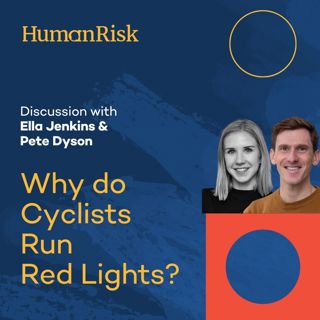
Ella Jenkins & Pete Dyson on Why Do Cyclists Run Red Lights?

Ella Jenkins & Pete Dyson on Why Do Cyclists Run Red Lights?

Why do cyclists in London run red lights? It's against the law, and yet, if you've cycled, driven or just observed London's cyclists, you'll know that many of them don't stop when there's a red light....

31 Aug 202554min
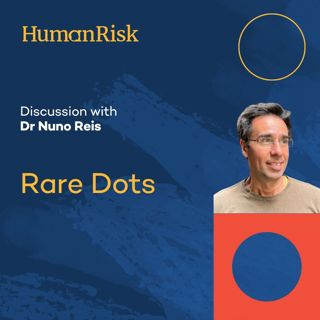
Dr Nuno Reis on Rare Dots

Dr Nuno Reis on Rare Dots

What if the ideas that linger in the back of your mind — the ones you can’t quite explain — are the ones you most need to pay attention to?Episode SummaryIn this episode, I explore that question with ...

24 Aug 20251h 7min
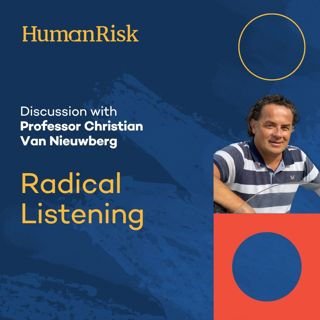
Professor Christian van Nieuwberg on Radical Listening

Professor Christian van Nieuwberg on Radical Listening

Is listening a hidden superpower we’ve overlooked?  You've heard of Active Listening, but what is Radical Listening and why does it matter?Episode SummaryOn this episode, I’m joined by Professor Chris...

17 Aug 20251h 9min
Dr Sunita Sah on Defiance - how to speak up when it matters

Dr Sunita Sah on Defiance - how to speak up when it matters

Why do we follow orders or go along with things that feel wrong? Why might defiance be better than compliance? And how can we go about becoming more defiant?Episode SummaryI’ve always been fascinated ...

9 Aug 20251h 2min
Dr Libby Maman on Measuring and (Re-)building Trust

Dr Libby Maman on Measuring and (Re-)building Trust

What happens when citizens lose faith in the institutions that serve them? And how can we rebuild that trust?Episode SummaryOn this episode, I'm speaking to someone who cares passionately about this s...

2 Aug 20251h
Iain Morrison on When The Show Mustn't Go On

Iain Morrison on When The Show Mustn't Go On

We’ve all heard the phrase ‘the show must go on’.  But when shouldn’t the show go on?  To help me answer that, I’m speaking to someone who has spent 35 years managing some of Australia’s most iconic l...

26 Juli 20251h 5min
Zsike Peter on Thinkbait

Zsike Peter on Thinkbait

What if the real risk of AI isn’t job loss but brain atrophy?Episode SummaryIf you've spent any time on social media recently, you'll be familiar with the flood of low-quality AI-generated sludge. And...

19 Juli 20251h 9min
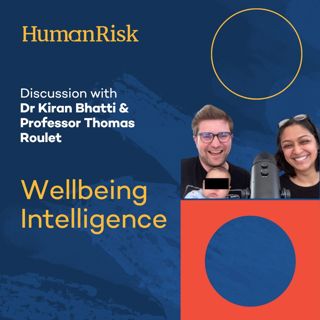
Dr Kiran Bhatti & Professor Thomas Roulet on Wellbeing Intelligence

Dr Kiran Bhatti & Professor Thomas Roulet on Wellbeing Intelligence

What if we treated mental health like a capability instead of a crisis? On this episode, I'm talking to a business school professor and a counselling psychologist about their new book that looks at pr...

12 Juli 20251h 2min

Populärt inom Vetenskap

allt-du-velat-veta
dumma-manniskor
p3-dystopia
ufo-sverige
rss-ufobortom-rimligt-tvivel
kapitalet-en-podd-om-ekonomi
svd-nyhetsartiklar
hacka-livet
paranormalt-med-caroline-giertz
ufo-sverige-2
rss-spraket
sexet
rss-vetenskapsradion
medicinvetarna
det-morka-psyket
rss-vetenskapsradion-2
dumforklarat
rss-dennis-world
rss-tidslinjen-podcast
rss-tidsmaskinen