Trauma & Intersectionality
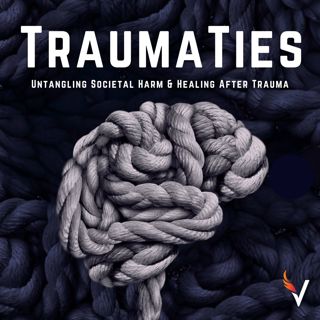
TraumaTies7 Juli 2022

Trauma & Intersectionality

As a proud Somali-American Muslim woman, Lul Mohamud, MPH is dedicated to supporting survivors of domestic violence in the African Immigrant and Refugee communities. Through The Person Center, she is leading change to better the lives of the community she calls her own.

On this week’s episode of TraumaTies, hosts Bridgette Stumpf, Executive Director at NVRDC, and Lindsey Silverberg, Head of Services at NVRDC, discuss trauma in communities with Lul, who is the Executive Director at The Person Center.

Lul says that the invisible wound of trauma can only be healed if we start at the root cause. The same goes for trauma. Whether the trauma began five years ago or 500 years ago, you have to go to the source and begin healing from there. Trauma is an invisible wound that builds on top of itself.

This episode investigates trauma responses, how trauma differs between communities, and the steps we can take to begin healing.

Featured Guest

Name: Lul Mohamud, MPH

What she does: Lul is the Executive Director at The Person Center. She focuses her global health work on trauma response and prevention through restorative and reformative justice for survivors of interpersonal, structural, and generational violence both domestically and abroad. She received her Master of Public Health in Global Health and Community Health Development with a certificate in Mental Health from Emory University’s Rollins School of Public Health. Lul is on a mission to lead systemic and cultural change to better the lives of her community.

Company: The Person Center

Episode Highlights

[4:19] Mental health in communities of color: Starting from the roots of colonialism, black and brown individuals with mental health issues were labeled as “hysterical” and “unfit” and were locked away, further stigmatizing unseen trauma and silencing individuals.

[10:51] How trauma and trauma response differs between communities: Compared to white communities, communities of color have different external stressors that impact trauma and trauma response.

[20:10] Believing in others: Lul discusses the impact that one person can make by believing in others.

[25:25] Why we shouldn’t be ashamed to cry: People are afraid of the uncomfortable. Oftentimes, we’re quick to tell people “it’s OK” and resolve the situation at once.

[31:29] The trauma response: Lul uses the metaphor of a horror movie to describe the trauma response: “the scariest part of the horror movie is not actually the jump scare. It’s waiting for it, realizing what’s happening, and figuring out the plot.”

[39:39] The cost of distancing ourselves from trauma: As a society, we continue to create walls and ignore the fact that communities are deeply connected.

[45:07] Resolving trauma: There’s no easy solution to trauma. Lul talks about how if we really want to begin healing, we have to get to the root of the trauma.

Connect with the Network for Victim Recovery of DC

☑️ Follow us on Twitter, Facebook, Instagram & LinkedIn.

☑️ Subscribe to TraumaTies on Apple Podcasts, Spotify, or Google Podcasts.

Brought to you by Network for Victim Recovery of DC (NVRDC), TraumaTies: Untangling Societal Harm & Healing After Crime is a podcast that creates space and conversations to dissect the structural and systemic knots that keep us from addressing trauma.

Rooted in a belief that survivors of crime deserve respect for their dignity in the aftermath of victimization, NVRDC seeks to empower survivors by informing them of all of the options available and working to transform existing response systems to be more inclusive of the diverse needs that survivors often have after crime.

NVRDC also provides free, holistic, and comprehensive advocacy, case management, and legal services to victims of all crime types in Washington, DC. Visit our website to learn more about how to access our trauma-informed education training and how to partner with us to expand survivor-defined justice.

Det här avsnittet är hämtat från ett öppet RSS-flöde och publiceras inte av Podme. Det kan innehålla reklam.

Avsnitt(45)

When Systems Fail with Paula Yost

When Systems Fail with Paula Yost

Paula Yost joins TraumaTies to discuss her journey as an attorney and court advocate for children. She speaks about her speciality in intersectional legal and social work and how, without effective sy...

11 Aug 22min

What Coping Teaches Us About Survival

What Coping Teaches Us About Survival

When do our coping behaviors go from necessary survival needs to reliance on avoidant behavior? In this week’s episode, Bridgette and Lindsey dive into how coping mechanisms of any kind can turn into ...

4 Aug 21min

Investing in Healing and Resilience with Denise Huskins Quinn

Investing in Healing and Resilience with Denise Huskins Quinn

In this episode of TraumaTies, Bridgette and Lindsey are delighted to be joined by Denise Huskins Quinn, whose journey as a survivor has led her to become a leading advocate for crime victims’ rights....

28 Juli 33min

Why We Give Our Pets Voices

Why We Give Our Pets Voices

Do you give your pets their own voice and personality? Announce their thoughts like they could talk? Or maybe you use the signature baby voice for them? We don’t judge! Bridgette and Lindsey discuss h...

21 Juli 20min

Why Trauma Survivors Aren't Believed

Why Trauma Survivors Aren't Believed

This week, Bridgette and Lindsey ask: why does our society find it hard to trust and believe survivors? What do we misunderstand about “credibility?” Finally, how can we show survivors that we do supp...

14 Juli 23min

Root Causes and Real Healing: Chronic Illness with Dr. Jaquel Patterson

Root Causes and Real Healing: Chronic Illness with Dr. Jaquel Patterson

In this episode of TraumaTies, Bridgette and Lindsey are joined by Dr. Jaquel Patterson, a nationally recognized doctor of naturopathic medicine who has taught thousands of doctors in integrative medi...

7 Juli 35min

What Zootopia Gets Right About Trauma

What Zootopia Gets Right About Trauma

This week on TraumaTies, Bridgette Stumpf and Lindsey Silverberg discuss categorization, bias, and how we respond to people and conversations that challenge our perspective. How do our implicit biases...

30 Juni 23min

If you were a lab rat, you’d do the same thing

If you were a lab rat, you’d do the same thing

In this episode of TraumaTies, Bridgette Stumpf and Lindsey Silverberg explore how behavior is shaped by environment, experience, and survival. Through famous studies on addiction, learned helplessnes...

23 Juni 24min

Populärt inom Business & ekonomi

framgangspodden
badfluence
dynastin
varvet
uppgang-och-fall
svd-tech-brief
avanzapodden
rss-inga-dumma-fragor-om-pengar
tabberaset
rss-kort-lang-analyspodden-fran-di
rikatillsammans-om-privatekonomi-rikedom-i-livet
fill-or-kill
borslunch-2
lastbilspodden
rss-dagen-med-di
rss-borslunch
ekonomiekot-extra
rss-hos-psykologen
bathina-en-podcast
rss-borssurr-med-mitelman-och-mellqvist