
#6 - Toby Ord on why the long-term future matters more than anything else & what to do about it

#6 - Toby Ord on why the long-term future matters more than anything else & what to do about it

Of all the people whose well-being we should care about, only a small fraction are alive today. The rest are members of future generations who are yet to exist. Whether they’ll be born into a world that is flourishing or disintegrating – and indeed, whether they will ever be born at all – is in large part up to us. As such, the welfare of future generations should be our number one moral concern.

This conclusion holds true regardless of whether your moral framework is based on common sense, consequences, rules of ethical conduct, cooperating with others, virtuousness, keeping options open – or just a sense of wonder about the universe we find ourselves in.

That’s the view of Dr Toby Ord, a philosophy Fellow at the University of Oxford and co-founder of the effective altruism community. In this episode of the 80,000 Hours Podcast Dr Ord makes the case that aiming for a positive long-term future is likely the best way to improve the world.

Apply for personalised coaching, see what questions are asked when, and read extra resources to learn more.

We then discuss common objections to long-termism, such as the idea that benefits to future generations are less valuable than those to people alive now, or that we can’t meaningfully benefit future generations beyond taking the usual steps to improve the present.

Later the conversation turns to how individuals can and have changed the course of history, what could go wrong and why, and whether plans to colonise Mars would actually put humanity in a safer position than it is today.

This episode goes deep into the most distinctive features of our advice. It’s likely the most in-depth discussion of how 80,000 Hours and the effective altruism community think about the long term future and why - and why we so often give it top priority.

It’s best to subscribe, so you can listen at leisure on your phone, speed up the conversation if you like, and get notified about future episodes. You can do so by searching ‘80,000 Hours’ wherever you get your podcasts.

Want to help ensure humanity has a positive future instead of destroying itself? We want to help.

We’ve helped 100s of people compare between their options, get introductions, and jobs important for the the long-run future. If you want to work on any of the problems discussed in this episode, such as artificial intelligence or biosecurity, find out if our coaching can help you.

Overview of the discussion

3m30s - Why is the long-term future of humanity such a big deal, and perhaps the most important issue for us to be thinking about?
9m05s - Five arguments that future generations matter
21m50s - How bad would it be if humanity went extinct or civilization collapses?
26m40s - Why do people start saying such strange things when this topic comes up?
30m30s - Are there any other reasons to prioritize thinking about the long-term future of humanity that you wanted to raise before we move to objections?
36m10s - What is this school of thought called?
Read more...

Avsnitt(332)

#224 – There's a cheap and low-tech way to save humanity from any engineered disease | Andrew Snyder-Beattie

#224 – There's a cheap and low-tech way to save humanity from any engineered disease | Andrew Snyder-Beattie

Conventional wisdom is that safeguarding humanity from the worst biological risks — microbes optimised to kill as many as possible — is difficult bordering on impossible, making bioweapons humanity’s ...

2 Okt 20252h 31min
Inside the Biden admin’s AI policy approach | Jake Sullivan, Biden’s NSA | via The Cognitive Revolution

Inside the Biden admin’s AI policy approach | Jake Sullivan, Biden’s NSA | via The Cognitive Revolution

Jake Sullivan was the US National Security Advisor from 2021-2025. He joined our friends on The Cognitive Revolution podcast in August to discuss AI as a critical national security issue. We thought i...

26 Sep 20251h 5min
#223 – Neel Nanda on leading a Google DeepMind team at 26 – and advice if you want to work at an AI company (part 2)

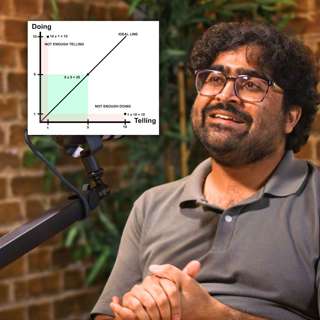
#223 – Neel Nanda on leading a Google DeepMind team at 26 – and advice if you want to work at an AI company (part 2)

At 26, Neel Nanda leads an AI safety team at Google DeepMind, has published dozens of influential papers, and mentored 50 junior researchers — seven of whom now work at major AI companies. His secret?...

15 Sep 20251h 46min
#222 – Can we tell if an AI is loyal by reading its mind? DeepMind's Neel Nanda (part 1)

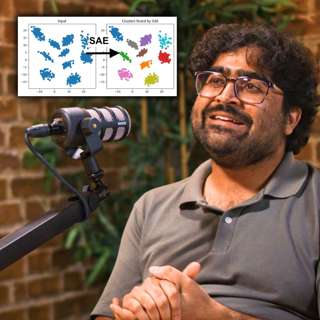
#222 – Can we tell if an AI is loyal by reading its mind? DeepMind's Neel Nanda (part 1)

We don’t know how AIs think or why they do what they do. Or at least, we don’t know much. That fact is only becoming more troubling as AIs grow more capable and appear on track to wield enormous cultu...

8 Sep 20253h 1min

#221 – Kyle Fish on the most bizarre findings from 5 AI welfare experiments

#221 – Kyle Fish on the most bizarre findings from 5 AI welfare experiments

What happens when you lock two AI systems in a room together and tell them they can discuss anything they want?According to experiments run by Kyle Fish — Anthropic’s first AI welfare researcher — som...

28 Aug 20252h 28min

How not to lose your job to AI (article by Benjamin Todd)

How not to lose your job to AI (article by Benjamin Todd)

About half of people are worried they’ll lose their job to AI. They’re right to be concerned: AI can now complete real-world coding tasks on GitHub, generate photorealistic video, drive a taxi more sa...

31 Juli 202551min

Rebuilding after apocalypse: What 13 experts say about bouncing back

Rebuilding after apocalypse: What 13 experts say about bouncing back

What happens when civilisation faces its greatest tests?This compilation brings together insights from researchers, defence experts, philosophers, and policymakers on humanity’s ability to survive and...

15 Juli 20254h 26min
#220 – Ryan Greenblatt on the 4 most likely ways for AI to take over, and the case for and against AGI in <8 years

#220 – Ryan Greenblatt on the 4 most likely ways for AI to take over, and the case for and against AGI in <8 years

Ryan Greenblatt — lead author on the explosive paper “Alignment faking in large language models” and chief scientist at Redwood Research — thinks there’s a 25% chance that within four years, AI will b...

8 Juli 20252h 50min

Populärt inom Utbildning

rss-bara-en-till-om-missbruk-medberoende-2
historiepodden-se
det-skaver
harrisons-dramatiska-historia
nu-blir-det-historia
allt-du-velat-veta
johannes-hansen-podcast
not-fanny-anymore
rss-viktmedicinpodden
roda-vita-rosen
sektledare
rss-foraldramotet-bring-lagercrantz
i-vantan-pa-katastrofen
sa-in-i-sjalen
rss-max-tant-med-max-villman
rss-sjalsligt-avkladd
alska-oss
rss-om-vi-ska-vara-arliga
rikatillsammans-om-privatekonomi-rikedom-i-livet
sex-pa-riktigt-med-marika-smith