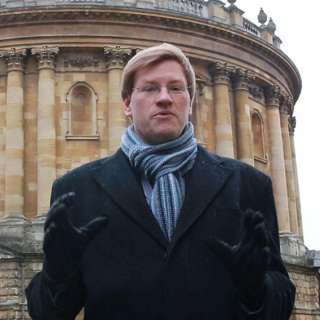

#29 - Anders Sandberg on 3 new resolutions for the Fermi paradox & how to colonise the universe

#29 - Anders Sandberg on 3 new resolutions for the Fermi paradox & how to colonise the universe

Part 2 out now: #33 - Dr Anders Sandberg on what if we ended ageing, solar flares & the annual risk of nuclear war

The universe is so vast, yet we don’t see any alien civilizations. If they exist, where are they? Oxford University’s Anders Sandberg has an original answer: they’re ‘sleeping’, and for a very compelling reason.

Because of the thermodynamics of computation, the colder it gets, the more computations you can do. The universe is getting exponentially colder as it expands, and as the universe cools, one Joule of energy gets worth more and more. If they wait long enough this can become a 10,000,000,000,000,000,000,000,000,000,000x gain. So, if a civilization wanted to maximize its ability to perform computations – its best option might be to lie in wait for trillions of years.

Why would a civilization want to maximise the number of computations they can do? Because conscious minds are probably generated by computation, so doing twice as many computations is like living twice as long, in subjective time. Waiting will allow them to generate vastly more science, art, pleasure, or almost anything else they are likely to care about.

Full transcript, related links, and key quotes.

But there’s no point waking up to find another civilization has taken over and used up the universe’s energy. So they’ll need some sort of monitoring to protect their resources from potential competitors like us.

It’s plausible that this civilization would want to keep the universe’s matter concentrated, so that each part would be in reach of the other parts, even after the universe’s expansion. But that would mean changing the trajectory of galaxies during this dormant period. That we don’t see anything like that makes it more likely that these aliens have local outposts throughout the universe, and we wouldn’t notice them until we broke their rules. But breaking their rules might be our last action as a species.

This ‘aestivation hypothesis’ is the invention of Dr Sandberg, a Senior Research Fellow at the Future of Humanity Institute at Oxford University, where he looks at low-probability, high-impact risks, predicting the capabilities of future technologies and very long-range futures for humanity.

In this incredibly fun conversation we cover this and other possible explanations to the Fermi paradox, as well as questions like:

* Should we want optimists or pessimists working on our most important problems?
* How should we reason about low probability, high impact risks?
* Would a galactic civilization want to stop the stars from burning?
* What would be the best strategy for exploring and colonising the universe?
* How can you stay coordinated when you’re spread across different galaxies?
* What should humanity decide to do with its future?

Get this episode by subscribing to our podcast on the world’s most pressing problems and how to solve them: search for '80,000 Hours' in your podcasting app.

The 80,000 Hours Podcast is produced by Keiran Harris.

Avsnitt(333)

#68 - Will MacAskill on the paralysis argument, whether we're at the hinge of history, & his new priorities

#68 - Will MacAskill on the paralysis argument, whether we're at the hinge of history, & his new priorities

You’re given a box with a set of dice in it. If you roll an even number, a person's life is saved. If you roll an odd number, someone else will die. Each time you shake the box you get $10. Should you...

24 Jan 20203h 25min
#44 Classic episode - Paul Christiano on finding real solutions to the AI alignment problem

#44 Classic episode - Paul Christiano on finding real solutions to the AI alignment problem

Rebroadcast: this episode was originally released in October 2018. Paul Christiano is one of the smartest people I know. After our first session produced such great material, we decided to do a seco...

15 Jan 20203h 51min
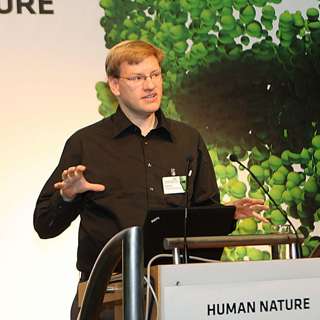
#33 Classic episode - Anders Sandberg on cryonics, solar flares, and the annual odds of nuclear war

#33 Classic episode - Anders Sandberg on cryonics, solar flares, and the annual odds of nuclear war

Rebroadcast: this episode was originally released in May 2018. Joseph Stalin had a life-extension program dedicated to making himself immortal. What if he had succeeded? According to Bryan Caplan ...

8 Jan 20201h 25min

#17 Classic episode - Will MacAskill on moral uncertainty, utilitarianism & how to avoid being a moral monster

#17 Classic episode - Will MacAskill on moral uncertainty, utilitarianism & how to avoid being a moral monster

Rebroadcast: this episode was originally released in January 2018. Immanuel Kant is a profoundly influential figure in modern philosophy, and was one of the earliest proponents for universal democracy...

31 Dec 20191h 52min
#67 – David Chalmers on the nature and ethics of consciousness

#67 – David Chalmers on the nature and ethics of consciousness

What is it like to be you right now? You're seeing this text on the screen, smelling the coffee next to you, and feeling the warmth of the cup. There’s a lot going on in your head — your conscious exp...

16 Dec 20194h 41min

#66 – Peter Singer on being provocative, effective altruism, & how his moral views have changed

#66 – Peter Singer on being provocative, effective altruism, & how his moral views have changed

In 1989, the professor of moral philosophy Peter Singer was all over the news for his inflammatory opinions about abortion. But the controversy stemmed from Practical Ethics — a book he’d actually rel...

5 Dec 20192h 1min

#65 – Ambassador Bonnie Jenkins on 8 years pursuing WMD arms control, & diversity in diplomacy

#65 – Ambassador Bonnie Jenkins on 8 years pursuing WMD arms control, & diversity in diplomacy

"…it started when the Soviet Union fell apart and there was a real desire to ensure security of nuclear materials and pathogens, and that scientists with [WMD-related] knowledge could get paid so that...

19 Nov 20191h 40min
#64 – Bruce Schneier on how insecure electronic voting could break the United States — and surveillance without tyranny

#64 – Bruce Schneier on how insecure electronic voting could break the United States — and surveillance without tyranny

November 3 2020, 10:32PM: CNN, NBC, and FOX report that Donald Trump has narrowly won Florida, and with it, re-election.  November 3 2020, 11:46PM: The NY Times and Wall Street Journal report that so...

25 Okt 20192h 11min

Populärt inom Utbildning

historiepodden-se
rss-bara-en-till-om-missbruk-medberoende-2
det-skaver
harrisons-dramatiska-historia
nu-blir-det-historia
rss-viktmedicinpodden
johannes-hansen-podcast
not-fanny-anymore
roda-vita-rosen
rss-foraldramotet-bring-lagercrantz
sektledare
allt-du-velat-veta
i-vantan-pa-katastrofen
sa-in-i-sjalen
rss-sjalsligt-avkladd
sex-pa-riktigt-med-marika-smith
rss-basta-livet
rikatillsammans-om-privatekonomi-rikedom-i-livet
rss-pa-insidan-med-bjorn-rudman
rss-traningsklubben