#43 - Daniel Ellsberg on the institutional insanity that maintains nuclear doomsday machines

#43 - Daniel Ellsberg on the institutional insanity that maintains nuclear doomsday machines

In Stanley Kubrick’s iconic film Dr. Strangelove, the American president is informed that the Soviet Union has created a secret deterrence system which will automatically wipe out humanity upon detection of a single nuclear explosion in Russia. With US bombs heading towards the USSR and unable to be recalled, Dr Strangelove points out that “the whole point of this Doomsday Machine is lost if you keep it a secret – why didn’t you tell the world, eh?” The Soviet ambassador replies that it was to be announced at the Party Congress the following Monday: “The Premier loves surprises”.

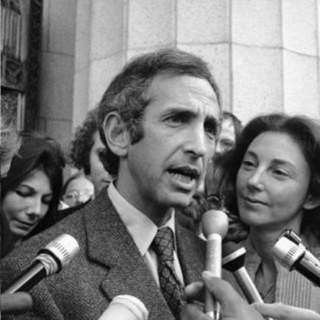
Daniel Ellsberg - leaker of the Pentagon Papers which helped end the Vietnam War and Nixon presidency - claims in his new book The Doomsday Machine: Confessions of a Nuclear War Planner that Dr. Strangelove might as well be a documentary. After attending the film in Washington DC in 1964, he and a colleague wondered how so many details of their nuclear planning had leaked.

Links to learn more, summary and full transcript.

The USSR did in fact develop a doomsday machine, Dead Hand, which probably remains active today.

If the system can’t contact military leaders, it checks for signs of a nuclear strike, and if it detects them, automatically launches all remaining Soviet weapons at targets across the northern hemisphere.

As in the film, the Soviet Union long kept Dead Hand completely secret, eliminating any strategic benefit, and rendering it a pointless menace to humanity.

You might think the United States would have a more sensible nuclear launch policy. You’d be wrong.

As Ellsberg explains, based on first-hand experience as a nuclear war planner in the 50s, that the notion that only the president is able to authorize the use of US nuclear weapons is a carefully cultivated myth.

The authority to launch nuclear weapons is delegated alarmingly far down the chain of command – significantly raising the chance that a lone wolf or communication breakdown could trigger a nuclear catastrophe.

The whole justification for this is to defend against a ‘decapitating attack’, where a first strike on Washington disables the ability of the US hierarchy to retaliate. In a moment of crisis, the Russians might view this as their best hope of survival.

Ostensibly, this delegation removes Russia’s temptation to attempt a decapitating attack – the US can retaliate even if its leadership is destroyed. This strategy only works, though, if the tell the enemy you’ve done it.

Instead, since the 50s this delegation has been one of the United States most closely guarded secrets, eliminating its strategic benefit, and rendering it another pointless menace to humanity.

Strategically, the setup is stupid. Ethically, it is monstrous.

So – how was such a system built? Why does it remain to this day? And how might we shrink our nuclear arsenals to the point they don’t risk the destruction of civilization?

Daniel explores these questions eloquently and urgently in his book. Today we cover:

* Why full disarmament today would be a mistake and the optimal number of nuclear weapons to hold
* How well are secrets kept in the government?
* What was the risk of the first atomic bomb test?
* The effect of Trump on nuclear security
* Do we have a reliable estimate of the magnitude of a ‘nuclear winter’?
* Why Gorbachev allowed Russia’s covert biological warfare program to continue

Get this episode by subscribing: type 80,000 Hours into your podcasting app.

The 80,000 Hours Podcast is produced by Keiran Harris.

Avsnitt(333)

#20 - Bruce Friedrich on inventing outstanding meat substitutes to end speciesism & factory farming

#20 - Bruce Friedrich on inventing outstanding meat substitutes to end speciesism & factory farming

Before the US Civil War, it was easier for the North to morally oppose slavery. Why? Because unlike the South they weren’t profiting much from its existence. The fight for abolition was partly won bec...

19 Feb 20181h 18min
#19 - Samantha Pitts-Kiefer on working next to the White House trying to prevent nuclear war

#19 - Samantha Pitts-Kiefer on working next to the White House trying to prevent nuclear war

Rogue elements within a state’s security forces enrich dozens of kilograms of uranium. It’s then assembled into a crude nuclear bomb. The bomb is transported on a civilian aircraft to Washington D.C, ...

14 Feb 20181h 4min
#18 - Ofir Reich on using data science to end poverty & the spurious action-inaction distinction

#18 - Ofir Reich on using data science to end poverty & the spurious action-inaction distinction

Ofir Reich started out doing math in the military, before spending 8 years in tech startups - but then made a sharp turn to become a data scientist focussed on helping the global poor. At UC Berkeley...

31 Jan 20181h 18min

#17 - Will MacAskill on moral uncertainty, utilitarianism & how to avoid being a moral monster

#17 - Will MacAskill on moral uncertainty, utilitarianism & how to avoid being a moral monster

Immanuel Kant is a profoundly influential figure in modern philosophy, and was one of the earliest proponents for universal democracy and international cooperation. He also thought that women have no ...

19 Jan 20181h 52min

#16 - Michelle Hutchinson on global priorities research & shaping the ideas of intellectuals

#16 - Michelle Hutchinson on global priorities research & shaping the ideas of intellectuals

In the 40s and 50s neoliberalism was a fringe movement within economics. But by the 80s it had become a dominant school of thought in public policy, and achieved major policy changes across the Englis...

22 Dec 201755min
#15 - Phil Tetlock on how chimps beat Berkeley undergrads and when it’s wise to defer to the wise

#15 - Phil Tetlock on how chimps beat Berkeley undergrads and when it’s wise to defer to the wise

Prof Philip Tetlock is a social science legend. Over forty years he has researched whose predictions we can trust, whose we can’t and why - and developed methods that allow all of us to be better at p...

20 Nov 20171h 24min
#14 - Sharon Nunez & Jose Valle on going undercover to expose animal abuse

#14 - Sharon Nunez & Jose Valle on going undercover to expose animal abuse

What if you knew that ducks were being killed with pitchforks? Rabbits dumped alive into containers? Or pigs being strangled with forklifts? Would you be willing to go undercover to expose the crime? ...

13 Nov 20171h 25min
#13 - Claire Walsh on testing which policies work & how to get governments to listen to the results

#13 - Claire Walsh on testing which policies work & how to get governments to listen to the results

In both rich and poor countries, government policy is often based on no evidence at all and many programs don’t work. This has particularly harsh effects on the global poor - in some countries governm...

31 Okt 201752min

Populärt inom Utbildning

historiepodden-se
rss-bara-en-till-om-missbruk-medberoende-2
det-skaver
harrisons-dramatiska-historia
nu-blir-det-historia
not-fanny-anymore
johannes-hansen-podcast
roda-vita-rosen
rss-foraldramotet-bring-lagercrantz
allt-du-velat-veta
rss-viktmedicinpodden
sektledare
sa-in-i-sjalen
rss-sjalsligt-avkladd
rss-max-tant-med-max-villman
i-vantan-pa-katastrofen
rikatillsammans-om-privatekonomi-rikedom-i-livet
sex-pa-riktigt-med-marika-smith
rss-basta-livet
rss-traningsklubben