#45 - Tyler Cowen's case for maximising econ growth, stabilising civilization & thinking long-term

#45 - Tyler Cowen's case for maximising econ growth, stabilising civilization & thinking long-term

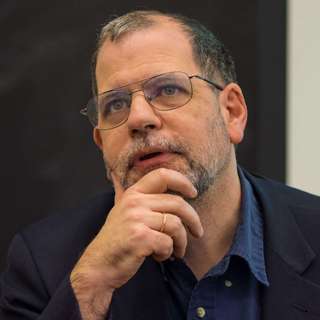
I've probably spent more time reading Tyler Cowen - Professor of Economics at George Mason University - than any other author. Indeed it's his incredibly popular blog Marginal Revolution that prompted me to study economics in the first place. Having spent thousands of hours absorbing Tyler's work, it was a pleasure to be able to question him about his latest book and personal manifesto: Stubborn Attachments: A Vision for a Society of Free, Prosperous, and Responsible Individuals.

Tyler makes the case that, despite what you may have heard, we *can* make rational judgments about what is best for society as a whole. He argues:

1. Our top moral priority should be preserving and improving humanity's long-term future
2. The way to do that is to maximise the rate of sustainable economic growth
3. We should respect human rights and follow general principles while doing so.

We discuss why Tyler believes all these things, and I push back where I disagree. In particular: is higher economic growth actually an effective way to safeguard humanity's future, or should our focus really be elsewhere?

In the process we touch on many of moral philosophy's most pressing questions: Should we discount the future? How should we aggregate welfare across people? Should we follow rules or evaluate every situation individually? How should we deal with the massive uncertainty about the effects of our actions? And should we trust common sense morality or follow structured theories?

Links to learn more, summary and full transcript.

After covering the book, the conversation ranges far and wide. Will we leave the galaxy, and is it a tragedy if we don't? Is a multi-polar world less stable? Will humanity ever help wild animals? Why do we both agree that Kant and Rawls are overrated?

Today's interview is released on both the 80,000 Hours Podcast and Tyler's own show: Conversation with Tyler.

Tyler may have had more influence on me than any other writer but this conversation is richer for our remaining disagreements. If the above isn't enough to tempt you to listen, we also look at:

* Why couldn’t future technology make human life a hundred or a thousand times better than it is for people today?
* Why focus on increasing the rate of economic growth rather than making sure that it doesn’t go to zero?
* Why shouldn’t we dedicate substantial time to the successful introduction of genetic engineering?
* Why should we completely abstain from alcohol and make it a social norm?
* Why is Tyler so pessimistic about space? Is it likely that humans will go extinct before we manage to escape the galaxy?
* Is improving coordination and international cooperation a major priority?
* Why does Tyler think institutions are keeping up with technology?
* Given that our actions seem to have very large and morally significant effects in the long run, are our moral obligations very onerous?
* Can art be intrinsically valuable?
* What does Tyler think Derek Parfit was most wrong about, and what was he was most right about that’s unappreciated today?

Get this episode by subscribing: type 80,000 Hours into your podcasting app.

The 80,000 Hours Podcast is produced by Keiran Harris.

Avsnitt(325)

#79 – A.J. Jacobs on radical honesty, following the whole Bible, and reframing global problems as puzzles

#79 – A.J. Jacobs on radical honesty, following the whole Bible, and reframing global problems as puzzles

Today’s guest, New York Times bestselling author A.J. Jacobs, always hated Judge Judy. But after he found out that she was his seventh cousin, he thought, "You know what? She's not so bad." Hijacking ...

1 Juni 20202h 38min
#78 – Danny Hernandez on forecasting and the drivers of AI progress

#78 – Danny Hernandez on forecasting and the drivers of AI progress

Companies use about 300,000 times more computation training the best AI systems today than they did in 2012 and algorithmic innovations have also made them 25 times more efficient at the same tasks.Th...

22 Maj 20202h 11min
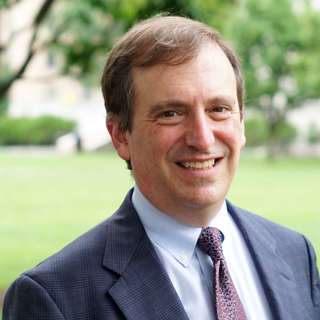
#77 – Marc Lipsitch on whether we're winning or losing against COVID-19

#77 – Marc Lipsitch on whether we're winning or losing against COVID-19

In March Professor Marc Lipsitch — Director of Harvard's Center for Communicable Disease Dynamics — abruptly found himself a global celebrity, his social media following growing 40-fold and journalist...

18 Maj 20201h 37min

Article: Ways people trying to do good accidentally make things worse, and how to avoid them

Article: Ways people trying to do good accidentally make things worse, and how to avoid them

Today’s release is the second experiment in making audio versions of our articles. The first was a narration of Greg Lewis’ terrific problem profile on ‘Reducing global catastrophic biological risks...

12 Maj 202026min
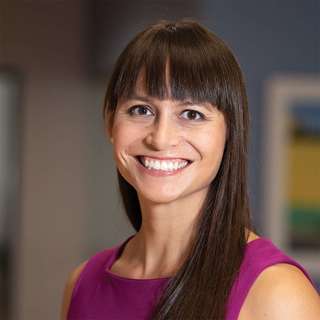
#76 – Tara Kirk Sell on misinformation, who's done well and badly, & what to reopen first

#76 – Tara Kirk Sell on misinformation, who's done well and badly, & what to reopen first

Amid a rising COVID-19 death toll, and looming economic disaster, we’ve been looking for good news — and one thing we're especially thankful for is the Johns Hopkins Center for Health Security (CHS). ...

8 Maj 20201h 53min

#75 – Michelle Hutchinson on what people most often ask 80,000 Hours

#75 – Michelle Hutchinson on what people most often ask 80,000 Hours

Since it was founded, 80,000 Hours has done one-on-one calls to supplement our online content and offer more personalised advice. We try to help people get clear on their most plausible paths, the key...

28 Apr 20202h 13min

#74 – Dr Greg Lewis on COVID-19 & catastrophic biological risks

#74 – Dr Greg Lewis on COVID-19 & catastrophic biological risks

Our lives currently revolve around the global emergency of COVID-19; you’re probably reading this while confined to your house, as the death toll from the worst pandemic since 1918 continues to rise. ...

17 Apr 20202h 37min

Article: Reducing global catastrophic biological risks

Article: Reducing global catastrophic biological risks

In a few days we'll be putting out a conversation with Dr Greg Lewis, who studies how to prevent global catastrophic biological risks at Oxford's Future of Humanity Institute. Greg also wrote a new ...

15 Apr 20201h 4min

Populärt inom Utbildning

historiepodden-se
rss-bara-en-till-om-missbruk-medberoende-2
det-skaver
alska-oss
harrisons-dramatiska-historia
nu-blir-det-historia
sektledare
rss-viktmedicinpodden
johannes-hansen-podcast
not-fanny-anymore
roda-vita-rosen
i-vantan-pa-katastrofen
rss-sjalsligt-avkladd
allt-du-velat-veta
rss-basta-livet
rss-om-vi-ska-vara-arliga
sa-in-i-sjalen
rss-max-tant-med-max-villman
rikatillsammans-om-privatekonomi-rikedom-i-livet
rss-pa-insidan-med-bjorn-rudman