
#48 - Brian Christian on better living through the wisdom of computer science

#48 - Brian Christian on better living through the wisdom of computer science

Please let us know if we've helped you: Fill out our annual impact survey

Ever felt that you were so busy you spent all your time paralysed trying to figure out where to start, and couldn't get much done? Computer scientists have a term for this - thrashing - and it's a common reason our computers freeze up. The solution, for people as well as laptops, is to 'work dumber': pick something at random and finish it, without wasting time thinking about the bigger picture.

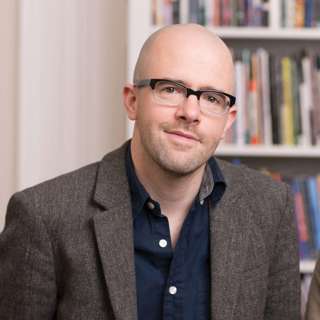
Bestselling author Brian Christian studied computer science, and in the book Algorithms to Live By he's out to find the lessons it can offer for a better life. He investigates into when to quit your job, when to marry, the best way to sell your house, how long to spend on a difficult decision, and how much randomness to inject into your life. In each case computer science gives us a theoretically optimal solution, and in this episode we think hard about whether its models match our reality.

Links to learn more, summary and full transcript.

One genre of problems Brian explores in his book are 'optimal stopping problems', the canonical example of which is ‘the secretary problem’. Imagine you're hiring a secretary, you receive *n* applicants, they show up in a random order, and you interview them one after another. You either have to hire that person on the spot and dismiss everybody else, or send them away and lose the option to hire them in future.

It turns out most of life can be viewed this way - a series of unique opportunities you pass by that will never be available in exactly the same way again.

So how do you attempt to hire the very best candidate in the pool? There's a risk that you stop before finding the best, and a risk that you set your standards too high and let the best candidate pass you by.

Mathematicians of the mid-twentieth century produced an elegant optimal approach: spend exactly one over *e*, or approximately 37% of your search, just establishing a baseline without hiring anyone, no matter how promising they seem. Then immediately hire the next person who's better than anyone you've seen so far.

It turns out that your odds of success in this scenario are also 37%. And the optimal strategy and the odds of success are identical regardless of the size of the pool. So as *n* goes to infinity you still want to follow this 37% rule, and you still have a 37% chance of success. Even if you interview a million people.

But if you have the option to go back, say by apologising to the first applicant and begging them to come work with you, and you have a 50% chance of your apology being accepted, then the optimal explore percentage rises all the way to 61%.

Today’s episode focuses on Brian’s book-length exploration of how insights from computer algorithms can and can't be applied to our everyday lives. We cover:

* Computational kindness, and the best way to schedule meetings
* How can we characterize a computational model of what people are actually doing, and is there a rigorous way to analyse just how good their instincts actually are?
* What’s it like being a human confederate in the Turing test competition?
* Is trying to detect fake social media accounts a losing battle?
* The canonical explore/exploit problem in computer science: the multi-armed bandit
* What’s the optimal way to buy or sell a house?
* Why is information economics so important?
* What kind of decisions should people randomize more in life?
* How much time should we spend on prioritisation?

Get this episode by subscribing: type '80,000 Hours' into your podcasting app.

The 80,000 Hours Podcast is produced by Keiran Harris.

Avsnitt(332)

#87 – Russ Roberts on whether it's more effective to help strangers, or people you know

#87 – Russ Roberts on whether it's more effective to help strangers, or people you know

If you want to make the world a better place, would it be better to help your niece with her SATs, or try to join the State Department to lower the risk that the US and China go to war? People involve...

3 Nov 20201h 49min

How much does a vote matter? (Article)

How much does a vote matter? (Article)

Today’s release is the latest in our series of audio versions of our articles.In this one — How much does a vote matter? — I investigate the two key things that determine the impact of your vote: • ...

29 Okt 202031min
#86 – Hilary Greaves on Pascal's mugging, strong longtermism, and whether existing can be good for us

#86 – Hilary Greaves on Pascal's mugging, strong longtermism, and whether existing can be good for us

Had World War 1 never happened, you might never have existed. It’s very unlikely that the exact chain of events that led to your conception would have happened otherwise — so perhaps you wouldn't have...

21 Okt 20202h 24min

Benjamin Todd on the core of effective altruism and how to argue for it (80k team chat #3)

Benjamin Todd on the core of effective altruism and how to argue for it (80k team chat #3)

Today’s episode is the latest conversation between Arden Koehler, and our CEO, Ben Todd. Ben’s been thinking a lot about effective altruism recently, including what it really is, how it's framed, an...

22 Sep 20201h 24min

Ideas for high impact careers beyond our priority paths (Article)

Ideas for high impact careers beyond our priority paths (Article)

Today’s release is the latest in our series of audio versions of our articles. In this one, we go through some more career options beyond our priority paths that seem promising to us for positively ...

7 Sep 202027min

Benjamin Todd on varieties of longtermism and things 80,000 Hours might be getting wrong (80k team chat #2)

Benjamin Todd on varieties of longtermism and things 80,000 Hours might be getting wrong (80k team chat #2)

Today’s bonus episode is a conversation between Arden Koehler, and our CEO, Ben Todd. Ben’s been doing a bunch of research recently, and we thought it’d be interesting to hear about how he’s current...

1 Sep 202057min

Global issues beyond 80,000 Hours’ current priorities (Article)

Global issues beyond 80,000 Hours’ current priorities (Article)

Today’s release is the latest in our series of audio versions of our articles. In this one, we go through 30 global issues beyond the ones we usually prioritize most highly in our work, and that you...

28 Aug 202032min

#85 - Mark Lynas on climate change, societal collapse & nuclear energy

#85 - Mark Lynas on climate change, societal collapse & nuclear energy

A golf-ball sized lump of uranium can deliver more than enough power to cover all of your lifetime energy use. To get the same energy from coal, you’d need 3,200 tonnes of black rock — a mass equivale...

20 Aug 20202h 8min

Populärt inom Utbildning

rss-bara-en-till-om-missbruk-medberoende-2
historiepodden-se
det-skaver
harrisons-dramatiska-historia
nu-blir-det-historia
allt-du-velat-veta
johannes-hansen-podcast
not-fanny-anymore
rss-viktmedicinpodden
roda-vita-rosen
rss-foraldramotet-bring-lagercrantz
sektledare
i-vantan-pa-katastrofen
sa-in-i-sjalen
rss-max-tant-med-max-villman
rss-sjalsligt-avkladd
alska-oss
rss-basta-livet
rss-om-vi-ska-vara-arliga
rikatillsammans-om-privatekonomi-rikedom-i-livet