#70 - Dr Cassidy Nelson on the 12 best ways to stop the next pandemic (and limit nCoV)

#70 - Dr Cassidy Nelson on the 12 best ways to stop the next pandemic (and limit nCoV)

nCoV is alarming governments and citizens around the world. It has killed more than 1,000 people, brought the Chinese economy to a standstill, and continues to show up in more and more places. But bad though it is, it's much closer to a warning shot than a worst case scenario. The next emerging infectious disease could easily be more contagious, more fatal, or both.

Despite improvements in the last few decades, humanity is still not nearly prepared enough to contain new diseases. We identify them too slowly. We can't do enough to reduce their spread. And we lack vaccines or drugs treatments for at least a year, if they ever arrive at all.

Links to learn more, summary and full transcript.

This is a precarious situation, especially with advances in biotechnology increasing our ability to modify viruses and bacteria as we like.

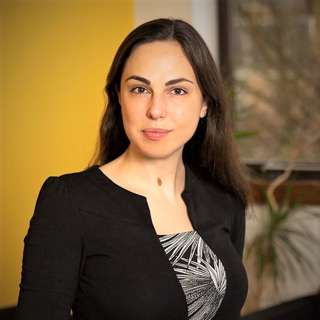
In today's episode, Cassidy Nelson, a medical doctor and research scholar at Oxford University's Future of Humanity Institute, explains 12 things her research group think urgently need to happen if we're to keep the risk at acceptable levels. The ideas are:

Science

1. Roll out genetic sequencing tests that lets you test someone for all known and unknown pathogens in one go.
2. Fund research into faster ‘platform’ methods for going from pathogen to vaccine, perhaps using innovation prizes.
3. Fund R&D into broad-spectrum drugs, especially antivirals, similar to how we have generic antibiotics against multiple types of bacteria.

Response

4. Develop a national plan for responding to a severe pandemic, regardless of the cause. Have a backup plan for when things are so bad the normal processes have stopped working entirely.
5. Rigorously evaluate in what situations travel bans are warranted. (They're more often counterproductive.)
6. Coax countries into more rapidly sharing their medical data, so that during an outbreak the disease can be understood and countermeasures deployed as quickly as possible.
7. Set up genetic surveillance in hospitals, public transport and elsewhere, to detect new pathogens before an outbreak — or even before patients develop symptoms.
8. Run regular tabletop exercises within governments to simulate how a pandemic response would play out.

Oversight

9. Mandate disclosure of accidents in the biosafety labs which handle the most dangerous pathogens.
10. Figure out how to govern DNA synthesis businesses, to make it harder to mail order the DNA of a dangerous pathogen.
11. Require full cost-benefit analysis of 'dual-use' research projects that can generate global risks.

12. And finally, to maintain momentum, it's necessary to clearly assign responsibility for the above to particular individuals and organisations.

These advances can be pursued by politicians and public servants, as well as academics, entrepreneurs and doctors, opening the door for many listeners to pitch in to help solve this incredibly pressing problem.

In the episode Rob and Cassidy also talk about:

• How Cassidy went from clinical medicine to a PhD studying novel pathogens with pandemic potential.
• The pros, and significant cons, of travel restrictions.
• Whether the same policies work for natural and anthropogenic pandemics.
• Ways listeners can pursue a career in biosecurity.
• Where we stand with nCoV as of today.

Chapters:

  • Rob’s intro (00:00:00)
  • The interview begins (00:03:27)
  • Where we stand with nCov today (00:07:24)
  • Policy idea 1: A drastic change to diagnostic testing (00:34:58)
  • Policy idea 2: Vaccine platforms (00:47:08)
  • Policy idea 3: Broad-spectrum therapeutics (00:54:48)
  • Policy idea 4: Develop a national plan for responding to a severe pandemic, regardless of the cause (01:02:15)
  • Policy idea 5: A different approach to travel bans (01:15:59)
  • Policy idea 6: Data sharing (01:16:48)
  • Policy idea 7: Prevention (01:24:45)
  • Policy idea 8: transparency around lab accidents (01:33:58)
  • Policy idea 9: DNA synthesis screening (01:39:22)
  • Policy idea 10: Dual Use Research oversight (01:48:47)
  • Policy idea 11: Pandemic tabletop exercises (02:00:00)
  • Policy idea 12: Coordination (02:12:20)


Get this episode by subscribing: type 80,000 Hours into your podcasting app. Or read the linked transcript.

Producer: Keiran Harris.
Transcriptions: Zakee Ulhaq.

Avsnitt(333)

#12 - Beth Cameron works to stop you dying in a pandemic. Here’s what keeps her up at night.

#12 - Beth Cameron works to stop you dying in a pandemic. Here’s what keeps her up at night.

“When you're in the middle of a crisis and you have to ask for money, you're already too late.” That’s Dr Beth Cameron, who leads Global Biological Policy and Programs at the Nuclear Threat Initiative...

25 Okt 20171h 45min

#11 - Spencer Greenberg on speeding up social science 10-fold & why plenty of startups cause harm

#11 - Spencer Greenberg on speeding up social science 10-fold & why plenty of startups cause harm

Do most meat eaters think it’s wrong to hurt animals? Do Americans think climate change is likely to cause human extinction? What is the best, state-of-the-art therapy for depression? How can we make ...

17 Okt 20171h 29min
#10 - Nick Beckstead on how to spend billions of dollars preventing human extinction

#10 - Nick Beckstead on how to spend billions of dollars preventing human extinction

What if you were in a position to give away billions of dollars to improve the world? What would you do with it? This is the problem facing Program Officers at the Open Philanthropy Project - people l...

11 Okt 20171h 51min
#9 - Christine Peterson on how insecure computers could lead to global disaster, and how to fix it

#9 - Christine Peterson on how insecure computers could lead to global disaster, and how to fix it

Take a trip to Silicon Valley in the 70s and 80s, when going to space sounded like a good way to get around environmental limits, people started cryogenically freezing themselves, and nanotechnology l...

4 Okt 20171h 45min
#8 - Lewis Bollard on how to end factory farming in our lifetimes

#8 - Lewis Bollard on how to end factory farming in our lifetimes

Every year tens of billions of animals are raised in terrible conditions in factory farms before being killed for human consumption. Over the last two years Lewis Bollard – Project Officer for Farm An...

27 Sep 20173h 16min

#7 - Julia Galef on making humanity more rational, what EA does wrong, and why Twitter isn’t all bad

#7 - Julia Galef on making humanity more rational, what EA does wrong, and why Twitter isn’t all bad

The scientific revolution in the 16th century was one of the biggest societal shifts in human history, driven by the discovery of new and better methods of figuring out who was right and who was wrong...

13 Sep 20171h 14min
#6 - Toby Ord on why the long-term future matters more than anything else & what to do about it

#6 - Toby Ord on why the long-term future matters more than anything else & what to do about it

Of all the people whose well-being we should care about, only a small fraction are alive today. The rest are members of future generations who are yet to exist. Whether they’ll be born into a world th...

6 Sep 20172h 8min

#5 - Alex Gordon-Brown on how to donate millions in your 20s working in quantitative trading

#5 - Alex Gordon-Brown on how to donate millions in your 20s working in quantitative trading

Quantitative financial trading is one of the highest paying parts of the world’s highest paying industry. 25 to 30 year olds with outstanding maths skills can earn millions a year in an obscure set of...

28 Aug 20171h 45min

Populärt inom Utbildning

historiepodden-se
rss-bara-en-till-om-missbruk-medberoende-2
det-skaver
harrisons-dramatiska-historia
nu-blir-det-historia
rss-viktmedicinpodden
johannes-hansen-podcast
not-fanny-anymore
roda-vita-rosen
rss-foraldramotet-bring-lagercrantz
sektledare
allt-du-velat-veta
i-vantan-pa-katastrofen
sa-in-i-sjalen
rss-sjalsligt-avkladd
sex-pa-riktigt-med-marika-smith
rss-basta-livet
rikatillsammans-om-privatekonomi-rikedom-i-livet
rss-pa-insidan-med-bjorn-rudman
rss-traningsklubben