
#72 - Toby Ord on the precipice and humanity's potential futures

#72 - Toby Ord on the precipice and humanity's potential futures

This week Oxford academic and 80,000 Hours trustee Dr Toby Ord released his new book The Precipice: Existential Risk and the Future of Humanity. It's about how our long-term future could be better than almost anyone believes, but also how humanity's recklessness is putting that future at grave risk — in Toby's reckoning, a 1 in 6 chance of being extinguished this century.

I loved the book and learned a great deal from it (buy it here, US and audiobook release March 24). While preparing for this interview I copied out 87 facts that were surprising, shocking or important. Here's a sample of 16:

1. The probability of a supervolcano causing a civilisation-threatening catastrophe in the next century is estimated to be 100x that of asteroids and comets combined.

2. The Biological Weapons Convention — a global agreement to protect humanity — has just four employees, and a smaller budget than an average McDonald’s.

3. In 2008 a 'gamma ray burst' reached Earth from another galaxy, 10 billion light years away. It was still bright enough to be visible to the naked eye. We aren't sure what generates gamma ray bursts but one cause may be two neutron stars colliding.

4. Before detonating the first nuclear weapon, scientists in the Manhattan Project feared that the high temperatures in the core, unprecedented for Earth, might be able to ignite the hydrogen in water. This would set off a self-sustaining reaction that would burn off the Earth’s oceans, killing all life above ground. They thought this was unlikely, but many atomic scientists feared their calculations could be missing something. As far as we know, the US President was never informed of this possibility, but similar risks were one reason Hitler stopped…

N.B. I've had to cut off this list as we only get 4,000 characters in these show notes, so:

Click here to read the whole list, see a full transcript, and find related links.

And if you like the list, you can get a free copy of the introduction and first chapter by joining our mailing list.

While I've been studying these topics for years and known Toby for the last eight, a remarkable amount of what's in The Precipice was new to me.

Of course the book isn't a series of isolated amusing facts, but rather a systematic review of the many ways humanity's future could go better or worse, how we might know about them, and what might be done to improve the odds.

And that's how we approach this conversation, first talking about each of the main threats, then how we can learn about things that have never happened before, then finishing with what a great future for humanity might look like and how it might be achieved.

Toby is a famously good explainer of complex issues — a bit of a modern Carl Sagan character — so as expected this was a great interview, and one which Arden Koehler and I barely even had to work for.

Some topics Arden and I ask about include:

• What Toby changed his mind about while writing the book
• Are people exaggerating when they say that climate change could actually end civilization?
• What can we learn from historical pandemics?
• Toby’s estimate of unaligned AI causing human extinction in the next century
• Is this century the most important time in human history, or is that a narcissistic delusion?
• Competing vision for humanity's ideal future
• And more.

Get this episode by subscribing: type '80,000 Hours' into your podcasting app. Or read the linked transcript.

Producer: Keiran Harris.
Audio mastering: Ben Cordell.
Transcriptions: Zakee Ulhaq.

Avsnitt(320)

#66 – Peter Singer on being provocative, effective altruism, & how his moral views have changed

#66 – Peter Singer on being provocative, effective altruism, & how his moral views have changed

In 1989, the professor of moral philosophy Peter Singer was all over the news for his inflammatory opinions about abortion. But the controversy stemmed from Practical Ethics — a book he’d actually rel...

5 Dec 20192h 1min
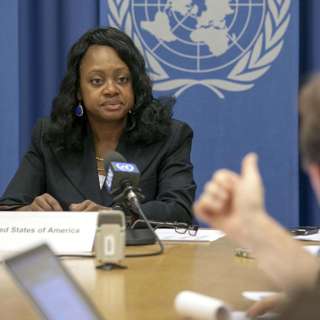
#65 – Ambassador Bonnie Jenkins on 8 years pursuing WMD arms control, & diversity in diplomacy

#65 – Ambassador Bonnie Jenkins on 8 years pursuing WMD arms control, & diversity in diplomacy

"…it started when the Soviet Union fell apart and there was a real desire to ensure security of nuclear materials and pathogens, and that scientists with [WMD-related] knowledge could get paid so that...

19 Nov 20191h 40min
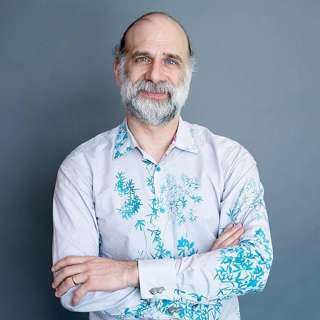
#64 – Bruce Schneier on how insecure electronic voting could break the United States — and surveillance without tyranny

#64 – Bruce Schneier on how insecure electronic voting could break the United States — and surveillance without tyranny

November 3 2020, 10:32PM: CNN, NBC, and FOX report that Donald Trump has narrowly won Florida, and with it, re-election.  November 3 2020, 11:46PM: The NY Times and Wall Street Journal report that so...

25 Okt 20192h 11min

Rob Wiblin on plastic straws, nicotine, doping, & whether changing the long-term is really possible

Rob Wiblin on plastic straws, nicotine, doping, & whether changing the long-term is really possible

Today's episode is a compilation of interviews I recently recorded for two other shows, Love Your Work and The Neoliberal Podcast.  If you've listened to absolutely everything on this podcast feed, y...

25 Sep 20193h 14min

Have we helped you have a bigger social impact? Our annual survey, plus other ways we can help you.

Have we helped you have a bigger social impact? Our annual survey, plus other ways we can help you.

1. Fill out our annual impact survey here. 2. Find a great vacancy on our job board. 3. Learn about our key ideas, and get links to our top articles. 4. Join our newsletter for an email about what's n...

16 Sep 20193min

#63 – Vitalik Buterin on better ways to fund public goods, blockchain's failures, & effective giving

#63 – Vitalik Buterin on better ways to fund public goods, blockchain's failures, & effective giving

Historically, progress in the field of cryptography has had major consequences. It has changed the course of major wars, made it possible to do business on the internet, and enabled private communicat...

3 Sep 20193h 18min

#62 – Paul Christiano on messaging the future, increasing compute, & how CO2 impacts your brain

#62 – Paul Christiano on messaging the future, increasing compute, & how CO2 impacts your brain

Imagine that – one day – humanity dies out. At some point, many millions of years later, intelligent life might well evolve again. Is there any message we could leave that would reliably help them out...

5 Aug 20192h 11min

#61 - Helen Toner on emerging technology, national security, and China

#61 - Helen Toner on emerging technology, national security, and China

From 1870 to 1950, the introduction of electricity transformed life in the US and UK, as people gained access to lighting, radio and a wide range of household appliances for the first time. Electricit...

17 Juli 20191h 54min

Populärt inom Utbildning

rss-bara-en-till-om-missbruk-medberoende-2
historiepodden-se
det-skaver
nu-blir-det-historia
harrisons-dramatiska-historia
rss-viktmedicinpodden
johannes-hansen-podcast
not-fanny-anymore
roda-vita-rosen
allt-du-velat-veta
sektledare
rss-sjalsligt-avkladd
i-vantan-pa-katastrofen
alska-oss
rss-beratta-alltid-det-har
sa-in-i-sjalen
rss-max-tant-med-max-villman
dumforklarat
rikatillsammans-om-privatekonomi-rikedom-i-livet
rss-basta-livet