#73 – Phil Trammell on patient philanthropy and waiting to do good

#73 – Phil Trammell on patient philanthropy and waiting to do good

To do good, most of us look to use our time and money to affect the world around us today. But perhaps that's all wrong.

If you took $1,000 you were going to donate and instead put it in the stock market — where it grew on average 5% a year — in 100 years you'd have $125,000 to give away instead. And in 200 years you'd have $17 million.

This astonishing fact has driven today's guest, economics researcher Philip Trammell at Oxford's Global Priorities Institute, to investigate the case for and against so-called 'patient philanthropy' in depth. If the case for patient philanthropy is as strong as Phil believes, many of us should be trying to improve the world in a very different way than we are now.

He points out that on top of being able to dispense vastly more, whenever your trustees decide to use your gift to improve the world, they'll also be able to rely on the much broader knowledge available to future generations. A donor two hundred years ago couldn't have known distributing anti-malarial bed nets was a good idea. Not only did bed nets not exist — we didn't even know about germs, and almost nothing in medicine was justified by science.

ADDED: Does the COVID-19 emergency mean we should actually use resources right now? See Phil's first thoughts on this question here.

Links to learn more, summary and full transcript.

What similar leaps will our descendants have made in 200 years, allowing your now vast foundation to benefit more people in even greater ways?

And there's a third reason to wait as well. What are the odds that we today live at the most critical point in history, when resources happen to have the greatest ability to do good? It's possible. But the future may be very long, so there has to be a good chance that some moment in the future will be both more pivotal and more malleable than our own.

Of course, there are many objections to this proposal. If you start a foundation you hope will wait around for centuries, might it not be destroyed in a war, revolution, or financial collapse?

Or might it not drift from its original goals, eventually just serving the interest of its distant future trustees, rather than the noble pursuits you originally intended?

Or perhaps it could fail for the reverse reason, by staying true to your original vision — if that vision turns out to be as deeply morally mistaken as the Rhodes' Scholarships initial charter, which limited it to 'white Christian men'.

Alternatively, maybe the world will change in the meantime, making your gift useless. At one end, humanity might destroy itself before your trust tries to do anything with the money. Or perhaps everyone in the future will be so fabulously wealthy, or the problems of the world already so overcome, that your philanthropy will no longer be able to do much good.

Are these concerns, all of them legitimate, enough to overcome the case in favour of patient philanthropy? In today's conversation with researcher Phil Trammell and my 80,000 Hours colleague Howie Lempel, we try to answer that, and also discuss:

• Real attempts at patient philanthropy in history and how they worked out
• Should we have a mixed strategy, where some altruists are patient and others impatient?
• Which causes most need money now, and which later?
• What is the research frontier here?
• What does this all mean for what listeners should do differently?

Chapters:

  • Rob’s intro (00:00:00)
  • The interview begins (00:02:23)
  • Consequences for getting this question wrong (00:06:03)
  • What have people had to say about this question in the past? (00:07:22)
  • The case for saving (00:11:51)
  • Hundred year leases (00:29:28)
  • Should we be concerned about one group taking control of the world? (00:34:51)
  • Finding better interventions in the future (00:37:20)
  • The hinge of history (00:43:46)
  • Does uncertainty lead us to wanting to wait? (01:01:52)
  • Counterarguments (01:11:36)
  • What about groups who have a particular sense of urgency? (01:40:46)
  • How much should we actually save? (02:01:35)
  • Implications for career choices (02:19:49)


Producer: Keiran Harris.
Audio mastering: Ben Cordell.
Transcriptions: Zakee Ulhaq.

Avsnitt(322)

#144 Classic episode – Athena Aktipis on why cancer is a fundamental universal phenomena

#144 Classic episode – Athena Aktipis on why cancer is a fundamental universal phenomena

What’s the opposite of cancer? If you answered “cure,” “antidote,” or “antivenom” — you’ve obviously been reading the antonym section at www.merriam-webster.com/thesaurus/cancer.But today’s guest Athe...

9 Jan 3h 30min
#142 Classic episode – John McWhorter on why the optimal number of languages might be one, and other provocative claims about language

#142 Classic episode – John McWhorter on why the optimal number of languages might be one, and other provocative claims about language

John McWhorter is a linguistics professor at Columbia University specialising in research on creole languages. He's also a content-producing machine, never afraid to give his frank opinion on anything...

6 Jan 1h 35min
2025 Highlight-o-thon: Oops! All Bests

2025 Highlight-o-thon: Oops! All Bests

It’s that magical time of year once again — highlightapalooza! Stick around for one top bit from each episode we recorded this year, including:Kyle Fish explaining how Anthropic’s AI Claude descends i...

29 Dec 20251h 40min

#232 – Andreas Mogensen on what we owe 'philosophical Vulcans' and unconscious beings

#232 – Andreas Mogensen on what we owe 'philosophical Vulcans' and unconscious beings

Most debates about the moral status of AI systems circle the same question: is there something that it feels like to be them? But what if that’s the wrong question to ask? Andreas Mogensen — a senior ...

19 Dec 20252h 37min
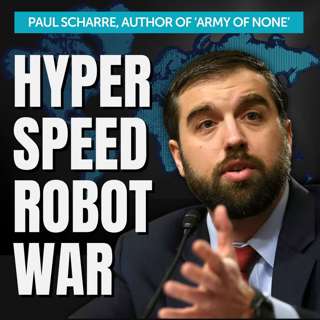
#231 – Paul Scharre on how AI-controlled robots will and won't change war

#231 – Paul Scharre on how AI-controlled robots will and won't change war

In 1983, Stanislav Petrov, a Soviet lieutenant colonel, sat in a bunker watching a red screen flash “MISSILE LAUNCH.” Protocol demanded he report it to superiors, which would very likely trigger a ret...

17 Dec 20252h 45min

AI might let a few people control everything — permanently (article by Rose Hadshar)

AI might let a few people control everything — permanently (article by Rose Hadshar)

Power is already concentrated today: over 800 million people live on less than $3 a day, the three richest men in the world are worth over $1 trillion, and almost six billion people live in countries ...

12 Dec 20251h
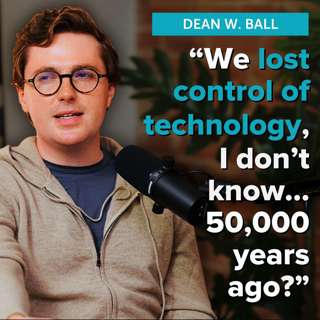
#230 – Dean Ball on how AI is a huge deal — but we shouldn’t regulate it yet

#230 – Dean Ball on how AI is a huge deal — but we shouldn’t regulate it yet

Former White House staffer Dean Ball thinks it's very likely some form of 'superintelligence' arrives in under 20 years. He thinks AI being used for bioweapon research is "a real threat model, obvious...

10 Dec 20252h 54min

#229 – Marius Hobbhahn on the race to solve AI scheming before models go superhuman

#229 – Marius Hobbhahn on the race to solve AI scheming before models go superhuman

We often worry about AI models “hallucinating” or making honest mistakes. But what happens when a model knows the truth, but decides to deceive you anyway to achieve a goal of its own? This isn’t sci-...

3 Dec 20253h 3min

Populärt inom Utbildning

historiepodden-se
rss-bara-en-till-om-missbruk-medberoende-2
det-skaver
alska-oss
sektledare
nu-blir-det-historia
rss-viktmedicinpodden
harrisons-dramatiska-historia
not-fanny-anymore
allt-du-velat-veta
johannes-hansen-podcast
roda-vita-rosen
rss-max-tant-med-max-villman
i-vantan-pa-katastrofen
sa-in-i-sjalen
rss-sjalsligt-avkladd
rss-basta-livet
sex-pa-riktigt-med-marika-smith
vi-gar-till-historien
rss-beratta-alltid-det-har