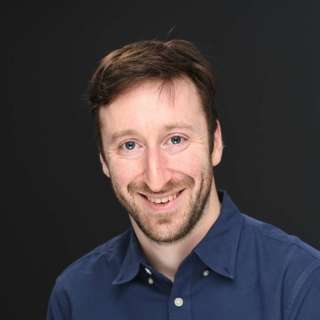

#73 – Phil Trammell on patient philanthropy and waiting to do good

#73 – Phil Trammell on patient philanthropy and waiting to do good

To do good, most of us look to use our time and money to affect the world around us today. But perhaps that's all wrong.

If you took $1,000 you were going to donate and instead put it in the stock market — where it grew on average 5% a year — in 100 years you'd have $125,000 to give away instead. And in 200 years you'd have $17 million.

This astonishing fact has driven today's guest, economics researcher Philip Trammell at Oxford's Global Priorities Institute, to investigate the case for and against so-called 'patient philanthropy' in depth. If the case for patient philanthropy is as strong as Phil believes, many of us should be trying to improve the world in a very different way than we are now.

He points out that on top of being able to dispense vastly more, whenever your trustees decide to use your gift to improve the world, they'll also be able to rely on the much broader knowledge available to future generations. A donor two hundred years ago couldn't have known distributing anti-malarial bed nets was a good idea. Not only did bed nets not exist — we didn't even know about germs, and almost nothing in medicine was justified by science.

ADDED: Does the COVID-19 emergency mean we should actually use resources right now? See Phil's first thoughts on this question here.

Links to learn more, summary and full transcript.

What similar leaps will our descendants have made in 200 years, allowing your now vast foundation to benefit more people in even greater ways?

And there's a third reason to wait as well. What are the odds that we today live at the most critical point in history, when resources happen to have the greatest ability to do good? It's possible. But the future may be very long, so there has to be a good chance that some moment in the future will be both more pivotal and more malleable than our own.

Of course, there are many objections to this proposal. If you start a foundation you hope will wait around for centuries, might it not be destroyed in a war, revolution, or financial collapse?

Or might it not drift from its original goals, eventually just serving the interest of its distant future trustees, rather than the noble pursuits you originally intended?

Or perhaps it could fail for the reverse reason, by staying true to your original vision — if that vision turns out to be as deeply morally mistaken as the Rhodes' Scholarships initial charter, which limited it to 'white Christian men'.

Alternatively, maybe the world will change in the meantime, making your gift useless. At one end, humanity might destroy itself before your trust tries to do anything with the money. Or perhaps everyone in the future will be so fabulously wealthy, or the problems of the world already so overcome, that your philanthropy will no longer be able to do much good.

Are these concerns, all of them legitimate, enough to overcome the case in favour of patient philanthropy? In today's conversation with researcher Phil Trammell and my 80,000 Hours colleague Howie Lempel, we try to answer that, and also discuss:

• Real attempts at patient philanthropy in history and how they worked out
• Should we have a mixed strategy, where some altruists are patient and others impatient?
• Which causes most need money now, and which later?
• What is the research frontier here?
• What does this all mean for what listeners should do differently?

Chapters:

  • Rob’s intro (00:00:00)
  • The interview begins (00:02:23)
  • Consequences for getting this question wrong (00:06:03)
  • What have people had to say about this question in the past? (00:07:22)
  • The case for saving (00:11:51)
  • Hundred year leases (00:29:28)
  • Should we be concerned about one group taking control of the world? (00:34:51)
  • Finding better interventions in the future (00:37:20)
  • The hinge of history (00:43:46)
  • Does uncertainty lead us to wanting to wait? (01:01:52)
  • Counterarguments (01:11:36)
  • What about groups who have a particular sense of urgency? (01:40:46)
  • How much should we actually save? (02:01:35)
  • Implications for career choices (02:19:49)


Producer: Keiran Harris.
Audio mastering: Ben Cordell.
Transcriptions: Zakee Ulhaq.

Avsnitt(324)

#105 – Alexander Berger on improving global health and wellbeing in clear and direct ways

#105 – Alexander Berger on improving global health and wellbeing in clear and direct ways

The effective altruist research community tries to identify the highest impact things people can do to improve the world. Unsurprisingly, given the difficulty of such a massive and open-ended project,...

12 Juli 20212h 54min

#104 – Pardis Sabeti on the Sentinel system for detecting and stopping pandemics

#104 – Pardis Sabeti on the Sentinel system for detecting and stopping pandemics

When the first person with COVID-19 went to see a doctor in Wuhan, nobody could tell that it wasn’t a familiar disease like the flu — that we were dealing with something new. How much death and destru...

29 Juni 20212h 20min

#103 – Max Roser on building the world's best source of COVID-19 data at Our World in Data

#103 – Max Roser on building the world's best source of COVID-19 data at Our World in Data

History is filled with stories of great people stepping up in times of crisis. Presidents averting wars; soldiers leading troops away from certain death; data scientists sleeping on the office floor t...

21 Juni 20212h 22min

#102 – Tom Moynihan on why prior generations missed some of the biggest priorities of all

#102 – Tom Moynihan on why prior generations missed some of the biggest priorities of all

It can be tough to get people to truly care about reducing existential risks today. But spare a thought for the longtermist of the 17th century: they were surrounded by people who thought extinction w...

11 Juni 20213h 56min

#101 – Robert Wright on using cognitive empathy to save the world

#101 – Robert Wright on using cognitive empathy to save the world

In 2003, Saddam Hussein refused to let Iraqi weapons scientists leave the country to be interrogated. Given the overwhelming domestic support for an invasion at the time, most key figures in the U.S. ...

28 Maj 20211h 36min

#100 – Having a successful career with depression, anxiety and imposter syndrome

#100 – Having a successful career with depression, anxiety and imposter syndrome

Today's episode is one of the most remarkable and really, unique, pieces of content we’ve ever produced (and I can say that because I had almost nothing to do with making it!). The producer of this ...

19 Maj 20212h 51min

#99 – Leah Garcés on turning adversaries into allies to change the chicken industry

#99 – Leah Garcés on turning adversaries into allies to change the chicken industry

For a chance to prevent enormous amounts of suffering, would you be brave enough to drive five hours to a remote location to meet a man who seems likely to be your enemy, knowing that it might be an a...

13 Maj 20212h 26min

#98 – Christian Tarsney on future bias and a possible solution to moral fanaticism

#98 – Christian Tarsney on future bias and a possible solution to moral fanaticism

Imagine that you’re in the hospital for surgery. This kind of procedure is always safe, and always successful — but it can take anywhere from one to ten hours. You can’t be knocked out for the operati...

5 Maj 20212h 38min

Populärt inom Utbildning

historiepodden-se
rss-bara-en-till-om-missbruk-medberoende-2
det-skaver
alska-oss
harrisons-dramatiska-historia
nu-blir-det-historia
rss-viktmedicinpodden
sektledare
johannes-hansen-podcast
not-fanny-anymore
allt-du-velat-veta
rss-sjalsligt-avkladd
roda-vita-rosen
i-vantan-pa-katastrofen
rss-max-tant-med-max-villman
sa-in-i-sjalen
rss-om-vi-ska-vara-arliga
rikatillsammans-om-privatekonomi-rikedom-i-livet
polisutbildningspodden
rss-basta-livet