#77 – Marc Lipsitch on whether we're winning or losing against COVID-19

#77 – Marc Lipsitch on whether we're winning or losing against COVID-19

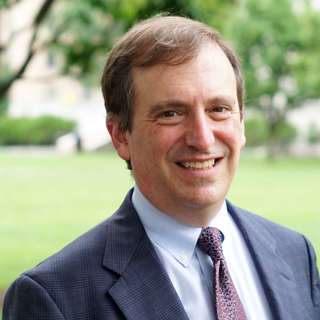
In March Professor Marc Lipsitch — Director of Harvard's Center for Communicable Disease Dynamics — abruptly found himself a global celebrity, his social media following growing 40-fold and journalists knocking down his door, as everyone turned to him for information they could trust.

Here he lays out where the fight against COVID-19 stands today, why he's open to deliberately giving people COVID-19 to speed up vaccine development, and how we could do better next time.

As Marc tells us, island nations like Taiwan and New Zealand are successfully suppressing SARS-COV-2. But everyone else is struggling.

Links to learn more, summary and full transcript.

Even Singapore, with plenty of warning and one of the best test and trace systems in the world, lost control of the virus in mid-April after successfully holding back the tide for 2 months.

This doesn't bode well for how the US or Europe will cope as they ease their lockdowns. It also suggests it would have been exceedingly hard for China to stop the virus before it spread overseas.

But sadly, there's no easy way out.

The original estimates of COVID-19's infection fatality rate, of 0.5-1%, have turned out to be basically right. And the latest serology surveys indicate only 5-10% of people in countries like the US, UK and Spain have been infected so far, leaving us far short of herd immunity. To get there, even these worst affected countries would need to endure something like ten times the number of deaths they have so far.

Marc has one good piece of news: research suggests that most of those who get infected do indeed develop immunity, for a while at least.

To escape the COVID-19 trap sooner rather than later, Marc recommends we go hard on all the familiar options — vaccines, antivirals, and mass testing — but also open our minds to creative options we've so far left on the shelf.

Despite the importance of his work, even now the training and grant programs that produced the community of experts Marc is a part of, are shrinking. We look at a new article he's written about how to instead build and improve the field of epidemiology, so humanity can respond faster and smarter next time we face a disease that could kill millions and cost tens of trillions of dollars.

We also cover:

• How listeners might contribute as future contagious disease experts, or donors to current projects
• How we can learn from cross-country comparisons
• Modelling that has gone wrong in an instructive way
• What governments should stop doing
• How people can figure out who to trust, and who has been most on the mark this time
• Why Marc supports infecting people with COVID-19 to speed up the development of a vaccines
• How we can ensure there's population-level surveillance early during the next pandemic
• Whether people from other fields trying to help with COVID-19 has done more good than harm
• Whether it's experts in diseases, or experts in forecasting, who produce better disease forecasts

Chapters:

  • Rob’s intro (00:00:00)
  • The interview begins (00:01:45)
  • Things Rob wishes he knew about COVID-19 (00:05:23)
  • Cross-country comparisons (00:10:53)
  • Any government activities we should stop? (00:21:24)
  • Lessons from COVID-19 (00:33:31)
  • Global catastrophic biological risks (00:37:58)
  • Human challenge trials (00:43:12)
  • Disease surveillance (00:50:07)
  • Who should we trust? (00:58:12)
  • Epidemiology as a field (01:13:05)
  • Careers (01:31:28)


Producer: Keiran Harris.
Audio mastering: Ben Cordell.
Transcriptions: Zakee Ulhaq.

Avsnitt(332)

Will MacAskill – AI character, surviving the intelligence explosion, and the case against utopia

Will MacAskill – AI character, surviving the intelligence explosion, and the case against utopia

Hundreds of millions already turn to AI on the most personal of topics — therapy, political opinions, and how to treat others. And as AI takes over more of the economy, the character of these systems ...

22 Apr 3h 9min
Risks from power-seeking AI systems (article narration by Zershaaneh Qureshi)

Risks from power-seeking AI systems (article narration by Zershaaneh Qureshi)

Hundreds of prominent AI scientists and other notable figures signed a statement in 2023 saying that mitigating the risk of extinction from AI should be a global priority. At 80,000 Hours, we’ve consi...

16 Apr 1h 29min

How scary is Claude Mythos? 303 pages in 21 minutes

How scary is Claude Mythos? 303 pages in 21 minutes

With Claude Mythos we have an AI that knows when it's being tested, can obscure its reasoning when it wants, and is better at breaking into (and out of) computers than any human alive. Rob Wiblin work...

10 Apr 21min
Village gossip, pesticide bans, and gene drives: 17 experts on the future of global health

Village gossip, pesticide bans, and gene drives: 17 experts on the future of global health

What does it really take to lift millions out of poverty and prevent needless deaths?In this special compilation episode, 17 past guests — including economists, nonprofit founders, and policy advisors...

7 Apr 4h 6min

What everyone is missing about Anthropic vs the Pentagon. And: The Meta leaks are worse than you think.

What everyone is missing about Anthropic vs the Pentagon. And: The Meta leaks are worse than you think.

When the Pentagon tried to strong-arm Anthropic into dropping its ban on AI-only kill decisions and mass domestic surveillance, the company refused. Its critics went on the attack: Anthropic and its s...

3 Apr 20min

#241 – Richard Moulange on how now AI codes viable genomes from scratch and outperforms virologists at lab work — what could go wrong?

#241 – Richard Moulange on how now AI codes viable genomes from scratch and outperforms virologists at lab work — what could go wrong?

Last September, scientists used an AI model to design genomes for entirely new bacteriophages (viruses that infect bacteria). They then built them in a lab. Many were viable. And despite being entirel...

31 Mars 3h 7min

#240 – Samuel Charap on how a Ukraine ceasefire could accidentally set Europe up for a bigger war

#240 – Samuel Charap on how a Ukraine ceasefire could accidentally set Europe up for a bigger war

Many people believe a ceasefire in Ukraine will leave Europe safer. But today's guest lays out how a deal could potentially generate insidious new risks — leaving us in a situation that's equally dang...

24 Mars 1h 12min
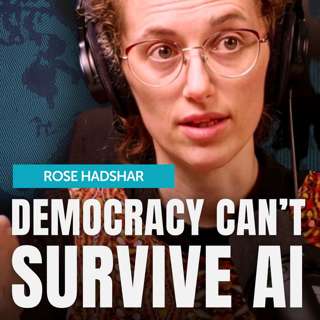
#239 – Rose Hadshar on why automating all human labour will break our political system

#239 – Rose Hadshar on why automating all human labour will break our political system

The most important political question in the age of advanced AI might not be who wins elections. It might be whether elections continue to matter at all.That’s the view of Rose Hadshar, researcher at ...

17 Mars 2h 14min

Populärt inom Utbildning

rss-bara-en-till-om-missbruk-medberoende-2
historiepodden-se
det-skaver
nu-blir-det-historia
harrisons-dramatiska-historia
johannes-hansen-podcast
allt-du-velat-veta
not-fanny-anymore
rss-viktmedicinpodden
rss-foraldramotet-bring-lagercrantz
roda-vita-rosen
sektledare
i-vantan-pa-katastrofen
sa-in-i-sjalen
rss-max-tant-med-max-villman
alska-oss
rss-sjalsligt-avkladd
rss-om-vi-ska-vara-arliga
rss-basta-livet
sex-pa-riktigt-med-marika-smith