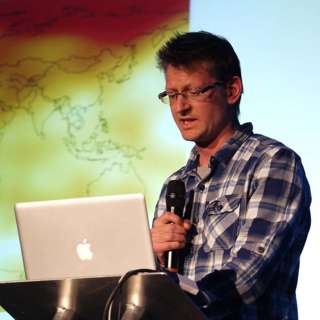

#85 - Mark Lynas on climate change, societal collapse & nuclear energy

#85 - Mark Lynas on climate change, societal collapse & nuclear energy

A golf-ball sized lump of uranium can deliver more than enough power to cover all of your lifetime energy use. To get the same energy from coal, you’d need 3,200 tonnes of black rock — a mass equivalent to 800 adult elephants, which would produce more than 11,000 tonnes of CO2. That’s about 11,000 tonnes more than the uranium.

Many people aren’t comfortable with the danger posed by nuclear power. But given the climatic stakes, it’s worth asking: Just how much more dangerous is it compared to fossil fuels?

According to today’s guest, Mark Lynas — author of Six Degrees: Our Future on a Hotter Planet (winner of the prestigious Royal Society Prizes for Science Books) and Nuclear 2.0 — it’s actually much, much safer.

Links to learn more, summary and full transcript.

Climatologists James Hansen and Pushker Kharecha calculated that the use of nuclear power between 1971 and 2009 avoided the premature deaths of 1.84 million people by avoiding air pollution from burning coal.

What about radiation or nuclear disasters? According to Our World In Data, in generating a given amount of electricity, nuclear, wind, and solar all cause about the same number of deaths — and it's a tiny number.

So what’s going on? Why isn’t everyone demanding a massive scale-up of nuclear energy to save lives and stop climate change? Mark and many other activists believe that unchecked climate change will result in the collapse of human civilization, so the stakes could not be higher.

Mark says that many environmentalists — including him — simply grew up with anti-nuclear attitudes all around them (possibly stemming from a conflation of nuclear weapons and nuclear energy) and haven't thought to question them.

But he thinks that once you believe in the climate emergency, you have to rethink your opposition to nuclear energy.

At 80,000 Hours we haven’t analysed the merits and flaws of the case for nuclear energy — especially compared to wind and solar paired with gas, hydro, or battery power to handle intermittency — but Mark is convinced.

He says it comes down to physics: Nuclear power is just so much denser.

We need to find an energy source that provides carbon-free power to ~10 billion people, and we need to do it while humanity is doubling or tripling (or more) its energy demand.

How do you do that without destroying the world's ecology? Mark thinks that nuclear is the only way.

Read a more in-depth version of the case for nuclear energy in the full blog post.

For Mark, the only argument against nuclear power is a political one -- that people won't want or accept it.

He says that he knows people in all kinds of mainstream environmental groups — such as Greenpeace — who agree that nuclear must be a vital part of any plan to solve climate change. But, because they think they'll be ostracized if they speak up, they keep their mouths shut.

Mark thinks this willingness to indulge beliefs that contradict scientific evidence stands in the way of actually fully addressing climate change, and so he’s helping to build a movement of folks who are out and proud about their support for nuclear energy.

This is only one topic of many in today’s interview. Arden, Rob, and Mark also discuss:

• At what degrees of warming does societal collapse become likely
• Whether climate change could lead to human extinction
• What environmentalists are getting wrong about climate change
• And much more.

Get this episode by subscribing: type 80,000 Hours into your podcasting app. Or read the linked transcript.

Producer: Keiran Harris.
Audio mastering: Ben Cordell.
Transcriptions: Zakee Ulhaq.

Avsnitt(332)

#11 - Spencer Greenberg on speeding up social science 10-fold & why plenty of startups cause harm

#11 - Spencer Greenberg on speeding up social science 10-fold & why plenty of startups cause harm

Do most meat eaters think it’s wrong to hurt animals? Do Americans think climate change is likely to cause human extinction? What is the best, state-of-the-art therapy for depression? How can we make ...

17 Okt 20171h 29min
#10 - Nick Beckstead on how to spend billions of dollars preventing human extinction

#10 - Nick Beckstead on how to spend billions of dollars preventing human extinction

What if you were in a position to give away billions of dollars to improve the world? What would you do with it? This is the problem facing Program Officers at the Open Philanthropy Project - people l...

11 Okt 20171h 51min
#9 - Christine Peterson on how insecure computers could lead to global disaster, and how to fix it

#9 - Christine Peterson on how insecure computers could lead to global disaster, and how to fix it

Take a trip to Silicon Valley in the 70s and 80s, when going to space sounded like a good way to get around environmental limits, people started cryogenically freezing themselves, and nanotechnology l...

4 Okt 20171h 45min
#8 - Lewis Bollard on how to end factory farming in our lifetimes

#8 - Lewis Bollard on how to end factory farming in our lifetimes

Every year tens of billions of animals are raised in terrible conditions in factory farms before being killed for human consumption. Over the last two years Lewis Bollard – Project Officer for Farm An...

27 Sep 20173h 16min

#7 - Julia Galef on making humanity more rational, what EA does wrong, and why Twitter isn’t all bad

#7 - Julia Galef on making humanity more rational, what EA does wrong, and why Twitter isn’t all bad

The scientific revolution in the 16th century was one of the biggest societal shifts in human history, driven by the discovery of new and better methods of figuring out who was right and who was wrong...

13 Sep 20171h 14min
#6 - Toby Ord on why the long-term future matters more than anything else & what to do about it

#6 - Toby Ord on why the long-term future matters more than anything else & what to do about it

Of all the people whose well-being we should care about, only a small fraction are alive today. The rest are members of future generations who are yet to exist. Whether they’ll be born into a world th...

6 Sep 20172h 8min
#5 - Alex Gordon-Brown on how to donate millions in your 20s working in quantitative trading

#5 - Alex Gordon-Brown on how to donate millions in your 20s working in quantitative trading

Quantitative financial trading is one of the highest paying parts of the world’s highest paying industry. 25 to 30 year olds with outstanding maths skills can earn millions a year in an obscure set of...

28 Aug 20171h 45min
#4 - Howie Lempel on pandemics that kill hundreds of millions and how to stop them

#4 - Howie Lempel on pandemics that kill hundreds of millions and how to stop them

What disaster is most likely to kill more than 10 million human beings in the next 20 years? Terrorism? Famine? An asteroid? Actually it’s probably a pandemic: a deadly new disease that spreads out o...

23 Aug 20172h 35min

Populärt inom Utbildning

rss-bara-en-till-om-missbruk-medberoende-2
historiepodden-se
det-skaver
nu-blir-det-historia
harrisons-dramatiska-historia
johannes-hansen-podcast
allt-du-velat-veta
not-fanny-anymore
rss-viktmedicinpodden
rss-foraldramotet-bring-lagercrantz
roda-vita-rosen
sektledare
i-vantan-pa-katastrofen
sa-in-i-sjalen
rss-max-tant-med-max-villman
alska-oss
rss-sjalsligt-avkladd
rss-om-vi-ska-vara-arliga
rss-basta-livet
sex-pa-riktigt-med-marika-smith