
#87 – Russ Roberts on whether it's more effective to help strangers, or people you know

#87 – Russ Roberts on whether it's more effective to help strangers, or people you know

If you want to make the world a better place, would it be better to help your niece with her SATs, or try to join the State Department to lower the risk that the US and China go to war?

People involved in 80,000 Hours or the effective altruism community would be comfortable recommending the latter. This week's guest — Russ Roberts, host of the long-running podcast EconTalk, and author of a forthcoming book on decision-making under uncertainty and the limited ability of data to help — worries that might be a mistake.

Links to learn more, summary and full transcript.

I've been a big fan of Russ' show EconTalk for 12 years — in fact I have a list of my top 100 recommended episodes — so I invited him to talk about his concerns with how the effective altruism community tries to improve the world.

These include:

• Being too focused on the measurable
• Being too confident we've figured out 'the best thing'
• Being too credulous about the results of social science or medical experiments
• Undermining people's altruism by encouraging them to focus on strangers, who it's naturally harder to care for
• Thinking it's possible to predictably help strangers, who you don't understand well enough to know what will truly help
• Adding levels of wellbeing across people when this is inappropriate
• Encouraging people to pursue careers they won't enjoy

These worries are partly informed by Russ' 'classical liberal' worldview, which involves a preference for free market solutions to problems, and nervousness about the big plans that sometimes come out of consequentialist thinking.

While we do disagree on a range of things — such as whether it's possible to add up wellbeing across different people, and whether it's more effective to help strangers than people you know — I make the case that some of these worries are founded on common misunderstandings about effective altruism, or at least misunderstandings of what we believe here at 80,000 Hours.

We primarily care about making the world a better place over thousands or even millions of years — and we wouldn’t dream of claiming that we could accurately measure the effects of our actions on that timescale.

I'm more skeptical of medicine and empirical social science than most people, though not quite as skeptical as Russ (check out this quiz I made where you can guess which academic findings will replicate, and which won't).

And while I do think that people should occasionally take jobs they dislike in order to have a social impact, those situations seem pretty few and far between.

But Russ and I disagree about how much we really disagree. In addition to all the above we also discuss:

• How to decide whether to have kids
• Was the case for deworming children oversold?
• Whether it would be better for countries around the world to be better coordinated

Chapters:

  • Rob’s intro (00:00:00)
  • The interview begins (00:01:48)
  • RCTs and donations (00:05:15)
  • The 80,000 Hours project (00:12:35)
  • Expanding the moral circle (00:28:37)
  • Global coordination (00:39:48)
  • How to act if you're pessimistic about improving the long-term future (00:55:49)
  • Communicating uncertainty (01:03:31)
  • How much to trust empirical research (01:09:19)
  • How to decide whether to have kids (01:24:13)
  • Utilitarianism (01:34:01)


Producer: Keiran Harris.
Audio mastering: Ben Cordell.
Transcriptions: Zakee Ulhaq.

Avsnitt(321)

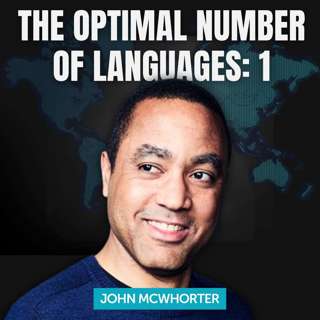
#142 Classic episode – John McWhorter on why the optimal number of languages might be one, and other provocative claims about language

#142 Classic episode – John McWhorter on why the optimal number of languages might be one, and other provocative claims about language

John McWhorter is a linguistics professor at Columbia University specialising in research on creole languages. He's also a content-producing machine, never afraid to give his frank opinion on anything...

6 Jan 1h 35min

2025 Highlight-o-thon: Oops! All Bests

2025 Highlight-o-thon: Oops! All Bests

It’s that magical time of year once again — highlightapalooza! Stick around for one top bit from each episode we recorded this year, including:Kyle Fish explaining how Anthropic’s AI Claude descends i...

29 Dec 20251h 40min

#232 – Andreas Mogensen on what we owe 'philosophical Vulcans' and unconscious beings

#232 – Andreas Mogensen on what we owe 'philosophical Vulcans' and unconscious beings

Most debates about the moral status of AI systems circle the same question: is there something that it feels like to be them? But what if that’s the wrong question to ask? Andreas Mogensen — a senior ...

19 Dec 20252h 37min
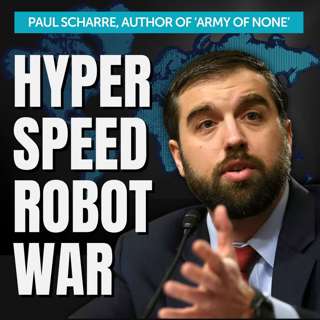
#231 – Paul Scharre on how AI-controlled robots will and won't change war

#231 – Paul Scharre on how AI-controlled robots will and won't change war

In 1983, Stanislav Petrov, a Soviet lieutenant colonel, sat in a bunker watching a red screen flash “MISSILE LAUNCH.” Protocol demanded he report it to superiors, which would very likely trigger a ret...

17 Dec 20252h 45min

AI might let a few people control everything — permanently (article by Rose Hadshar)

AI might let a few people control everything — permanently (article by Rose Hadshar)

Power is already concentrated today: over 800 million people live on less than $3 a day, the three richest men in the world are worth over $1 trillion, and almost six billion people live in countries ...

12 Dec 20251h
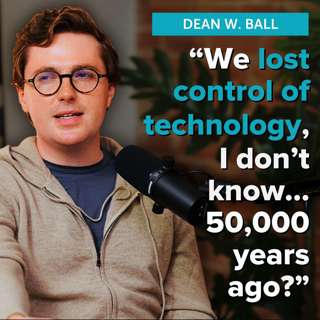
#230 – Dean Ball on how AI is a huge deal — but we shouldn’t regulate it yet

#230 – Dean Ball on how AI is a huge deal — but we shouldn’t regulate it yet

Former White House staffer Dean Ball thinks it's very likely some form of 'superintelligence' arrives in under 20 years. He thinks AI being used for bioweapon research is "a real threat model, obvious...

10 Dec 20252h 54min

#229 – Marius Hobbhahn on the race to solve AI scheming before models go superhuman

#229 – Marius Hobbhahn on the race to solve AI scheming before models go superhuman

We often worry about AI models “hallucinating” or making honest mistakes. But what happens when a model knows the truth, but decides to deceive you anyway to achieve a goal of its own? This isn’t sci-...

3 Dec 20253h 3min

Rob & Luisa chat kids, the 2016 fertility crash, and how the 50s invented parenting that makes us miserable

Rob & Luisa chat kids, the 2016 fertility crash, and how the 50s invented parenting that makes us miserable

Global fertility rates aren’t just falling: the rate of decline is accelerating. From 2006 to 2016, fertility dropped gradually, but since 2016 the rate of decline has increased 4.5-fold. In many weal...

25 Nov 20251h 59min

Populärt inom Utbildning

historiepodden-se
rss-bara-en-till-om-missbruk-medberoende-2
det-skaver
nu-blir-det-historia
alska-oss
sektledare
not-fanny-anymore
johannes-hansen-podcast
rss-viktmedicinpodden
harrisons-dramatiska-historia
roda-vita-rosen
rss-sjalsligt-avkladd
sa-in-i-sjalen
rss-max-tant-med-max-villman
allt-du-velat-veta
rikatillsammans-om-privatekonomi-rikedom-i-livet
rss-beratta-alltid-det-har
i-vantan-pa-katastrofen
sektpodden
nar-man-talar-om-trollen